

 +86-18020396629

Leave Your Message
-
CONTACT NUMBER
-
 CONTACT NUMBER
-

Industry-leading CNC machining centers purpose-built for automatic door latch and lock-tongue integration in custom furniture production.

Automatic door latches are spring-loaded or motorized closure mechanisms embedded in cabinet doors, wardrobe panels, and architectural doors during the manufacturing process. Unlike manual latches that require a separate installation step, automatic door latches are machined and positioned with CNC precision directly during furniture production, enabling one-pass assembly workflows.
In custom furniture manufacturing, the latch mortise, strike plate slot, and hinge bore must align within fractions of a millimeter — a tolerance achievable only with intelligent CNC machining centers. Poor alignment leads to costly rework, warranty claims, and dissatisfied end customers.
Modern automatic latches encompass magnetic catches, push-to-open mechanisms, hydraulic soft-close systems, and smart electronic locks — all of which demand different slot geometries and depths, making programmable CNC processing centers the cornerstone of scalable custom furniture production.
CNC machining centers that process door latch slots with ±0.01 mm accuracy eliminate fitment failures and reduce per-door labor by up to 40%, directly boosting factory profitability.
The global custom furniture and architectural door market is undergoing rapid automation. Here is where automatic door latch technology currently stands — and where it is heading.
The global custom furniture market exceeded USD 80 billion in 2024 and is projected to grow at a CAGR of 7.2% through 2030, driven by residential real estate booms in Asia, Europe, and North America. Every custom door produced requires precise latch hardware integration, creating a massive downstream demand for intelligent CNC processing equipment.
Mid-to-large furniture manufacturers are rapidly retiring semi-manual latch routing in favor of fully automated CNC processing centers. In China alone, over 3,500 wood door factories upgraded to CNC latch-processing lines between 2020 and 2024, and similar adoption curves are visible in Vietnam, Malaysia, Poland, and Mexico as labor costs rise globally.
The proliferation of smart home integration — electronic strikes, RFID-enabled latches, Bluetooth deadbolts — has dramatically increased hardware slot complexity. A standard wooden door may now require up to 12 distinct machining operations for lock, latch, hinge, and sensor hardware, all demanding sub-millimeter CNC accuracy and automated path optimization.
Forward-looking manufacturers are connecting CNC machining centers to MES (Manufacturing Execution Systems) and ERP platforms via IIoT protocols. Real-time production data — tool wear, feed rate, spindle load — is streamed to cloud dashboards, enabling predictive maintenance that prevents costly unplanned downtime on high-volume latch-processing lines.
Post-pandemic supply chain disruptions have accelerated regional manufacturing. Furniture brands that previously relied on offshore production are now investing in local CNC woodworking infrastructure, creating new markets for automatic door latch processing centers in Southeast Asia, Eastern Europe, and Latin America.
Emerging AI-driven nesting and path-optimization software can reduce material waste by 18–25% while cutting total machining time per door by up to 30%. Proprietary systems like Shuping's PNC intelligent control, which enables QR-code scanning and automatic path generation, represent the leading edge of this commercial transformation.
The industry is converging on machining centers that complete hinge bore, latch mortise, lock-body cavity, and weather-strip groove in a single clamping operation. This eliminates positional error accumulation across multiple setups and is critical for high-mix, low-batch custom furniture environments where changeover speed directly impacts profitability.
Operators scan a QR code on the door blank and the CNC machine automatically retrieves the correct machining program from a cloud database. This zero-programming, instant-changeover workflow reduces skilled-operator dependency and is enabling smaller custom furniture shops to adopt advanced automation previously reserved for large factories.
Environmental regulations in China, the EU, and North America are pushing furniture manufacturers to minimize wood waste. CNC machining centers with optimized tool paths and adaptive feed rates reduce material removal to the minimum necessary for perfect latch seating, supporting both sustainability goals and cost reduction.
The smart home boom is requiring furniture manufacturers to accommodate electronic mortise locks, motorized latches, and electromagnetic keeps alongside traditional mechanical hardware. CNC centers must now machine precise cable routing channels and electronic component cavities in addition to traditional latch slots, demanding more sophisticated programming capabilities.
Leading manufacturers are pairing CNC machining centers with collaborative robots for automated door loading and unloading, creating lights-out production windows during off-shifts. This human-robot collaboration model is expected to become standard practice in custom furniture factories by 2027, further elevating throughput on latch-processing lines.
In-process measurement systems that verify latch slot dimensions after every machining cycle — and automatically adjust tool compensation — are becoming standard on premium CNC centers. This closed-loop quality control eliminates the need for separate CMM inspection stations and ensures every door meets specification before leaving the machine.
Automatic door latch processing is not a one-size-fits-all technology. Here is an in-depth look at the distinct manufacturing environments where intelligent CNC latch machining delivers transformative value.
Bespoke wardrobe and kitchen cabinet doors represent the highest-volume segment for automatic latch processing. Each door panel requires precise routed pockets for magnetic push latches or soft-close mechanisms, and dimensions vary per order. CNC centers with QR-driven parameter loading allow factories to switch between 50 different door configurations per shift without manual reprogramming — a commercial necessity for made-to-order furniture brands.
Hotels, resorts, and corporate fit-outs demand thousands of identical or near-identical door units with consistent latch performance. A missed latch mortise depth of even 0.5 mm can cause a hotel guest's door to misalign or fail to latch — a brand-damaging outcome. Multi-spindle CNC centers that process lock-tongue joints, strike plate slots, and hinge bores simultaneously are the hardware backbone of large hospitality project deliveries.
Property developers fitting out large residential complexes require bulk orders of pre-hung door assemblies where latches, frames, and hardware are fully integrated before site delivery. CNC machining centers that maintain 0.01 mm precision across 680 doors per day make this scale commercially viable, directly supporting Country Garden, Vanke, and comparable developers' tight construction timelines.
Luxury furniture OEMs supplying brands like TATA, Sofia, and Oppein require exceptional surface quality around latch zones — no tear-out, consistent edge profiles, and zero witness marks from fixturing. High-frequency spindles with adaptive feed control, combined with automatic tool-life management, ensure every door meets the cosmetic and functional standards demanded by premium brand partners.
Fire-rated and acoustic doors impose strict tolerance requirements on latch and seal channel machining because any deviation affects the door's certified performance rating. CNC centers with closed-loop feedback machining ensure that latch pockets, intumescent strip grooves, and smoke seal channels are machined to certified dimensions every time, maintaining compliance with BS, EN, and UL fire door standards.
Furniture factories supplying European, North American, and Middle Eastern markets must comply with diverse hardware standards — DIN, ANSI, and BS — which specify different latch geometries and tolerances. A CNC machining center with a comprehensive parameter library and Japanese-heritage precision engineering enables one factory to serve all global markets from a single production line, dramatically simplifying export operations.
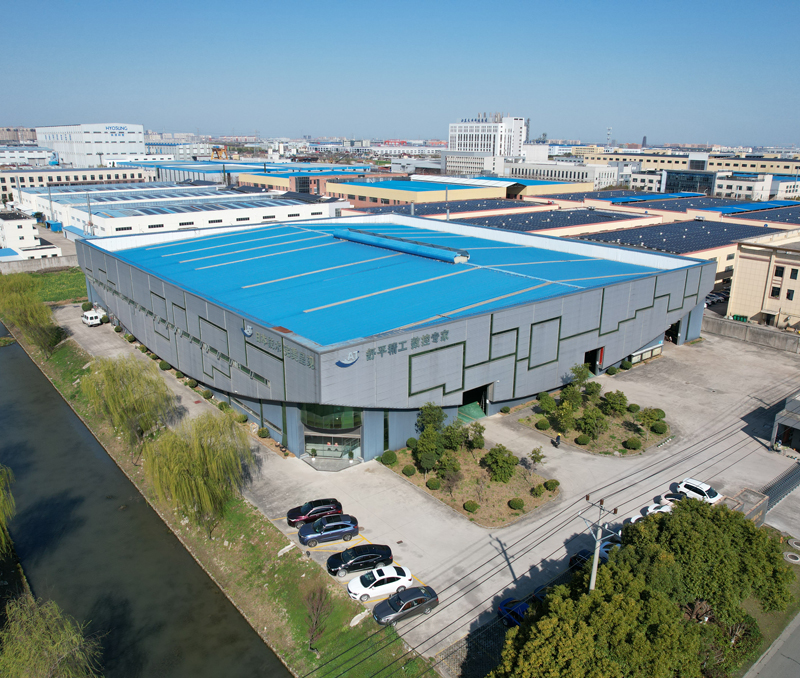


Shanghai Shuping Precision Machinery Co., Ltd. is a well-established Sino-Japanese joint venture. Its core manufacturing base is Shuping Precision Machinery (Nantong) Co., Ltd., which commenced full-scale production in 2017 and occupies a total floor area exceeding 13,000 square meters. Since its establishment in 1995, the company has consistently focused on the R&D, production, sales, and service of CNC woodworking machinery, dedicated to providing the global woodworking industry with intelligent solutions that are "faster, more precise, more accurate, and more economical."
Established in
m² Total Floor Area
Authorized Patents
Our technological heritage originates from Japan. Over a fifteen-year period, the company provided OEM manufacturing services for renowned Japanese enterprises, gaining profound expertise in precision machining techniques originating from Matsuhama, Japan in the 1970s. Building upon this foundation, we established our proprietary brand CAT Shanghai in 2010 and simultaneously founded the CAT JAPAN R&D Center in Japan, ensuring our core technologies remain at the forefront of global innovation.
Our dedicated R&D center in Japan ensures our CNC machining centers continuously incorporate the latest advances in spindle technology, servo control, and intelligent path optimization — keeping Shuping customers at a sustained competitive advantage.
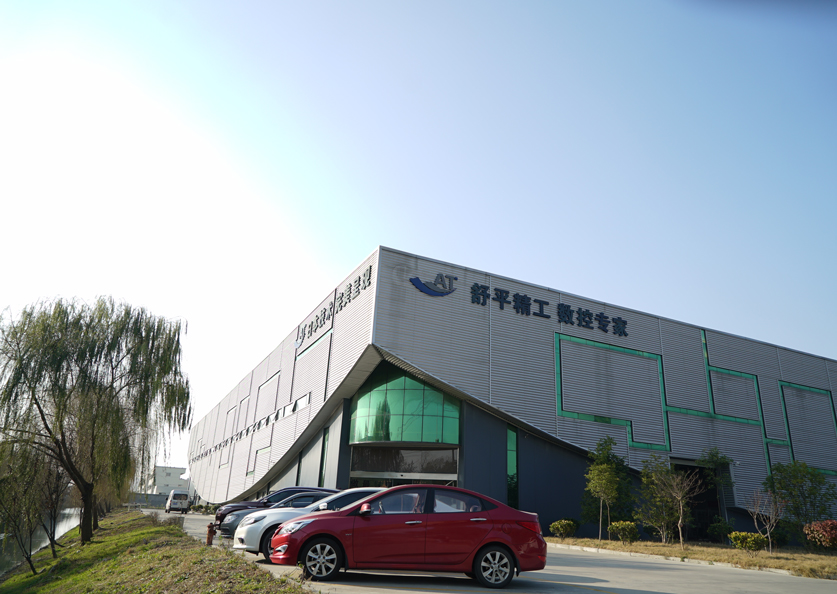
In 2017, the modern production base in Nantong, located within the Jiangsu Hai'an Economic and Technological Development Zone, officially commenced operations, marking the company's entry into a new phase of large-scale, intelligent development. Leveraging this advanced manufacturing platform, we assembled an elite technical team comprising experts in electrical engineering, software, design, and process technology.
We have accumulated over 52 nationally accepted and authorized patents, comprehensively covering the entire spectrum of wood door and panel furniture processing machinery. Our independently developed PNC intelligent control system enables direct QR code scanning and automatic path optimization, transforming complex machining into simple, efficient operations.

It is precisely this relentless pursuit of technology that has earned Shuping Precision Engineering widespread market recognition. Our production lines achieve exceptional efficiency — 680 wooden doors per day with a three-person shift — alongside 0.01mm-level machining precision, significantly boosting clients' production capacity while reducing labor costs. Today, hundreds of industry leaders have established long-term partnerships with Shuping Precision Machinery, with our products gaining continuous acclaim within the sector.
Talent is the fundamental driving force behind corporate development. We place high importance on human resource development and cultivation, establishing a scientific and systematic training and incentive mechanism to continuously stimulate team innovation. This lays a solid foundation for the company's sustained growth and internationalization strategy.
From single-function lock-tongue joint centers to fully multi-functional door processing platforms — explore our complete range engineered for automatic door latch integration in custom furniture manufacturing.
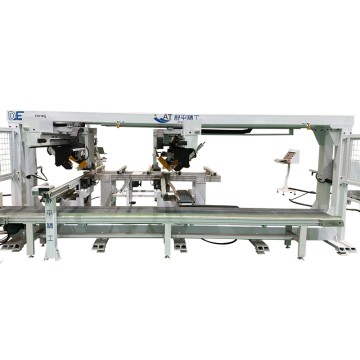 DFW Door Frame Double End Sawing Processing Center
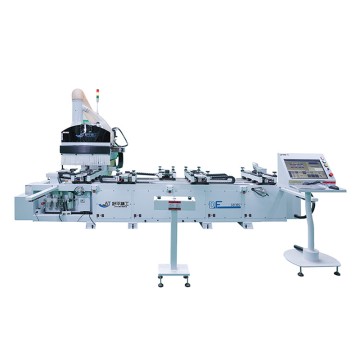 DF45A Wood Door Frame Processing Center
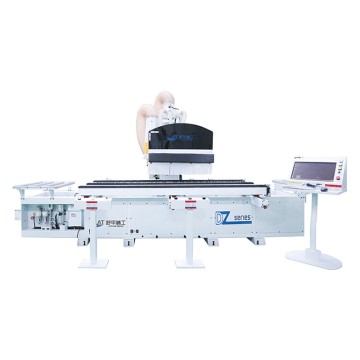 DZA Series Wooden Door Sawing And Milling Machining Center
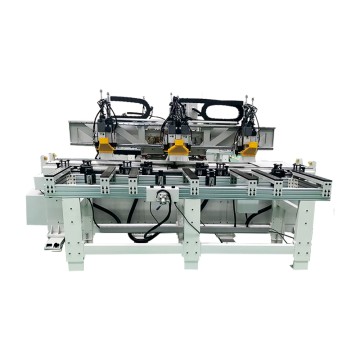 DFH Door Frame Lock Tongue Joint Processing Center
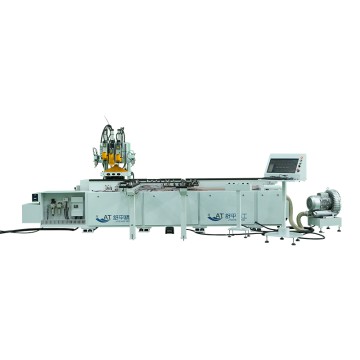 DZKQ Door Leaf & Door Frame Multi-Functional Machining Center
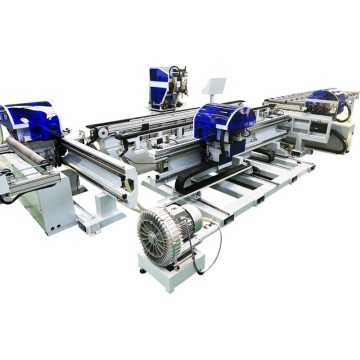 DXJ Door Leaf Hardware Hole Slot Machining Center
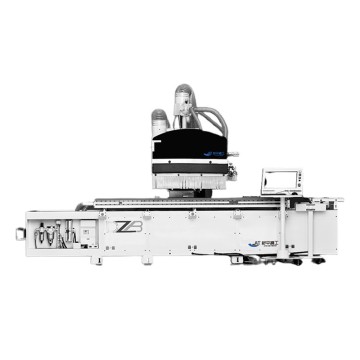 DZB Series Fully Functional Wooden Door Processing Center
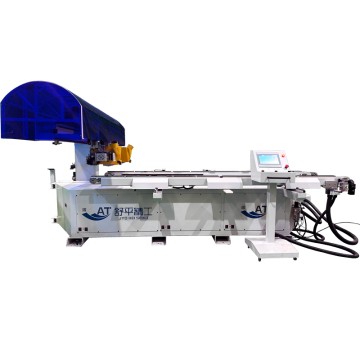 CNC Door Leaf Four Sided Sawing Machining Center
Like the rising sun, Shuping Precision Engineering advances with vigorous vitality and steady strides, continuously enhancing its capabilities while flexibly adapting to market shifts. We look forward to partnering with global clients to jointly pioneer a new chapter in intelligent woodworking manufacturing through continuously innovative products and services.
Contact Us