

 +86-18020396629

Leave Your Message
-
CONTACT NUMBER
-
 CONTACT NUMBER
-

High-precision CNC processing centers engineered for automatic latch pocket milling, strike-plate routing, and door frame preparation in woodworking shops.
Understanding the commercial landscape, precision requirements, and CNC-driven transformation of latch integration.
In contemporary woodworking shops—whether small-batch custom studios or high-volume industrial door manufacturing lines—automatic door latches represent one of the most mechanically critical components of any finished door assembly. A latch must align with micron-level precision relative to the strike plate in the door frame. Even a 0.3 mm deviation can cause a door to bind, fail to self-close, or produce irritating rattling under thermal expansion and contraction cycles.
Historically, latch mortises were hand-chiselled or routed with manual jigs, a labor-intensive process prone to cumulative positional error across batches. The commercial transition to CNC-driven machining centers over the past two decades has fundamentally changed this dynamic, enabling repeatable, sub-millimeter latch pocket preparation at industrial throughput rates.
Today, a modern woodworking shop processing interior residential doors must simultaneously handle dead-bolt bores, privacy latch recesses, passage latch mortises, hinge pockets, and strike-plate rebates—all in a single automated program pass. This integrated approach to automatic latch machining is now the competitive baseline, not the premium offering.
Modern CNC door machining centers achieve 0.01 mm positional repeatability—far beyond manual routing—ensuring latch bolts and strike plates align perfectly on every single door across thousands of daily cycles.
Automated latch-pocket machining integrated into a full-door processing line dramatically reduces crew requirements. What once demanded 8–10 skilled operators now runs with 3 personnel per shift at higher throughput.
Intelligent PNC control systems allow operators to scan a door-order QR code and the machine automatically loads the correct latch position, bore depth, and frame rebate parameters—eliminating manual setup errors entirely.
Key metrics defining the automatic door latch machining sector in global woodworking manufacturing.
How evolving market forces are reshaping automatic door latch integration in woodworking shops worldwide.
Global residential construction demand—particularly across Southeast Asia, the Middle East, and Eastern Europe—is pushing door manufacturers toward fully automated latch-pocket lines capable of processing hundreds of SKUs per shift without retooling downtime.
The proliferation of electronic deadbolts, biometric passage sets, and motorized latch mechanisms requires machining shops to CNC-route increasingly complex multi-bore patterns. A single smart-lock mortise may require 5 distinct milling operations—only viable at scale with automated programming.
Post-pandemic supply chain disruptions have accelerated reshoring of door component manufacturing in North America and Europe, increasing demand for compact, high-precision CNC machining centers that can operate efficiently in smaller domestic facilities.
Shifts from solid hardwood to LVL cores, HDF skins, and WPC composites demand adaptive cutting parameters. Modern machining centers automatically adjust spindle speeds and feed rates based on material profiles—critical for clean latch mortise walls in laminated substrates.
Leading door manufacturers now require every latch position to be digitally logged against order IDs for quality traceability. CNC centers with built-in MES connectivity automatically record machining parameters per door—enabling full batch recalls and quality audits.
Automated path optimization in latch routing programs reduces sawdust generation, minimizes tool wear, and cuts energy consumption per door by up to 22% compared to traditional manual routing workflows—supporting ISO 14001 environmental compliance targets.
From small custom shops to large-scale industrial lines—where CNC automatic latch integration delivers measurable value.
High-volume factories producing passage, privacy, and pocket doors require consistent latch-bore positioning across thousands of units daily. Four-sided sawing centers with integrated latch routing eliminate separate workstation transfers, reducing cycle time per door from 4+ minutes to under 90 seconds.
Fire-rated doors demand latch mortises milled to exacting UL/BS standards where deviation affects certification. Automated machining centers with laser-verified positioning ensure every latch void meets regulatory depth and clearance specifications—reducing rejection rates to near zero.
Hotel renovation projects ordering 500–2,000 identical room doors in single batches demand zero-variance latch alignment for master-key system compatibility. Batch-programmable CNC centers process entire hotel orders from a single setup file, guaranteeing inter-door dimensional consistency.
Smaller woodworking studios producing built-in wardrobes, entertainment units, and bespoke furniture increasingly specify magnetic touch-latches and automatic soft-close mechanisms. Compact multi-functional machining centers allow these shops to CNC-rout latch recesses with the same precision as industrial door lines.
Flat-pack cabinet doors require latch and hinge boss positions pre-routed to 32 mm system standards. Integrated panel processing centers handle latch pocket routing, edge banding, and bore drilling in continuous-feed operations—enabling lights-out automation during off-peak hours.
Multi-point locking systems used in security doors require precise co-planar routing of multiple latch bolts, deadbolts, and roller cams across a single door edge. Five-axis CNC machining centers execute these complex pocket sequences automatically from a single CAD import, eliminating manual layout entirely.
Eco-certified door producers working with bamboo, reclaimed timber, or cross-laminated panels face unpredictable grain and density variations that challenge manual latch routing. Smart CNC centers with adaptive force-feedback maintain consistent mortise quality regardless of substrate variability.
Manufacturers supplying finished door blanks to international brands must meet diverse latch standard specifications (ANSI, EN, AS/NZS) within the same production run. Programmable machining centers switch between latch geometry presets in seconds—supporting multi-standard OEM fulfillment without retooling.
Latch mortises were hand-chiselled or routed with fixed steel templates. Positional accuracy depended entirely on operator skill, yielding ±1–2 mm variance typical across production batches.
Entry-level CNC routers introduced G-code-programmed latch routing, reducing setup time but requiring skilled programmers. Precision improved to ±0.1 mm but changeover between door models remained time-consuming.
Multi-axis machining centers combined four-sided sawing, hinge routing, latch boring, and lock-box milling into single-pass operations. Shuping launched the CAT brand and CAT JAPAN R&D Center during this period, bringing Japanese precision methodology to Chinese manufacturing scale.
Proprietary PNC control systems enable QR scan-to-run operation. Operators scan the door order barcode; the machine auto-loads latch geometry, optimizes the toolpath, and begins cutting within seconds—with real-time MES data logging and 0.01 mm repeatability.
Next-generation systems incorporate machine-vision cameras to detect grain direction and density zones, dynamically adjusting router feed rates through latch pockets to prevent tear-out on figured or reclaimed wood substrates.
Shops processing under 200 doors/day benefit from compact multi-functional centers; operations above 500 doors/day require dedicated four-sided sawing centers with in-line latch boring stations to avoid bottlenecks.
High-mix low-volume shops need machining centers with fast QR-code-based changeover capability. High-volume low-mix lines benefit from dedicated fixtures optimized for a single latch type.
Confirm whether your hardware supplier uses ANSI/BHMA, European EN 12209, or proprietary OEM specifications before configuring mortise geometry—modern CNC centers store all three in switchable preset libraries.
Facilities with limited CNC operators should prioritize QR scan-to-run systems with guided touchscreen interfaces, which reduce training time from months to days and eliminate programming errors on latch geometry.
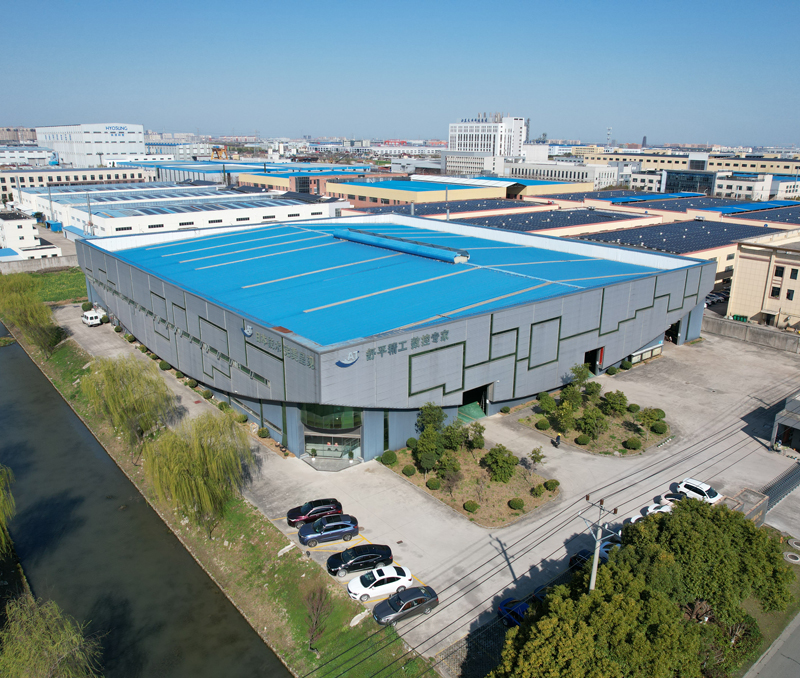


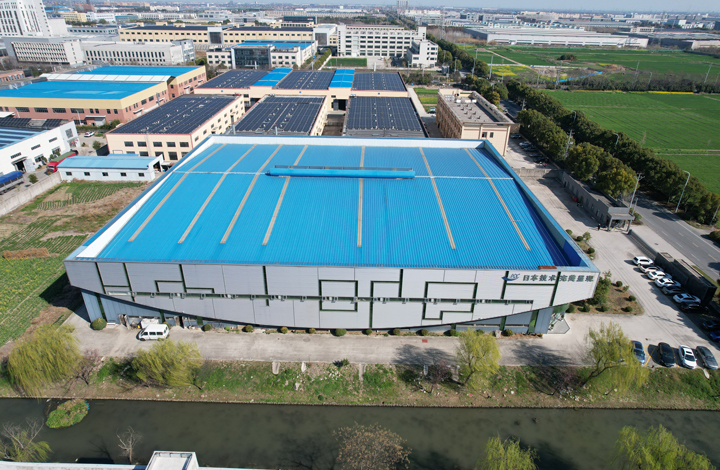
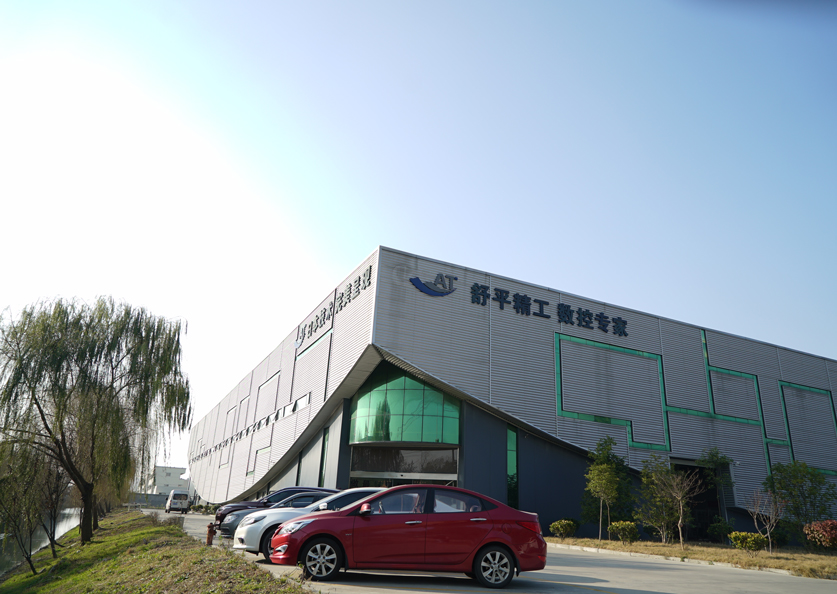
Shanghai Shuping Precision Machinery Co., Ltd. is a well-established Sino-Japanese joint venture. Its core manufacturing base is Shuping Precision Machinery (Nantong) Co., Ltd., which commenced full-scale production in 2017 and occupies a total floor area exceeding 13,000 square meters. Since its establishment in 1995, the company has consistently focused on the R&D, production, sales, and service of CNC woodworking machinery, dedicated to providing the global woodworking industry with intelligent solutions that are "faster, more precise, more accurate, and more economical."
Established in
m² total floor area
Nationally authorized patents

Welcome To Learn About Our Company
Our technological heritage originates from Japan. Over a fifteen-year period, the company provided OEM manufacturing services for renowned Japanese enterprises, gaining profound expertise in precision machining techniques originating from Matsuhama, Japan in the 1970s. Building upon this foundation, we established our proprietary brand CAT Shanghai in 2010 and simultaneously founded the CAT JAPAN R&D Center in Japan, ensuring our core technologies remain at the forefront of global innovation.
This Japanese precision philosophy is embedded in every latch-pocket machining parameter our systems execute—from spindle runout tolerances to feed-rate acceleration curves—delivering the sub-millimeter repeatability that automatic door latch assembly demands.
In 2017, the modern production base in Nantong, located within the Jiangsu Hai'an Economic and Technological Development Zone, officially commenced operations, marking the company's entry into a new phase of large-scale, intelligent development. Leveraging this advanced manufacturing platform, we assembled an elite technical team comprising experts in electrical engineering, software, design, and process technology.
We have accumulated over 52 nationally accepted and authorized patents, comprehensively covering the entire spectrum of wood door and panel furniture processing machinery. Our independently developed PNC intelligent control system enables direct QR code scanning and automatic path optimization, transforming complex machining—including multi-point latch routing, lock-box milling, and strike-plate rebating—into simple, efficient operations.

It is precisely this relentless pursuit of technology that has earned Shuping Precision Engineering widespread market recognition. Our production lines achieve exceptional efficiency—680 wooden doors per day with a three-person shift—alongside 0.01mm-level machining precision, significantly boosting clients' production capacity while reducing labor costs. Today, hundreds of industry leaders—including Jiangshan Oppein, TATA Wooden Doors, Sofia Home Furnishings, Kendiya Wooden Doors, and Country Garden Modern Home Furnishings—have established long-term partnerships with Shuping Precision Machinery, with our products gaining continuous acclaim within the sector.
Talent is the fundamental driving force behind corporate development. We place high importance on human resource development and cultivation, establishing a scientific and systematic training and incentive mechanism to continuously stimulate team innovation. This lays a solid foundation for the company's sustained growth and internationalization strategy.
A business case analysis for shop owners evaluating CNC latch automation investment.
Shops replacing 4 manual routing operators with a single automated latch-pocket center typically recover machine investment within 12–18 months through labor savings alone, before accounting for reject rate reduction and throughput gains.
Manual latch routing introduces operator fatigue variance—measurably worse in the final hour of a shift. CNC automation maintains identical 0.01 mm precision from the first door to the last, eliminating costly field callbacks due to misaligned latches.
Switching from a standard tubular latch to a European-style espagnolette lock configuration takes under 2 minutes with preset program libraries—vs. 45–60 minutes to reconfigure manual jigs and templates on traditional router tables.
QR-driven machining connects the shop floor directly to sales orders, eliminating the paper traveller and verbal instruction chain that causes 70% of manual latch positioning errors in traditional woodworking operations.
Documented CNC machining logs for each door provide defensible quality records when installer callbacks or warranty claims arise, protecting manufacturers from unsubstantiated defect claims.
Achieving CE, UL, or other international compliance for door hardware installation requires documented dimensional traceability. Automated CNC records satisfy this requirement by default, opening export markets to manufacturers previously limited to domestic distribution.
From four-sided sawing to frame lock-tongue joint processing—complete CNC solutions for every automatic door latch application in woodworking shops.
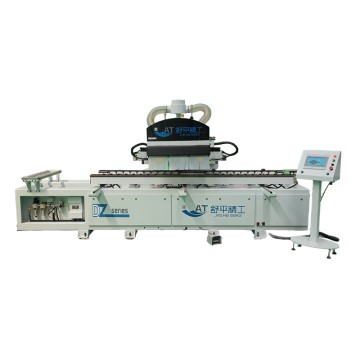
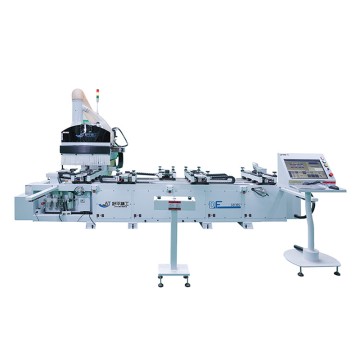
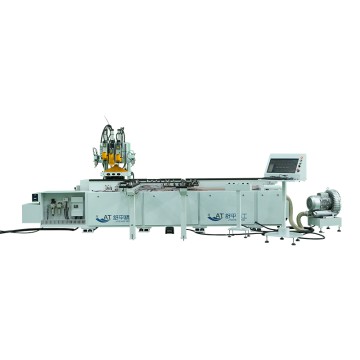
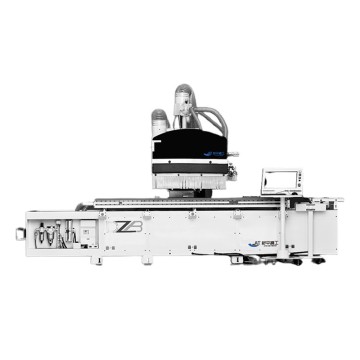
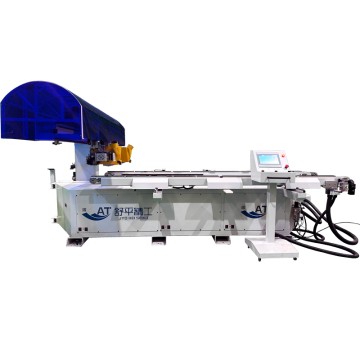
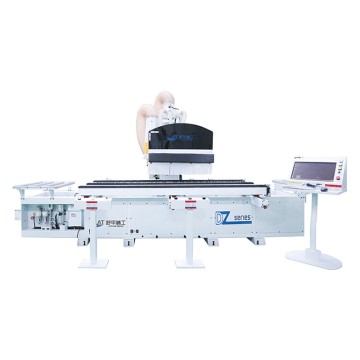
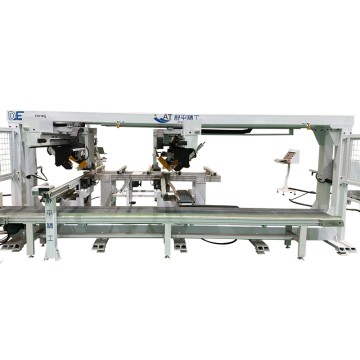
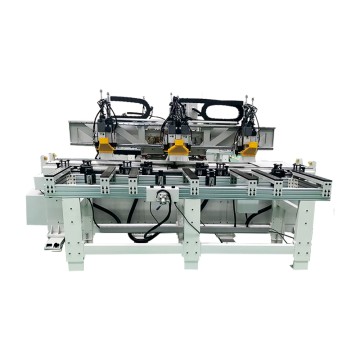
Like the rising sun, Shuping Precision Engineering advances with vigorous vitality and steady strides, continuously enhancing its capabilities while flexibly adapting to market shifts. We look forward to partnering with global clients to jointly pioneer a new chapter in intelligent woodworking manufacturing—delivering automatic door latch machining solutions that are faster, more precise, more accurate, and more economical than anything previously possible.