

 +86-18020396629

Leave Your Message
-
CONTACT NUMBER
-
 CONTACT NUMBER
-

The global custom furniture market has experienced explosive growth over the past decade, driven by rising consumer demand for personalized living spaces and the rapid expansion of e-commerce home furnishing platforms. As manufacturers scale up production to meet this demand, the need for intelligent, high-speed, and error-free component identification has never been more critical.
Automatic labeling machines have emerged as a cornerstone technology in modern custom furniture production lines. Unlike traditional manual labeling — which is slow, error-prone, and labor-intensive — automated labeling systems integrate seamlessly with ERP/MES platforms, CNC cutting machines, and conveyor systems to deliver real-time, accurate label application at speeds exceeding hundreds of panels per hour.
In a sector where each order may involve dozens of uniquely dimensioned components, an automatic labeling machine for custom furniture eliminates mis-assembly risks, accelerates sorting and packaging, and enables complete traceability from raw board to finished product delivery.
Precision-engineered labeling systems designed specifically for panel furniture, cabinet, and wood door manufacturing workflows.
The automatic labeling machine sector is evolving rapidly, shaped by digitalization, mass customization, and smart factory demands.
Modern automatic labeling machines are no longer standalone devices. They are deeply integrated into smart factory ecosystems, communicating in real time with ERP, MES, and WMS systems. This enables dynamic label content generation based on live production orders, dramatically reducing setup time and eliminating human error in high-mix, low-volume custom furniture environments.
The shift from simple barcodes to 2D QR codes and RFID tags is accelerating. Each furniture panel can now carry a unique digital identity linking it to design files, machining parameters, assembly sequences, and quality inspection records. This full-lifecycle traceability is becoming a baseline requirement for major furniture brands and export markets.
Machine vision systems equipped with AI algorithms now enable labeling machines to automatically detect panel orientation, surface condition, and edge position, ensuring labels are applied with sub-millimeter accuracy regardless of minor dimensional variations. This is particularly critical for high-gloss lacquered or veneered furniture panels where placement aesthetics matter.
Next-generation labeling systems can simultaneously apply multiple labels — including assembly sequence codes, customer order tags, and safety compliance marks — in a single pass. With throughput rates exceeding 60 panels per minute on leading models, these machines are redefining productivity benchmarks for large-scale custom furniture factories.
IoT-enabled labeling machines transmit operational data — including label consumption rates, print head status, jam frequency, and cycle times — to cloud dashboards accessible from anywhere. Predictive maintenance algorithms analyze this data to schedule servicing before failures occur, maximizing uptime in 24/7 production environments.
As furniture manufacturers face increasing ESG scrutiny, labeling systems are adapting to support recyclable, biodegradable, and FSC-certified label materials. Ink-free thermal printing technology is also gaining traction, eliminating consumable ink cartridges while delivering high-contrast, durable markings on wood-based panel surfaces.
From cabinet production to whole-home customization, here's how automatic labeling transforms every stage of the custom furniture workflow.
Immediately after CNC nesting cutting, panels of varying sizes exit the cutting table at high speed. Automatic labeling machines positioned inline apply unique component labels within milliseconds of each panel clearing the cutting zone. Labels encode room designation, cabinet number, part name, drilling coordinates, and edge-banding specifications — enabling sorters and downstream machines to process each piece without manual interpretation.
In continuous edge-banding production lines, automatic labeling machines are synchronized with edge-banding machines to label panels both before and after the banding process. Pre-banding labels guide machine settings; post-banding labels confirm process completion and update the digital production record. This closed-loop labeling approach virtually eliminates the risk of incorrect edge material being applied to a panel.
Custom furniture panels require precise drilling patterns for hinges, dowels, and cam locks that vary by design. Automatic labels carrying encoded drilling programs allow CNC drilling centers to scan and auto-load the correct machining program for each panel, eliminating manual program selection. This is especially valuable in factories running hundreds of unique SKUs simultaneously across shared equipment.
In the warehouse, labeled panels are scanned and automatically directed to the correct order staging area by conveyor routing systems. Pick-to-light or scan-to-verify systems confirm that all components for each customer order are present before packaging. This dramatically reduces missing-part complaints — a leading cause of costly re-manufacturing and customer dissatisfaction in the custom furniture industry.
Consumer-facing QR code labels on finished panels allow delivery teams and installation crews to instantly access 3D assembly animations, hardware lists, and room layout plans via smartphone. This reduces on-site assembly errors by over 60% according to industry studies, and significantly improves the end-customer experience — a critical differentiator in the premium custom furniture segment.
When customers require replacement panels or repairs years after delivery, scanned QR codes instantly retrieve original production specifications, material details, and finish codes from the manufacturer's database. This enables precise re-manufacturing of matching components without requiring customers to provide technical measurements — a service capability that drives brand loyalty and repeat business in the high-end custom furniture market.
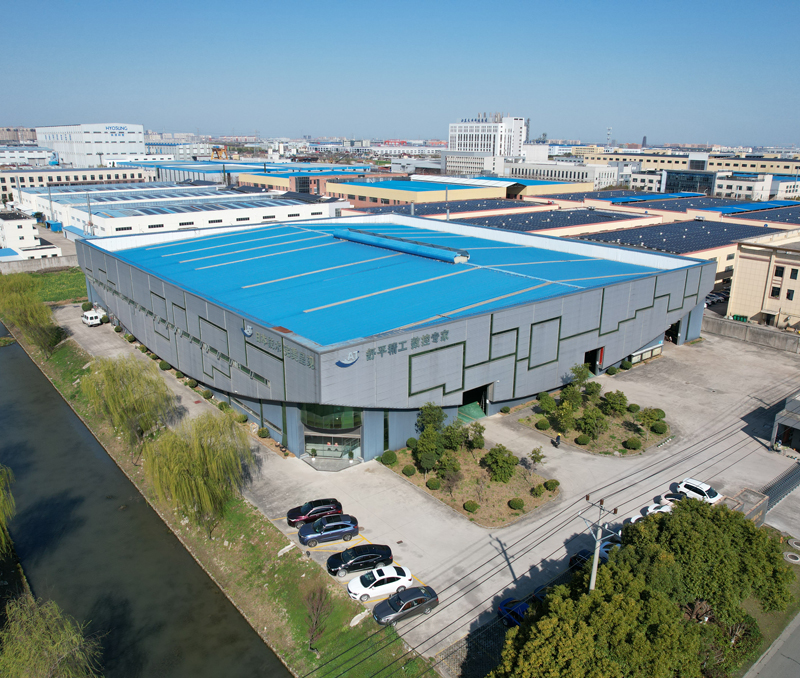

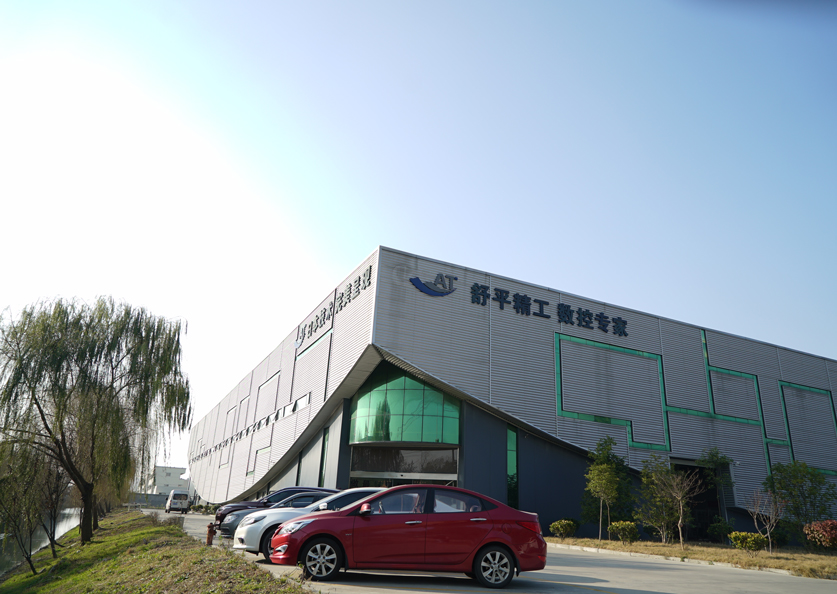
Shanghai Shuping Precision Machinery Co., Ltd. is a well-established Sino-Japanese joint venture. Its core manufacturing base is Shuping Precision Machinery (Nantong) Co., Ltd., which commenced full-scale production in 2017 and occupies a total floor area exceeding 13,000 square meters. Since its establishment in 1995, the company has consistently focused on the R&D, production, sales, and service of CNC woodworking machinery, dedicated to providing the global woodworking industry with intelligent solutions that are "faster, more precise, more accurate, and more economical."
Welcome To Learn About Our Company
Our technological heritage originates from Japan. Over a fifteen-year period, the company provided OEM manufacturing services for renowned Japanese enterprises, gaining profound expertise in precision machining techniques originating from Matsuhama, Japan in the 1970s. Building upon this foundation, we established our proprietary brand CAT Shanghai in 2010 and simultaneously founded the CAT JAPAN R&D Center in Japan, ensuring our core technologies remain at the forefront of global innovation.
This deep-rooted Japanese precision engineering philosophy directly informs the design of our automatic labeling machines for custom furniture — delivering the micron-level repeatability and long-term mechanical reliability that high-volume furniture manufacturers demand.
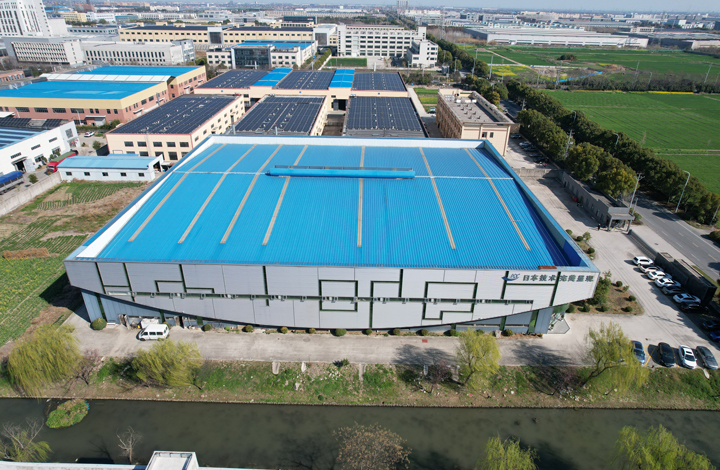
In 2017, the modern production base in Nantong, located within the Jiangsu Hai'an Economic and Technological Development Zone, officially commenced operations, marking the company's entry into a new phase of large-scale, intelligent development. Leveraging this advanced manufacturing platform, we assembled an elite technical team comprising experts in electrical engineering, software, design, and process technology.
We have accumulated over 52 nationally accepted and authorized patents, comprehensively covering the entire spectrum of wood door and panel furniture processing machinery. Our independently developed PNC intelligent control system enables direct QR code scanning and automatic path optimization, transforming complex machining into simple, efficient operations.
It is precisely this relentless pursuit of technology that has earned Shuping Precision Engineering widespread market recognition. Our production lines achieve exceptional efficiency — 680 wooden doors per day with a three-person shift — alongside 0.01mm-level machining precision, significantly boosting clients' production capacity while reducing labor costs.
Talent is the fundamental driving force behind corporate development. We place high importance on human resource development and cultivation, establishing a scientific and systematic training and incentive mechanism to continuously stimulate team innovation. This lays a solid foundation for the company's sustained growth and internationalization strategy.
Explore our complete lineup of intelligent labeling and CNC woodworking machinery engineered for every scale of custom furniture production.
Like the rising sun, Shuping Precision Engineering advances with vigorous vitality and steady strides, continuously enhancing its capabilities while flexibly adapting to market shifts. We look forward to partnering with global clients to jointly pioneer a new chapter in intelligent woodworking manufacturing through continuously innovative products and services.
Contact Us


