

 +86-18020396629

Leave Your Message
-
CONTACT NUMBER
-
 CONTACT NUMBER
-

Purpose-built for wood door and panel furniture factories, our labeling systems integrate directly with CNC processing lines — enabling automatic QR-code label printing & application at every production stage.
The global woodworking machinery market is undergoing a structural shift from manual, labor-intensive operations toward fully automated, data-driven manufacturing. Automatic labeling machines sit at the heart of this transformation — acting as the critical information bridge between digital design files and physical components on the shop floor.
In today's custom furniture and wood door industry, each panel or door component carries a unique set of machining parameters, assembly instructions, and order information. Manual label writing leads to misidentification errors that cost factories hours of rework. Automatic labeling machines eliminate this bottleneck by printing, encoding, and applying machine-readable labels — such as QR codes and barcodes — directly on each workpiece at the moment it enters the production line.
Industry data indicates that large panel furniture manufacturers can produce thousands of unique part variants per shift. Without automatic labeling, tracking these components through cutting, edgebanding, drilling, and assembly is virtually impossible at scale. Modern woodworking shops that have adopted automatic labeling report a 40–60% reduction in mis-sorting errors and a measurable increase in throughput without additional headcount.
Consumer preference for customized furniture has exploded. Each production batch now includes dozens of unique SKUs requiring individual part identification — only automation can handle this at scale.
Rising labor costs across Asia, Europe, and North America are forcing shops to automate repetitive tasks. One automatic labeling station replaces 2–3 manual operators while doubling throughput speed.
Modern factories require every workpiece to carry real-time digital identity. Automatic labeling is the first step in creating a fully connected, IoT-enabled woodworking production ecosystem.
From factory to installation site, labeled components enable end-to-end traceability, reducing delivery errors, warranty disputes, and after-sales service costs by a significant margin.
Automatic labeling machines for woodworking shops have evolved from simple sticker-dispensing devices into intelligent, networked production nodes. The technology continues to advance at pace with broader Industry 4.0 adoption across the global furniture sector.
Basic machines that dispensed pre-printed labels for manual placement by operators. Prone to positioning errors and could not handle variable data printing. Suitable only for small-batch, low-variety production runs.
Combined thermal label printers with mechanical applicator arms, enabling on-demand label creation. Widely adopted in large furniture factories through the 2000s and 2010s. Reduced mis-labeling significantly but lacked real-time data connectivity.
The current mainstream technology. Labels carry QR codes encoding full part specifications, linking each component to ERP and MES systems. Machines receive live production data, adjust label content dynamically, and feed scanning data back to factory management platforms — the model used by CAT CNC systems today.
Next-generation systems combine machine vision cameras with robotic arms for fully autonomous label placement verification and correction. Capable of detecting surface defects before labeling and adapting to irregular panel shapes — critical for high-end custom joinery and architectural woodwork.
Beyond basic part identification, automatic labeling machines serve as intelligent control points across the entire woodworking production chain. Here are the key application scenarios where this technology drives the greatest commercial and operational impact.
In high-volume wardrobe, cabinet, and shelving factories, labeling machines work inline with beam saws and CNC nesting routers. Each cut panel receives a QR code label encoding part ID, edge profile, drilling pattern, and assembly position — enabling zero-error sorting by robotic conveyor systems downstream.
Wood door factories must track door stiles, rails, panels, and hardware across multiple processing stations. Automatic labeling at the first cut stage creates a digital twin for each door component, allowing operators to scan-verify fit before assembly and dramatically reducing costly finishing errors.
Custom architectural firms producing bespoke built-ins, staircases, and paneling systems use automatic labeling to manage extremely high part-variety and low-volume runs. Integrated with 3D design software, labels carry installation-specific data including room location and fitting sequence codes.
When connected to an ERP system, each labeled component becomes a live production record. Factory managers gain real-time visibility into work-in-progress, bottleneck detection, and order completion forecasting — transforming the shopfloor into a data-generating asset for business intelligence.
For furniture brands operating across multiple assembly or distribution sites, automatically applied labels with standardized global formats (GS1, SSCC) ensure seamless handoff between facilities and compliance with international retail supply chain requirements (IKEA, Home Depot, etc.).
QR code labels placed during manufacturing remain scannable for years, enabling direct part replacement sourcing, batch-level quality recalls, and warranty verification — creating a service revenue stream alongside the core manufacturing process.
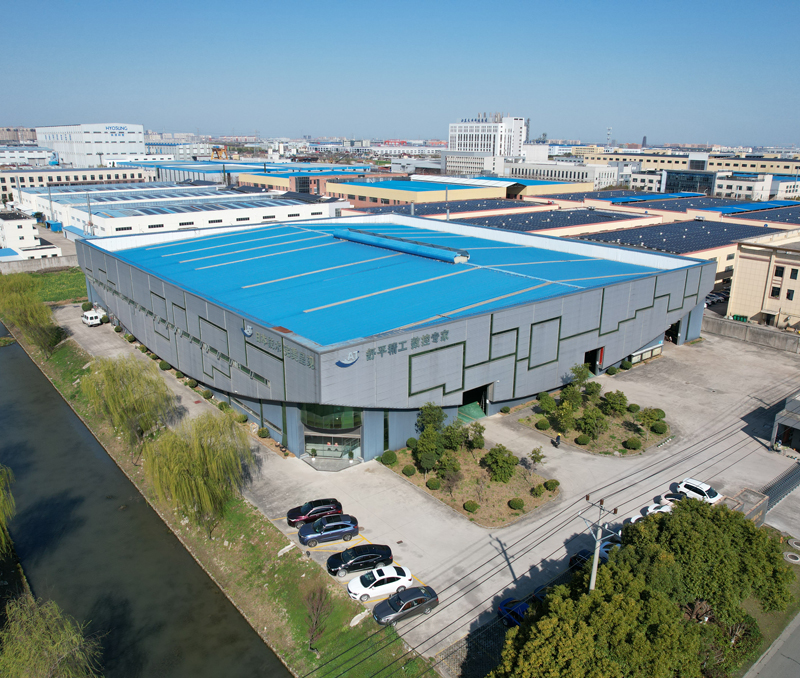
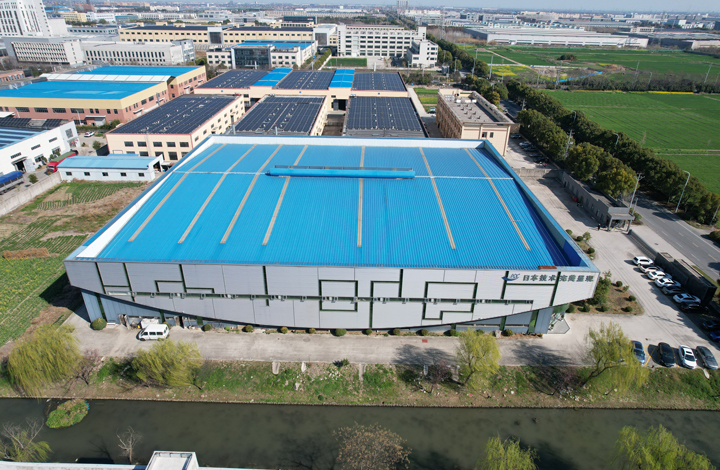
Shanghai Shuping Precision Machinery Co., Ltd. is a well-established Sino-Japanese joint venture. Its core manufacturing base is Shuping Precision Machinery (Nantong) Co., Ltd., which commenced full-scale production in 2017 and occupies a total floor area exceeding 13,000 square meters. Since its establishment in 1995, the company has consistently focused on the R&D, production, sales, and service of CNC woodworking machinery, dedicated to providing the global woodworking industry with intelligent solutions that are "faster, more precise, more accurate, and more economical."



Welcome To Learn About Our Company
Our technological heritage originates from Japan. Over a fifteen-year period, the company provided OEM manufacturing services for renowned Japanese enterprises, gaining profound expertise in precision machining techniques originating from Matsuhama, Japan in the 1970s. Building upon this foundation, we established our proprietary brand CAT Shanghai in 2010 and simultaneously founded the CAT JAPAN R&D Center in Japan, ensuring our core technologies remain at the forefront of global innovation.
This deep Japanese engineering DNA is embedded into every CAT automatic labeling machine — from servo-driven label dispensers achieving ±0.5 mm placement repeatability, to thermal print heads calibrated for wood surface adhesive performance across all climate conditions.
In 2017, the modern production base in Nantong, located within the Jiangsu Hai'an Economic and Technological Development Zone, officially commenced operations, marking the company's entry into a new phase of large-scale, intelligent development. Leveraging this advanced manufacturing platform, we assembled an elite technical team comprising experts in electrical engineering, software, design, and process technology.
We have accumulated over 52 nationally accepted and authorized patents, comprehensively covering the entire spectrum of wood door and panel furniture processing machinery. Our independently developed PNC intelligent control system enables direct QR code scanning and automatic path optimization, transforming complex machining into simple, efficient operations.
For automatic labeling machines specifically, the PNC system acts as the central command layer — receiving order data from the ERP, generating label content dynamically, synchronizing print timing with the conveyor line speed, and logging every labeled component into the production database in real time.
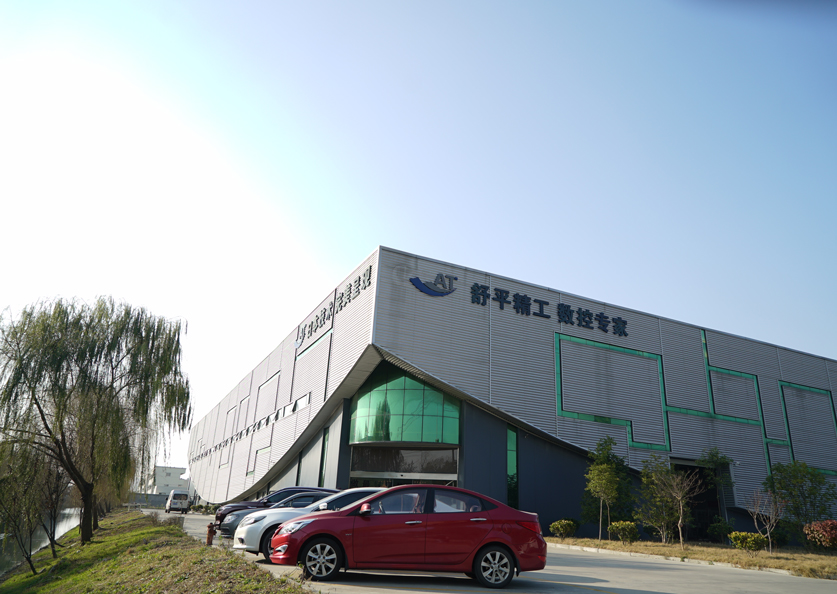
It is precisely this relentless pursuit of technology that has earned Shuping Precision Engineering widespread market recognition. Our production lines achieve exceptional efficiency — 680 wooden doors per day with a three-person shift — alongside 0.01 mm-level machining precision, significantly boosting clients' production capacity while reducing labor costs.
Today, hundreds of industry leaders have established long-term partnerships with Shuping Precision Machinery, with our products gaining continuous acclaim within the sector.
Talent is the fundamental driving force behind corporate development. We place high importance on human resource development and cultivation, establishing a scientific and systematic training and incentive mechanism to continuously stimulate team innovation. This lays a solid foundation for the company's sustained growth and internationalization strategy.
Servo-controlled applicator arms derived from Japanese precision machining heritage ensure consistent, repeatable label placement on every single workpiece — critical for downstream robotic sorting systems.
Native integration with Shuping's proprietary PNC intelligent control platform allows direct QR code scanning of production orders — no manual data entry, no re-keying errors between machines.
Designed to install inline with existing beam saws, CNC routers, and edgebanders with standard conveyor interfaces — minimizing installation downtime and enabling rapid ROI from day one of operation.
Each machine embodies patented innovations across mechanical design, control software, and adhesive systems — giving CAT customers a technological competitive edge that competitors cannot easily replicate.
Explore our full lineup of intelligent labeling solutions — engineered for every stage of the wood door and panel furniture manufacturing process.
Like the rising sun, Shuping Precision Engineering advances with vigorous vitality and steady strides, continuously enhancing its capabilities while flexibly adapting to market shifts. We look forward to partnering with global clients to jointly pioneer a new chapter in intelligent woodworking manufacturing through continuously innovative products and services.
Contact Us


