

 +86-18020396629

Leave Your Message
-
CONTACT NUMBER
-
 CONTACT NUMBER
-

Core product lines engineered for high-throughput export manufacturing — precision, speed, and global compliance in every unit.

High-speed wrapping & sealing optimized for wood door panel export batches, reducing labor cost and damage rate.
View Details →
Precisely calibrated for flat-pack cabinet panel exports; integrates auto-film cutting and edge-seal for transit protection.
View Details →
Full-automatic stretch-film packaging for large-format furniture panels; supports mixed-size batches on single export runs.
View Details →
Designed for engineered flooring export; moisture-barrier film application with real-time tension control ensures zero edge damage.
View Details →Global export supply chains demand packaging precision, repeatability, and audit-ready traceability — only automation delivers all three at scale.
Manual packing becomes a critical bottleneck at export volumes. Automatic packing machines sustain 680+ units per shift without quality degradation, directly matching CNC machining output rates and eliminating downstream delays before container loading.
Export markets impose strict packaging standards — ISPM 15, EU timber regulations, and custom buyer specifications. Automated systems enforce consistent wrap tension, corner protection, and label placement, dramatically reducing non-conformance claims from overseas importers.
A three-person shift operating an integrated automatic packing line replaces 10–15 manual packers while achieving higher consistency. For export manufacturers with tight margins, this labor arbitrage directly improves landed-cost competitiveness in key markets.
Ocean freight subjects packages to humidity, vibration, and compression over weeks. Precision stretch-film tension control and automated corner-padding insertion — only achievable through automation — reduce sea-freight damage claims by up to 90% versus manual packing.
Modern automatic packers connect directly to upstream CNC machining centers via PLC and ERP data links. QR-code scanning triggers auto pack-spec selection, ensuring the correct packaging format is applied to every SKU without operator input or error.
Machines engineered for export manufacturing support CE, UL, and ISO 9001 process documentation. Built-in production logging provides the audit trails required by customs authorities, third-party inspection bodies, and major retail buyers like IKEA and B&Q.
Understanding the macro forces that are making automated packing an export-manufacturing necessity, not an option.
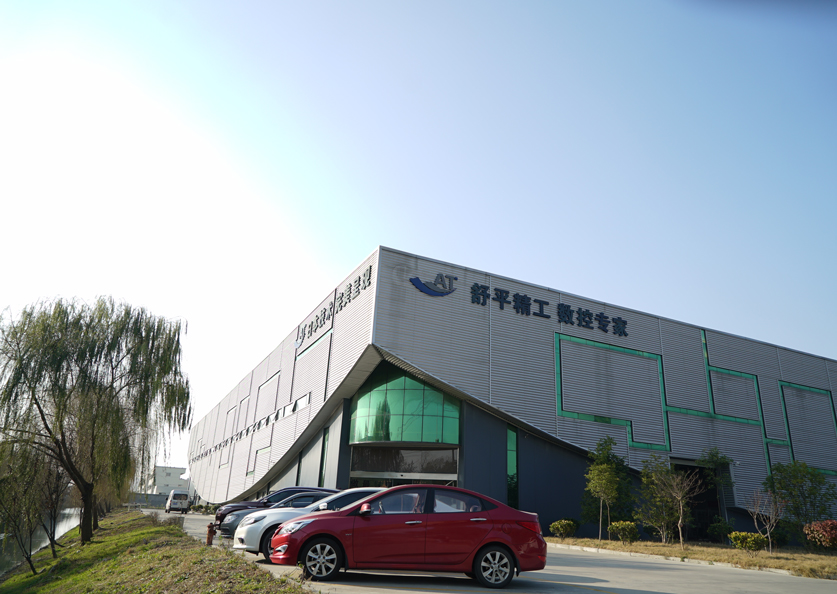
The global industrial packaging machinery market surpassed $42 billion in 2024, with export-oriented manufacturing sectors — wood products, furniture, building materials, and engineered panels — accounting for the fastest-growing segment. Rising labor costs across Southeast Asia, Eastern Europe, and China's Yangtze River Delta have accelerated capital investment in automatic packing systems as manufacturers seek to protect export margin.
China alone exports over $180 billion in furniture and wood products annually, with a growing proportion of shipments requiring automated packaging to meet the specification requirements of European and North American retail chains. Buyers increasingly mandate machine-packed, individually bar-coded cartons with consistent compression levels as a supplier qualification criterion.
The convergence of e-commerce fulfillment requirements — smaller, more frequent export shipments with zero-damage expectations — has further amplified demand for flexible automatic packing machines capable of handling varied SKU dimensions on a single production line without time-consuming manual changeovers.
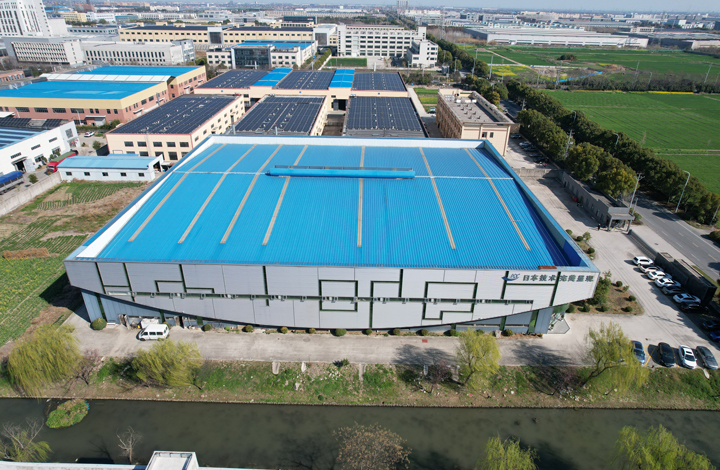
For manufacturers exporting to markets such as the EU, USA, Australia, and the Middle East, packaging is no longer a purely logistical concern — it is a direct commercial differentiator. Buyers conducting factory audits now evaluate packing line automation as part of supplier capacity assessment, treating it as a proxy for overall production maturity.
Manufacturers operating manual packing lines routinely face 3–8% damage claims on ocean freight consignments, a cost that compounds with insurance premiums, re-work labor, and replacement shipment lead times. Transitioning to automatic packing machines with servo-controlled tension and integrated foam-corner insertion systems consistently brings damage rates below 0.5%, transforming the packing department from a cost center into a competitive asset.
Furthermore, export customs compliance — particularly fumigation and ISPM 15 phytosanitary requirements for wood packaging — is more reliably managed through automated packing lines that generate machine-readable compliance records, reducing customs hold incidents by up to 70% in documented case studies.
Decades of precision manufacturing excellence, validated by real production metrics that matter to export buyers.
The next generation of export packing automation is being shaped by AI, IoT, sustainable materials, and hyper-flexible line architecture.
Machine learning algorithms now analyze product dimensions in real time to compute optimal wrap patterns, film usage, and cushioning placement — reducing consumable waste by 18–25% per export shipment while improving pack integrity scores.
Cloud-connected automatic packers transmit production data — units packed, film consumption, downtime events, and QC flags — to factory MES and ERP platforms, providing export manufacturers with real-time OEE visibility across global production sites.
Growing regulatory pressure from the EU Packaging and Packaging Waste Regulation (PPWR) is driving adoption of bio-degradable stretch films and reduced-gauge high-strength films compatible with modern automatic packing machines — a key export compliance requirement by 2030.
Next-generation automatic packing machines handle 200mm to 3000mm product widths on a single servo-driven line, eliminating dedicated lines per SKU — critical for export manufacturers supplying multiple product categories to different geographic markets simultaneously.
Inline camera systems now scan every packed unit for label position, wrap completeness, and surface defects before palletizing, generating export-compliant inspection records automatically — replacing end-of-line manual QC checkpoints with zero human latency.
From wood door factories to panel furniture OEM plants — automatic packing machines are transforming how export manufacturers prepare goods for global trade.
Wood door factories exporting to Europe and North America demand packing lines that handle flush doors, moulded doors, and fire-rated doors with identical cycle times. Automatic packing machines with PLC-controlled corner inserters and stretch-hood systems eliminate the scuffs and edge dents that trigger buyer claims, while generating ISPM 15 compliance documentation for every pallet.
Flat-pack furniture OEM suppliers for global brands require automatic packing lines capable of handling mixed board sizes — from 300×300mm drawer panels to 2400×600mm wardrobe side panels — in a single uninterrupted flow. Auto-sensing width detection and servo-adjusted wrapping arms enable tool-free format changes between SKUs, supporting just-in-time export scheduling without line stoppages.
Engineered flooring, LVT, and building panel exporters face the dual challenge of moisture protection and compression resistance over long sea voyages. Automatic packing machines with multi-layer stretch-film application and integrated humidity-indicator label insertion address both requirements, while high-speed throughput — up to 12 packs per minute — keeps pace with panel press and lamination line output.
Window and door frame exporters deal with irregular profiles requiring custom foam insertion and multi-point taping — traditionally labor-intensive tasks. Automatic packing systems equipped with programmable foam-profile applicators and self-adhesive tape heads replicate complex manual pack sequences at machine speed, cutting per-unit packing time from 4 minutes to under 45 seconds.
Cabinet manufacturers supplying to Oppein, Sofia, and similar brands operating at export scale process thousands of board variants per day. Integrated automatic packing lines connected to the upstream CAT PNC intelligent control system read QR codes directly from machined panels to auto-select pack specifications — zero operator intervention, zero mismatch between product and packaging format.
The rapid growth of B2C cross-border e-commerce — Amazon FBA, Wayfair, Lazada — has created demand for export-pack machines capable of handling individual parcel-sized units at high volume with retailer-specific label compliance. Automatic packing machines with integrated weigh-and-measure stations and API connectivity to logistics platforms enable direct export fulfillment without third-party repackaging.
The technology partner behind precision-engineered automatic packing machines for global export manufacturing.
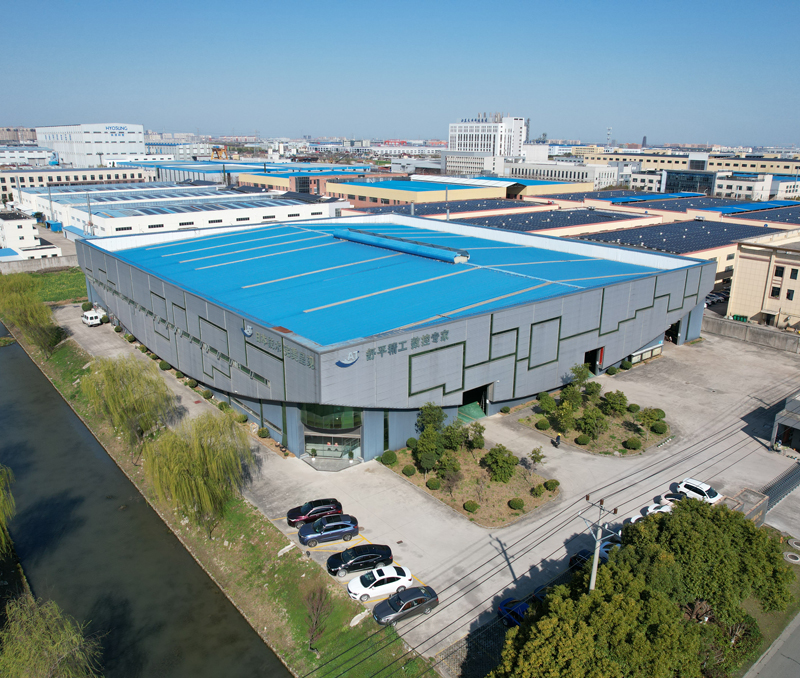
Shanghai Shuping Precision Machinery Co., Ltd. is a well-established Sino-Japanese joint venture. Its core manufacturing base is Shuping Precision Machinery (Nantong) Co., Ltd., which commenced full-scale production in 2017 and occupies a total floor area exceeding 13,000 square meters.
Since its establishment in 1995, the company has consistently focused on the R&D, production, sales, and service of CNC woodworking machinery, dedicated to providing the global woodworking industry with intelligent solutions that are "faster, more precise, more accurate, and more economical."


Our technological heritage originates from Japan. Over a fifteen-year period, the company provided OEM manufacturing services for renowned Japanese enterprises, gaining profound expertise in precision machining techniques originating from Matsuhama, Japan in the 1970s.
Building upon this foundation, we established our proprietary brand CAT Shanghai in 2010 and simultaneously founded the CAT JAPAN R&D Center in Japan, ensuring our core technologies remain at the forefront of global innovation.
This Japanese-rooted engineering DNA is embedded into every automatic packing machine and CNC processing system we deliver — translating directly into the micron-level repeatability and long-term reliability that export manufacturers worldwide depend on.
In 2017, the modern production base in Nantong, located within the Jiangsu Hai'an Economic and Technological Development Zone, officially commenced operations, marking the company's entry into a new phase of large-scale, intelligent development.
Leveraging this advanced manufacturing platform, we assembled an elite technical team comprising experts in electrical engineering, software, design, and process technology. We have accumulated over 52 nationally accepted and authorized patents, comprehensively covering the entire spectrum of wood door and panel furniture processing machinery.
Our independently developed PNC intelligent control system enables direct QR code scanning and automatic path optimization, transforming complex machining into simple, efficient operations — and providing seamless upstream data integration for connected automatic packing lines.

Trusted by hundreds of industry leaders across China and global export markets — production metrics that speak for themselves.
It is precisely this relentless pursuit of technology that has earned Shuping Precision Engineering widespread market recognition. Our production lines achieve exceptional efficiency — 680 wooden doors per day with a three-person shift — alongside 0.01mm-level machining precision, significantly boosting clients' production capacity while reducing labor costs.
Today, hundreds of industry leaders — including Jiangshan Oppein, TATA Wooden Doors, Sofia Home Furnishings, Kendiya Wooden Doors, and Country Garden Modern Home Furnishings — have established long-term partnerships with Shuping Precision Machinery, with our products gaining continuous acclaim within the sector.
Talent is the fundamental driving force behind corporate development. We place high importance on human resource development and cultivation, establishing a scientific and systematic training and incentive mechanism to continuously stimulate team innovation. This lays a solid foundation for the company's sustained growth and internationalization strategy.
Eight specialized systems covering every export packing application — from single-board wrapping to full pallet stretch-hood automation.

Entry-level automatic wrapping system for straight-edge panel export; 8 packs/min, compatible with PE and LLDPE stretch films.
View Details →
Profile-sensing frame packer with auto foam-corner insertion; reduces manual packing labor by 80% on door frame export lines.
View Details →
QR-code triggered auto pack-spec selection; integrates directly with PNC intelligent control for zero-error cabinet board export batching.
View Details →
Multi-layer moisture-barrier film applicator for engineered flooring export; servo-tension control ensures zero-slip wrap integrity over long sea voyages.
View Details →
High-speed flat-pack furniture board packer; handles 200–2600mm width range on a single servo-driven line with tool-free format changeover.
View Details →
Programmable foam-profile applicators and self-adhesive tape heads handle complex window profile pack sequences at 45 sec/unit — vs. 4 min manual.
View Details →
AI-driven vision system auto-detects SKU dimensions and selects pack program in under 0.3 seconds; ideal for OEM plants exporting multiple product categories simultaneously.
View Details →
Full-automatic stretch-hood palletizer for pallet-level export packaging; IoT-connected OEE dashboard, CE certified, ISPM 15 documentation output as standard.
View Details →Like the rising sun, Shuping Precision Engineering advances with vigorous vitality and steady strides, continuously enhancing its capabilities while flexibly adapting to market shifts. We look forward to partnering with global clients to jointly pioneer a new chapter in intelligent woodworking manufacturing through continuously innovative products and services.
Contact Us