

 +86-18020396629

Leave Your Message
-
CONTACT NUMBER
-
 CONTACT NUMBER
-

Engineered for high-volume environments, our flagship automatic packing machines deliver unmatched speed, repeatability, and smart integration — the backbone of modern industrial mass production.

Designed for continuous multi-shift mass production, ensuring consistent output with minimal human intervention.
View Details →
Combines 0.01mm-level accuracy with rapid cycle times — ideal for panel furniture and door component packaging.
View Details →
IoT-enabled smart packing systems with QR code scanning and automatic path optimization for seamless workflow.
View Details →
Flexible modular architecture adapts to diverse product sizes and packaging formats across mass production scenarios.
View Details →The global automatic packaging machinery market is undergoing a seismic transformation. Valued at over USD 60 billion in 2023 and projected to exceed USD 95 billion by 2030, the sector is driven by the convergence of labor cost pressures, accelerating e-commerce logistics, and relentless demand for throughput consistency across consumer goods, food & beverage, pharmaceuticals, electronics, and industrial components.
In mass production environments, packing is no longer a peripheral afterthought — it is a core constraint on factory output rates. A bottleneck in the packing station directly translates to reduced yield, delayed shipment cycles, and inflated per-unit labor costs. Automatic packing machines are now mission-critical infrastructure in any serious manufacturing facility targeting competitiveness in both domestic and export markets.
🏭 Factories that integrate fully automated packing lines consistently report 35–60% reductions in packing labor costs and throughput improvements of 2–4× versus manual operations at equivalent quality levels.
From micro-electronics to large-format wood panels, automatic packing delivers measurable gains across every key performance indicator in a production environment.
Modern automatic packing machines can process hundreds to thousands of units per hour, maintaining synchronization with upstream CNC and assembly processes without manual buffering.
Precision servo-driven systems achieve positioning accuracy at the 0.01mm level, eliminating dimensional inconsistency that causes downstream defects and customer complaints.
Integrated PNC intelligent control systems scan QR codes and automatically compute optimal packing paths, reducing operator skill dependency and setup changeover time.
Designed for plug-in compatibility with existing conveyor, labeling, inspection, and ERP systems — enabling true end-to-end digital manufacturing continuity.
A three-person shift achieving 680 packed units per day versus conventional multi-operator arrangements demonstrates the direct labor ROI available to manufacturing operators.
Automated systems apply standardized force, torque, and alignment across every pack cycle — a prerequisite for ISO compliance, retailer audits, and export certification.
The industry is moving fast. Manufacturers who understand these macro-trends will be best positioned to capitalize on next-generation packing automation investments.
Camera-based defect detection, label verification, and fill-level inspection are now embedded directly into packing stations. AI inference engines running at the edge can reject non-conforming units in real time — with zero reduction in line speed.
Smart packing machines transmit OEE (Overall Equipment Effectiveness), cycle counts, and fault codes to cloud dashboards, giving plant managers live visibility from any device. Predictive maintenance algorithms reduce unplanned downtime by up to 40%.
Regulatory pressure and brand sustainability commitments are accelerating adoption of machines that handle recyclable, bio-based, and right-sized packaging formats — dynamically adjusting pack dimensions to minimize material waste at scale.
Cobot-assisted packing cells are bridging the gap between fully manual and fully automated operations. These lightweight, easily reconfigured systems are particularly valuable for SKU-diverse mass production runs with frequent format changes.
Leading manufacturers in Asia and Europe are pushing toward fully autonomous "dark factories" where packing lines operate around the clock without human presence, enabled by robust automatic packing machinery and digital twin simulation platforms.
Automatic packing machines now integrate QR code printing, scanning, and RFID encoding as standard — creating serialized traceability records from production line to end consumer, a critical requirement for pharmaceuticals, food safety, and premium goods.
Across industries, the integration of automatic packing into mass production lines is unlocking competitive advantages that purely manual operations simply cannot replicate.
High-volume door factories running 680+ units per day per shift rely on precision automatic packing to maintain product integrity during stacking, strapping, and transit — eliminating surface damage and mis-pack defects common in manual workflows.
Stringent GMP and FDA compliance requirements demand automated tamper-evidence, serialization, and cleanroom-compatible packing lines capable of zero-defect output at speeds exceeding 400 packs per minute.
From ready-meal trays to beverage multipacks, automatic packing handles modified atmosphere sealing, weight check integration, and date coding at throughputs unachievable by any manual team — a core enabler for food retail compliance.
ESD-safe automated packing lines for PCBs, displays, and assembled devices combine robotic pick-and-place with vision-guided insertion — protecting sensitive components while maintaining sub-second cycle times.
Brands like Sofia Home Furnishings and Oppein operate large-scale packing lines where automatic machinery bundles, wraps, and labels complete furniture sets for container loading — reducing dock-to-ship time by hours per order.
Heavy, dimensionally variable products such as flooring planks, tiles, and profiles present unique packing challenges met by robust automatic systems with servo-controlled compression, banding, and palletizing modules.
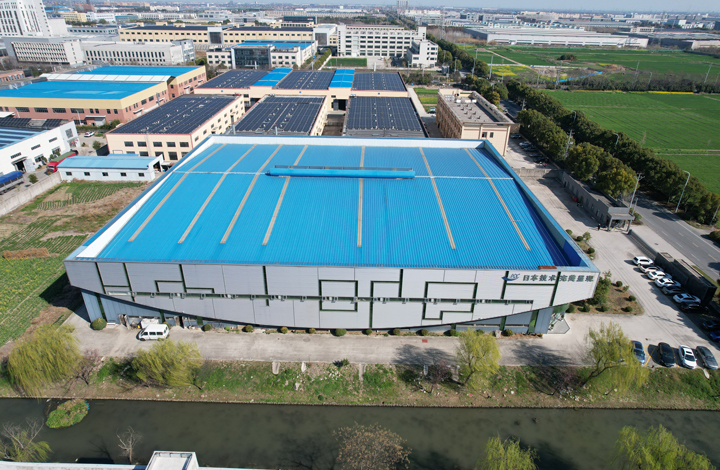
Welcome To Learn About Our Company
Our technological heritage originates from Japan. Over a fifteen-year period, the company provided OEM manufacturing services for renowned Japanese enterprises, gaining profound expertise in precision machining techniques originating from Matsuhama, Japan in the 1970s. Building upon this foundation, we established our proprietary brand CAT Shanghai in 2010 and simultaneously founded the CAT JAPAN R&D Center in Japan, ensuring our core technologies remain at the forefront of global innovation.
This deep-rooted Japanese precision philosophy — obsessive tolerance control, disciplined process engineering, and zero-compromise quality culture — is exactly what separates our automatic packing machines from commodity alternatives in a crowded market.


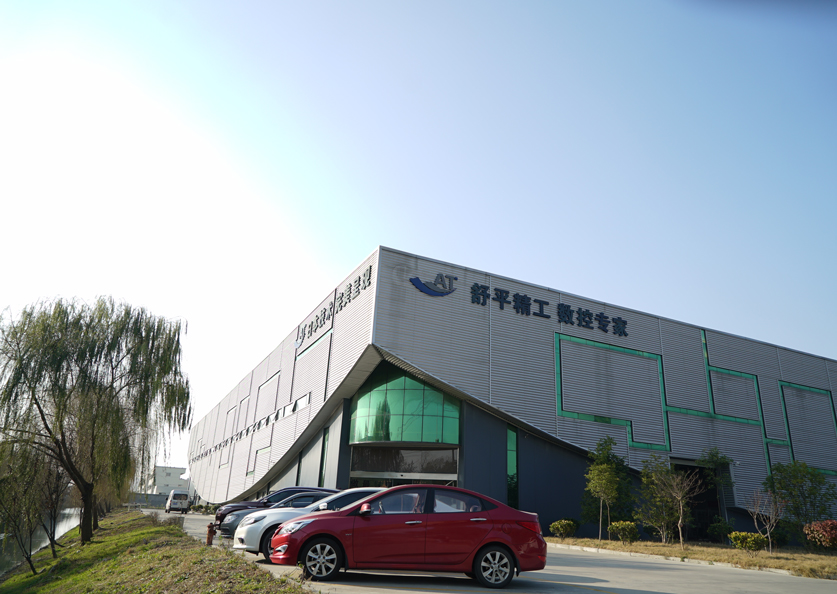
Shanghai Shuping Precision Machinery Co., Ltd. is a well-established Sino-Japanese joint venture. Its core manufacturing base is Shuping Precision Machinery (Nantong) Co., Ltd., which commenced full-scale production in 2017 and occupies a total floor area exceeding 13,000 square meters. Since its establishment in 1995, the company has consistently focused on the R&D, production, sales, and service of CNC woodworking machinery, dedicated to providing the global woodworking industry with intelligent solutions that are "faster, more precise, more accurate, and more economical."
It is precisely this relentless pursuit of technology that has earned Shuping Precision Engineering widespread market recognition. Our production lines achieve exceptional efficiency — 680 wooden doors per day with a three-person shift — alongside 0.01mm-level machining precision, significantly boosting clients' production capacity while reducing labor costs.
Today, hundreds of industry leaders — including Jiangshan Oppein, TATA Wooden Doors, Sofia Home Furnishings, Kendiya Wooden Doors, and Country Garden Modern Home Furnishings — have established long-term partnerships with Shuping Precision Machinery, with our products gaining continuous acclaim within the sector.
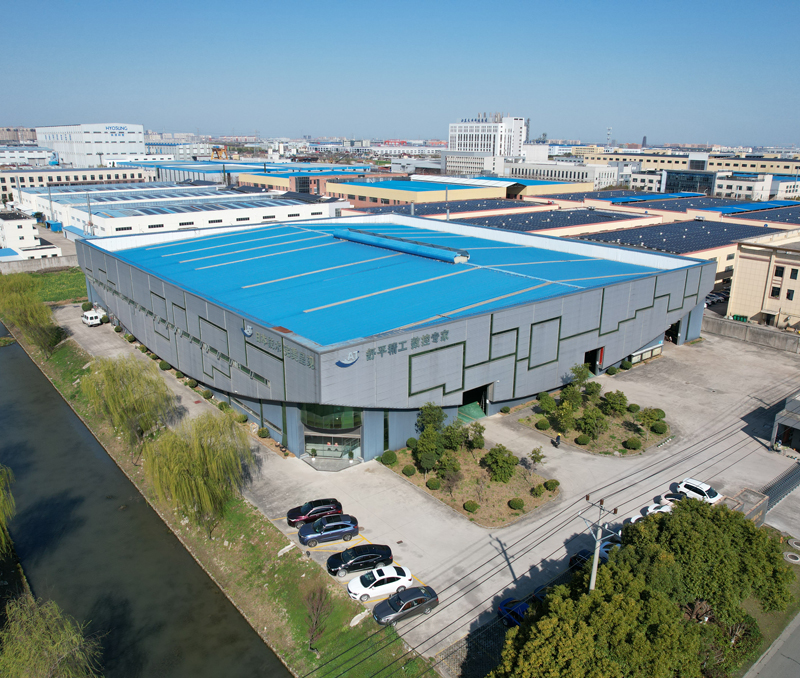

In 2017, the modern production base in Nantong, located within the Jiangsu Hai'an Economic and Technological Development Zone, officially commenced operations, marking the company's entry into a new phase of large-scale, intelligent development. Leveraging this advanced manufacturing platform, we assembled an elite technical team comprising experts in electrical engineering, software, design, and process technology.
We have accumulated over 52 nationally accepted and authorized patents, comprehensively covering the entire spectrum of wood door and panel furniture processing machinery. Our independently developed PNC intelligent control system enables direct QR code scanning and automatic path optimization, transforming complex machining into simple, efficient operations.
💡 The PNC system represents a fundamental shift: operators no longer need deep programming expertise. A simple QR scan at the machine triggers a fully optimized, machine-ready operation sequence.
Talent is the fundamental driving force behind corporate development. We place high importance on human resource development and cultivation, establishing a scientific and systematic training and incentive mechanism to continuously stimulate team innovation. This lays a solid foundation for the company's sustained growth and internationalization strategy.
Explore our comprehensive lineup of automatic packing machines — each engineered for specific mass production requirements across diverse industrial applications.

Multi-axis servo control for adaptive mass production packing across variable product dimensions.
View Details →
Dust and contamination-resistant design for cleanroom-adjacent mass production packing environments.
View Details →
Space-optimized footprint for factories where floor space is at a premium without sacrificing throughput.
View Details →
Built for oversized or heavy components — structural steel frame construction rated for continuous industrial duty.
View Details →
Parallel processing stations maximize throughput per square meter in dense mass production layouts.
View Details →
6-axis robotic integration handles irregular geometries and complex pack orientations autonomously.
View Details →
Zero-gap integration with CNC and conveyor upstream systems for frictionless high-volume production flows.
View Details →
Integrated QR/barcode print-and-apply packing systems for full serialized traceability in mass production.
View Details →Like the rising sun, Shuping Precision Engineering advances with vigorous vitality and steady strides, continuously enhancing its capabilities while flexibly adapting to market shifts. We look forward to partnering with global clients to jointly pioneer a new chapter in intelligent woodworking manufacturing through continuously innovative products and services.
Whether you are evaluating your first automatic packing machine for mass production or scaling to a multi-line intelligent factory, our engineering team is ready to design a solution tailored to your exact throughput, precision, and budget requirements.