

 +86-18020396629




High-efficiency automated packaging systems engineered for wood door, panel furniture, and CNC woodworking production environments.


The woodworking industry has entered a pivotal era of transformation. Rising labor costs, tighter delivery windows, increasingly complex product variations, and surging global demand for customized furniture and architectural joinery are collectively pushing manufacturers to rethink every step of their production chain — including packaging. For woodworking shops of all sizes, the question is no longer whether to automate packaging, but how quickly they can do so to stay competitive.
An automatic packing machine for woodworking shops is purpose-built to handle the unique challenges that wood products present: irregular surface textures, weight variations, moisture sensitivity, and the need to protect precision-machined edges and finishes throughout storage and transit. Unlike generic industrial packers, wood-oriented automatic packaging systems integrate material-specific film tension control, edge-safe clamping mechanisms, and programmable wrapping recipes to ensure every panel, door slab, or molded component leaves the line fully protected.
Advanced automatic packing lines in modern woodworking facilities can process 600–800 wood door panels per shift with only 2–3 operators, achieving packaging consistency rates above 99.5% — figures impossible to reach with manual methods.
Global wood product output continues to expand. According to industry projections, the panel furniture and engineered wood door segments are forecast to grow at a CAGR of 5.8% through 2030, driven by urbanization in Southeast Asia, the Middle East, and South America. As production volumes scale, packaging bottlenecks become increasingly costly — unpackaged or poorly packaged finished goods account for up to 12% of damage-related losses in furniture supply chains, a figure that automated packing technology directly addresses.
Labor market pressures compound the urgency. In China's Jiangsu and Guangdong manufacturing belts, workshop labor costs have tripled over the past decade. European and North American woodworking SMEs face even steeper wage inflation. Automatic packaging systems deliver a typical ROI within 18–30 months through direct labor displacement and reduction in product damage claims — making them one of the highest-return capital investments available on the shop floor today.
Meanwhile, sustainability regulations in the EU and increasingly in North America are pushing producers toward leaner, more consistent packaging footprints. Automated systems reduce film consumption by 15–25% compared with manual wrapping through precision tension control and optimized overlap algorithms, directly helping manufacturers meet environmental procurement criteria from major retail and construction clients.
Adoption of automatic packing technology across the woodworking sector is uneven but accelerating. Large-scale integrated manufacturers — those producing wood doors, custom cabinets, and panel furniture under one roof — have led investment in fully automated end-of-line packaging, often integrating packing machines directly into PLC-controlled conveyor systems connected upstream to CNC machining centers and edge banders.
Mid-size shops with daily outputs of 150–500 panels are the fastest-growing adoption segment. These operations typically deploy semi-integrated automatic wrapping or stretch-film systems that require minimal floor reconfiguration while delivering significant throughput gains. Compact footprint designs allow machines to be positioned immediately after quality inspection stations without redesigning existing layouts.
Small custom workshops are increasingly purchasing entry-level automatic packers with manual loading but automatic wrapping cycles, bridging the gap between purely manual packaging and full automation. This democratization of packing automation — driven by falling machine costs and flexible financing — means that even bespoke joinery shops can now protect their handcrafted products with the same consistency as a mass-production facility.
Machine-learning algorithms adjust film tension and overlap in real time based on product weight, surface texture, and ambient humidity — eliminating operator guesswork and reducing film tears by up to 40%.
Inline camera systems verify packaging integrity — detecting loose ends, punctures, or insufficient overlap — before products enter the warehouse, preventing damage during storage and transit.
Modern packers communicate packing counts, material consumption, and fault logs directly to factory MES and ERP platforms via OPC-UA or REST APIs, enabling real-time production dashboards and predictive maintenance alerts.
Next-generation machines are engineered to run biodegradable and recycled-content stretch films without sacrificing wrap tension or speed, supporting carbon-neutral supply chain commitments.
Automatic label applicators print and apply QR codes containing batch, specification, and destination data mid-wrap cycle — replacing manual labeling and supporting full traceability from production to delivery.
Collaborative robotic arms are increasingly paired with automatic packers to handle stacking, rotation, and pallet loading — forming fully lights-out packaging cells capable of 24/7 unattended operation.
From high-volume door factories to boutique custom workshops, automatic packaging adds measurable value across every production context in the woodworking sector.
Flush doors, fire-rated doors, and molded panel doors require edge protection and scratch-free surface preservation. Automatic stretch-film and PE-foam wrapping systems provide 360° coverage at speeds matching CNC machining outputs of 600+ units per shift.
Cabinet carcasses, wardrobe panels, and flat-pack furniture components benefit from bundled automatic wrapping that groups multiple parts per SKU, reducing warehouse space and simplifying downstream assembly at point-of-sale.
Long, narrow profiles such as architraves, skirting boards, and stair components present challenging geometry for packaging. Automatic edge-banding and co-extrusion wrap systems handle variable lengths up to 6m with consistent tension.
Flooring planks demand moisture barriers and scratch protection. Automatic shrink-wrap systems apply multi-layer film sequences that seal edges against humidity — critical for export shipments crossing multiple climate zones.
Complex routed and profiled CNC parts require gentle yet secure packaging. Vision-guided automatic packers detect component orientation and select the correct wrapping recipe from a digital library — eliminating setup changeover time.
Third-party logistics providers handling mixed wood product inventories use automatic re-packaging lines to standardize outbound pallet configurations, improving load stability and reducing transit damage claims by up to 30%.
Woodworking factories that integrate automatic packing machines report average labor cost savings of 65–75% in the packaging department, with product damage rates falling from an industry average of 3.2% to below 0.5% — a direct improvement to net margin and client satisfaction scores.
Choosing the optimal system requires a structured evaluation against your specific production profile. The following parameters should guide your procurement decision:
As global furniture and construction markets evolve, the ability to deliver products that arrive undamaged, accurately labeled, and professionally presented is no longer a differentiator — it is a baseline expectation. Woodworking shops that invest in intelligent automatic packing infrastructure today are building capabilities that extend far beyond packaging: they are creating digitally connected, data-rich production endings that feed quality analytics, reduce insurance claims, and enable premium pricing through verifiable product protection standards.
The convergence of IoT sensors, AI-driven process optimization, and increasingly affordable automation hardware means that the automatic packing machine of 2025 is a fundamentally different — and far more capable — asset than its predecessor from even five years ago. For forward-thinking woodworking businesses, it represents not a cost center but a strategic investment in operational excellence and customer trust.
Company Profile
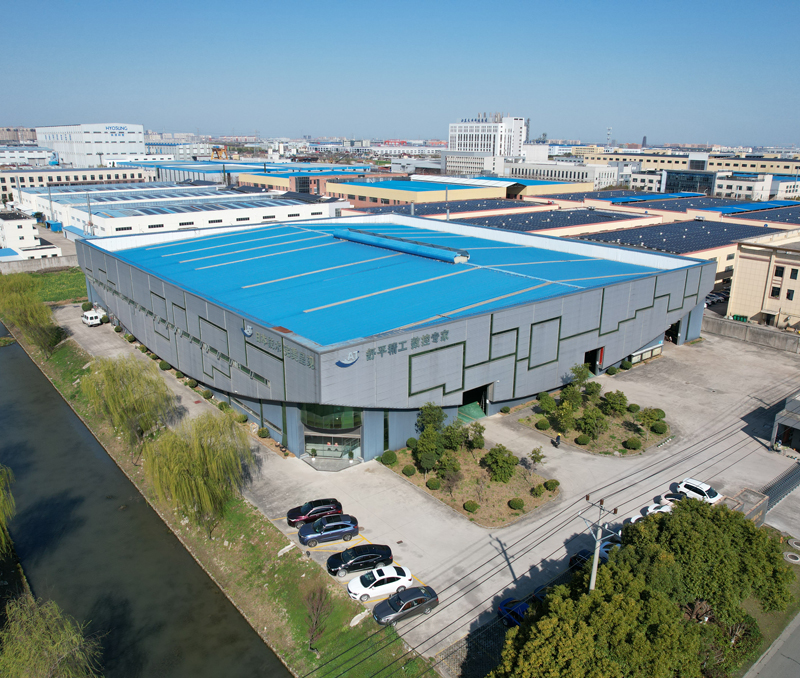
Shanghai Shuping Precision Machinery Co., Ltd. is a well-established Sino-Japanese joint venture. Its core manufacturing base is Shuping Precision Machinery (Nantong) Co., Ltd., which commenced full-scale production in 2017 and occupies a total floor area exceeding 13,000 square meters. Since its establishment in 1995, the company has consistently focused on the R&D, production, sales, and service of CNC woodworking machinery, dedicated to providing the global woodworking industry with intelligent solutions that are "faster, more precise, more accurate, and more economical."


Year Established — nearly three decades of dedicated CNC woodworking machinery innovation
Total manufacturing floor area at Nantong production base, Jiangsu
Nationally accepted and authorized patents covering wood door and panel furniture machinery
Shuping — Our Technological Heritage
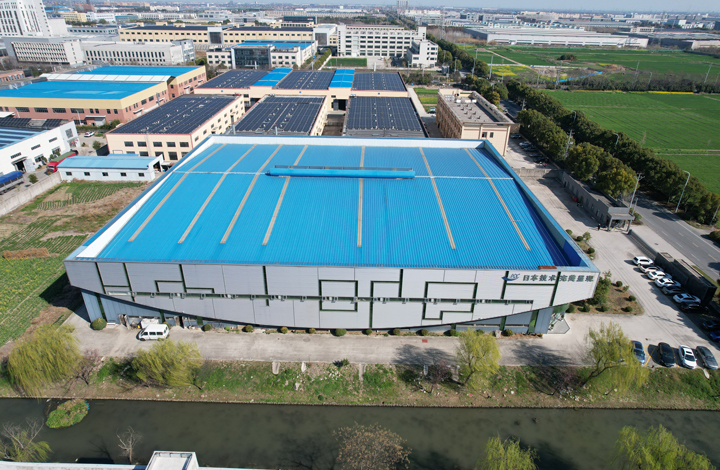
Our technological heritage originates from Japan. Over a fifteen-year period, the company provided OEM manufacturing services for renowned Japanese enterprises, gaining profound expertise in precision machining techniques originating from Matsuhama, Japan in the 1970s. Building upon this foundation, we established our proprietary brand CAT Shanghai in 2010 and simultaneously founded the CAT JAPAN R&D Center in Japan, ensuring our core technologies remain at the forefront of global innovation.

About Us — Large-Scale, Intelligent Development
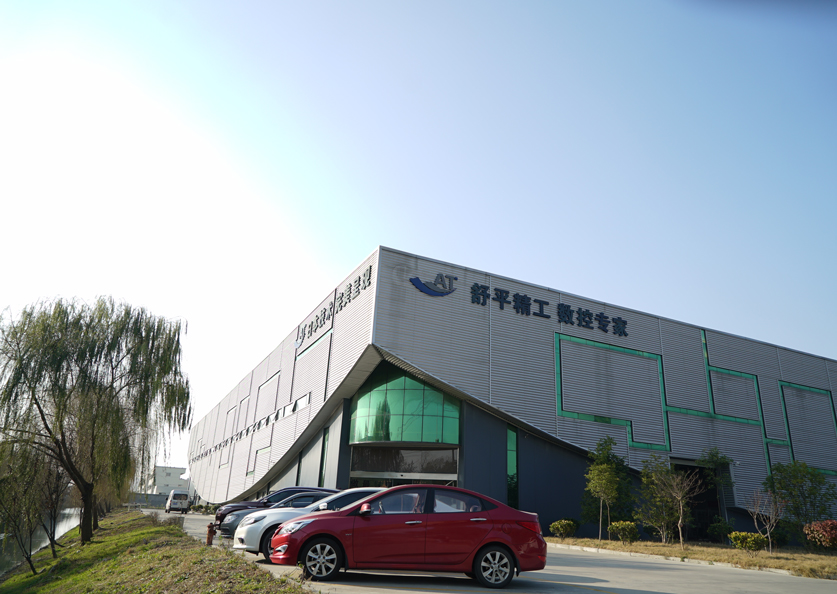
In 2017, the modern production base in Nantong, located within the Jiangsu Hai'an Economic and Technological Development Zone, officially commenced operations, marking the company's entry into a new phase of large-scale, intelligent development. Leveraging this advanced manufacturing platform, we assembled an elite technical team comprising experts in electrical engineering, software, design, and process technology.
We have accumulated over 52 nationally accepted and authorized patents, comprehensively covering the entire spectrum of wood door and panel furniture processing machinery. Our independently developed PNC intelligent control system enables direct QR code scanning and automatic path optimization, transforming complex machining into simple, efficient operations.
It is precisely this relentless pursuit of technology that has earned Shuping Precision Engineering widespread market recognition. Our production lines achieve exceptional efficiency — 680 wooden doors per day with a three-person shift — alongside 0.01mm-level machining precision, significantly boosting clients' production capacity while reducing labor costs. Today, hundreds of industry leaders — including Jiangshan Oppein, TATA Wooden Doors, Sofia Home Furnishings, Kendiya Wooden Doors, and Country Garden Modern Home Furnishings — have established long-term partnerships with Shuping Precision Machinery, with our products gaining continuous acclaim within the sector.
Talent is the fundamental driving force behind corporate development. We place high importance on human resource development and cultivation, establishing a scientific and systematic training and incentive mechanism to continuously stimulate team innovation. This lays a solid foundation for the company's sustained growth and internationalization strategy.
Shuping's integrated automatic packaging and CNC machining solutions enable clients to achieve throughput levels that redefine industry benchmarks — with precision held to 0.01mm tolerances throughout the entire production and packaging chain.
Explore our comprehensive lineup of intelligent packaging systems designed for every woodworking production requirement.


Like the rising sun, Shuping Precision Engineering advances with vigorous vitality and steady strides, continuously enhancing its capabilities while flexibly adapting to market shifts. We look forward to partnering with global clients to jointly pioneer a new chapter in intelligent woodworking manufacturing through continuously innovative products and services.
Contact Us