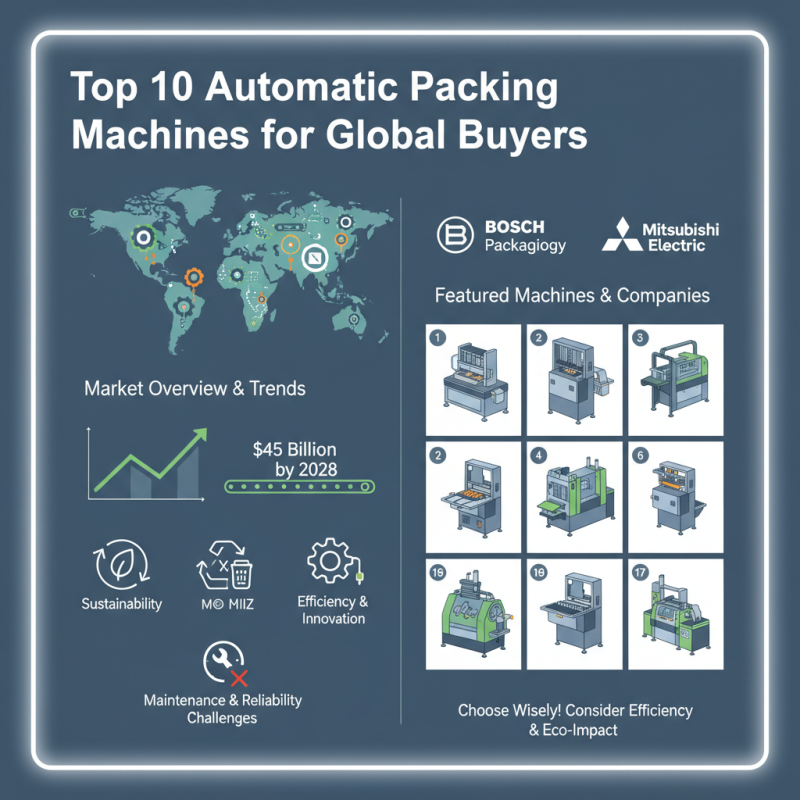
Hey, have you noticed how everyone's talking about the skyrocketing demand for automatic packing machines lately? It’s pretty wild — according to a recent report from Grand View Research, the market’s expected to hit around 45 billion bucks by 2028. Crazy, right? It kind of makes sense though, given how much more companies are pushing for faster, more efficient packing processes across all kinds of industries. Big names like Bosch Packaging and Mitsubishi Electric are really setting the bar high with their innovative tech.
One thing that’s pretty clear now is that sustainability is becoming a major focus. Many of these machines are being designed to cut down on waste and use eco-friendly materials — which is a huge step, especially with so many stricter environmental rules coming into play. When we’re looking at the top ten automatic packing machines, it’s not just about how well they perform, but also about their impact on the planet.
Of course, it’s not all smooth sailing. Some of these machines need more maintenance, which can cause unexpected downtime — nobody wants that. So, finding the right balance between cutting-edge features and reliability is still a bit of a challenge. At the end of the day, businesses need to really think about their specific needs before choosing the perfect automatic packing machine. It’s all about making sure they’re getting efficiency without sacrificing too much on reliability or environmental concerns.
Overview of Automatic Packing Machines in the Global Market
The global market for automatic packing machines has grown significantly. These machines enhance efficiency and reduce human error. They are essential in various industries, from food packaging to electronics. Key factors driving this demand include the need for consistent quality and speed in production.
Tips: Consider automation levels carefully. Not all industries require the same technology. Assess your production scale and product type before investing.
Moreover, the integration of advanced technologies like AI can optimize packing processes. An Automatic Labeling Machine offers precision in labeling products, ensuring compliance with regulations. However, cost considerations and ongoing maintenance are important. You should not overlook them when choosing a machine.
Tips: Review the total cost of ownership. It goes beyond just the purchase price. Training for staff is often a hidden cost that impacts overall efficiency.
Key Features to Consider When Choosing an Automatic Packing Machine
When selecting an automatic packing machine, several key features should be on your radar.
Speed is crucial; machines need to pack items quickly to keep up with production lines.
A speed of 20-30 packages per minute is common among efficient models. However, too much speed can reduce packing accuracy.
Balancing these factors is key for optimal performance.
Another important aspect is versatility. An ideal automatic packing machine should handle various product types and sizes.
This flexibility allows businesses to adapt to changing demands. Many machines come with adjustable settings,
which can be beneficial as needs evolve. Also, consider user-friendly interfaces.
A simple control panel is essential for quick adjustments. Complex systems may lead to operator errors and downtime.
Durability cannot be overlooked. Machines should withstand regular use without frequent breakdowns.
Look for models made from high-quality materials that promise longevity. Reliability in packing processes minimizes losses and enhances productivity.
Choosing a machine with proper maintenance documentation helps ensure ongoing support. Lastly, safety features are vital.
Automatic packing machines must meet safety standards to protect your team. A machine lacking appropriate safety measures may cause injuries or accidents in the workplace.
Top 10 Automatic Packing Machines: Performance and Reliability Analysis
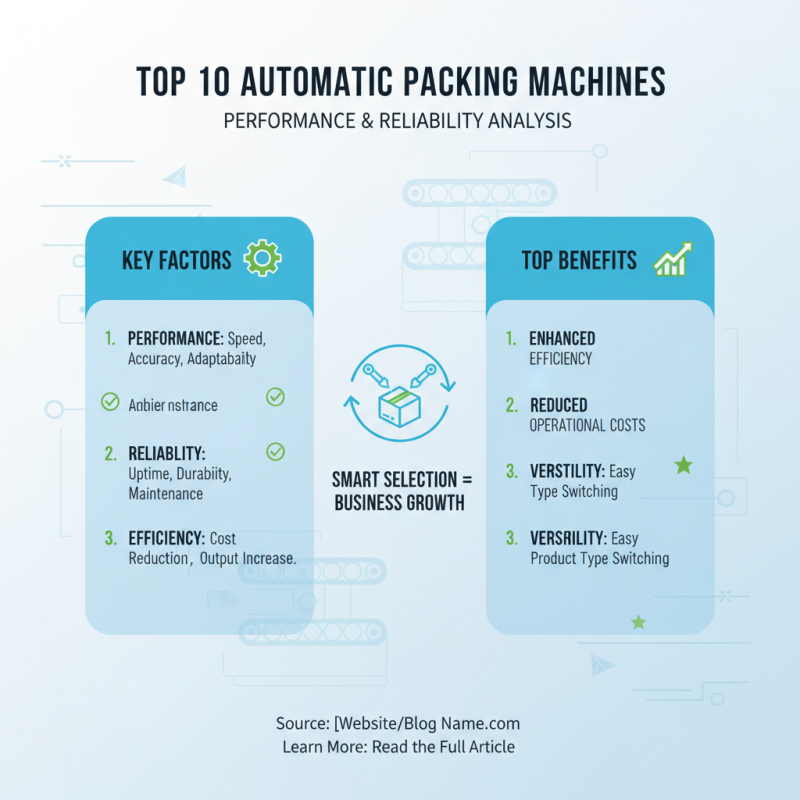
When selecting automatic packing machines, performance and reliability are crucial factors. The right machine can significantly enhance efficiency and reduce operational costs. Analyzing various models reveals differences in speed, accuracy, and adaptability. Machines that can easily switch between different packaging types are particularly valuable for businesses with diverse product lines.
Durability is another important aspect. Some machines face frequent breakdowns, leading to costly downtimes. Regular maintenance schedules can mitigate these issues. Users often overlook the importance of training staff to operate these machines efficiently. Improper handling can lead to errors, decreasing reliability.
Finding the optimal balance between cost and features requires careful research. Some machines may offer advanced capabilities but at a higher price. Conversely, budget-friendly options might lack critical functions. Therefore, businesses should assess their specific needs before making a purchase. It might be worth investing more in machines with proven track records, even if they appear expensive initially. This choice can lead to better reliability and long-term savings.
Cost-Effectiveness: Price Comparison of Leading Automatic Packing Machines
When selecting an automatic packing machine, cost-effectiveness is crucial. Many buyers often overlook this factor. Understanding the price range of different models is essential. Prices can vary widely. Some machines may seem affordable but lack durability. Others may offer advanced features at a premium cost.
Take time to compare features beyond the initial price tag. Performance and reliability must be evaluated alongside cost. A cheaper machine may lead to higher maintenance costs over time. Similarly, the value of extra features can justify a higher price. Key features to consider include speed, efficiency, and ease of use.
Seeking expert opinions can help, too. Reading reviews from reputable sources provides insights. It’s important to look for machines with robust support and warranty options. This reflects the manufacturer’s commitment to quality. Investing in an automatic packing machine should be based on informed decisions, similar to choosing an Automatic Door Lock for its security and reliability.
Top 10 Automatic Packing Machines - Cost-Effectiveness Comparison
This chart displays the cost-effectiveness of the top 10 automatic packing machines based on their price and efficiency ratings.
Market Trends: Innovations in Automatic Packing Technology
Automatic packing technology is evolving rapidly. Manufacturers are increasingly adopting innovative solutions that enhance efficiency and reduce production costs. One notable trend is the integration of artificial intelligence in packing machines. This technology allows for real-time data analysis, enabling machines to adjust settings dynamically. Such advancements ensure that products are packed in an optimal way, minimizing waste and enhancing overall productivity.
Moreover, sustainability is a growing concern in the packaging industry. Companies are focusing on eco-friendly materials and processes. New machines can work with biodegradable films and recycled materials. This shift not only meets consumer demand but also helps brands improve their environmental impact. However, many businesses still grapple with the transition. Adapting to new technologies can be challenging and costly.
While these innovations promise significant improvements, they also require careful implementation. The learning curve can be steep for staff. Training is essential for maximizing the benefits of these advanced machines. Balancing between speed and quality remains a critical area of reflection for producers worldwide. As the industry progresses, finding the right solutions will be key.
Top 10 Automatic Packing Machines for Global Buyers
| Machine Type |
Max Speed (Packages/min) |
Power Consumption (kW) |
Main Material |
Weight (kg) |
Price Range (USD) |
| Vertical Form Fill Seal |
100 |
2.5 |
Stainless Steel |
150 |
$15,000 - $25,000 |
| Horizontal Flow Wrapper |
120 |
3.0 |
Aluminum |
200 |
$20,000 - $30,000 |
| Carton Sealing Machine |
80 |
1.5 |
Metal |
250 |
$6,000 - $10,000 |
| Bottle Packaging Machine |
150 |
4.0 |
Plastic |
300 |
$25,000 - $40,000 |
| Pouch Filling Machine |
90 |
2.0 |
Stainless Steel |
180 |
$12,000 - $18,000 |
| Stretch Wrapper |
70 |
2.2 |
Metal |
260 |
$8,000 - $15,000 |
| Case Packing Machine |
110 |
3.5 |
Stainless Steel |
220 |
$18,000 - $28,000 |
| Labeling Machine |
200 |
1.8 |
Plastic |
150 |
$10,000 - $16,000 |
| Automated Box Erector |
60 |
2.7 |
Metal |
280 |
$14,000 - $22,000 |
| Wrapping Machine |
130 |
3.3 |
Plastic |
220 |
$12,500 - $20,000 |
Applications: Industries Benefiting from Automatic Packing Machines
Automatic packing machines are revolutionizing various industries, enhancing efficiency and precision. The food and beverage sector is one of the largest beneficiaries. According to a recent industry report, over 70% of food manufacturers now utilize automated packing solutions. These machines streamline processes, reduce waste, and improve product safety.
In pharmaceuticals, automatic packing machines play a crucial role. They ensure that products are packaged under strict sanitary conditions. A survey indicates that nearly 65% of pharmaceutical companies have adopted this technology to meet regulatory compliance and enhance traceability. However, the initial costs can be daunting for smaller manufacturers, leading some to reconsider their investments.
E-commerce also sees significant benefits from these machines. With consumer demand for fast shipping rising, automated packing helps businesses keep pace. Reports show that companies using these solutions can pack orders up to 50% faster. However, transitioning to automation requires careful planning. There is always a risk of operational disruptions during initial implementation phases, highlighting the need for a well-considered approach in adoption.
Future Prospects: The Evolution of Automatic Packing Machines in Logistics
The evolution of automatic packing machines in logistics signifies a pivotal shift toward efficiency and speed. These machines are now capable of handling diverse products with precision. They streamline the packing process, significantly reducing manual labor. As industries continue to expand globally, the demand for reliable packing solutions rises. Logistics experts suggest that innovation is key to staying competitive.
Tips: Consider the size and type of products to ensure compatibility with packing machines. Incorrect specifications can lead to inefficient packing processes. Regular maintenance of machines is essential. It ensures long-term functionality and reliability.
Automation is not without its challenges. Companies face issues related to integration with existing systems. The learning curve for staff can also hinder the transition. It is vital to invest in training programs that facilitate effective use of these machines. Future advancements in technology, including AI, may offer solutions. They can optimize packing operations even further. The market is continuously evolving. Adopting new technologies will likely become necessary for staying relevant. The role of Automatic Door Latches in these systems exemplifies the importance of innovative mechanisms for enhanced security and performance.
FAQS
: Look for performance, reliability, speed, and adaptability to various packaging types.
Regular maintenance is critical. Schedule routine checks to prevent breakdowns and costly downtimes.
Yes, improper handling can lead to errors. Training helps maximize effectiveness and maintain reliability.
Not necessarily. Assess specific needs. Sometimes, a cheaper machine incurs higher long-term maintenance costs.
Key features include speed, efficiency, and ease of use. These can significantly impact overall productivity.
Compare features and read reviews. Expert opinions provide valuable insights into reliability and performance.
Common issues include integration with existing systems and a steep learning curve for staff.
Extremely important. Adopting advancements can optimize operations and keep businesses competitive.
Incorrect specifications can lead to inefficient packing. Compatibility is key for optimal performance.
Future AI advancements may enhance efficiency and streamline packing processes even further.
Conclusion
The article "Top 10 Automatic Packing Machines for Global Buyers" provides a comprehensive overview of the current landscape of automatic packing machines in the global market. It highlights key features that buyers should consider when selecting an automatic packing machine, emphasizing factors such as performance, reliability, and cost-effectiveness. A detailed analysis of the top 10 machines showcases their capabilities, while a price comparison offers insights into the value proposition of leading models.
Additionally, the article discusses recent market trends, including innovations in automatic packing technology that enhance efficiency and adaptability across various industries. With applications spanning food and beverage, pharmaceuticals, and consumer goods, automatic packing machines are becoming increasingly integral to modern logistics. The piece concludes with a forward-looking perspective on the evolution of these machines, underscoring their importance in shaping the future of packaging and distribution.


 +86-18020396629

 CONTACT NUMBER