+86-18020396629

Leave Your Message
-
CONTACT NUMBER
-
 CONTACT NUMBER
-

High-precision CNC boring and machining centers designed for door, cabinet, and panel furniture manufacturers operating across Mexico's major industrial corridors.
Why Mexico's booming furniture and construction sectors are rapidly adopting advanced CNC boring technology to stay competitive in 2025 and beyond.
Mexico stands as one of Latin America's most dynamic manufacturing economies. The country's furniture and wood products sector generates over USD $10 billion annually, employing hundreds of thousands of skilled workers across states including Jalisco, Nuevo León, Estado de México, and Michoacán. With increasing domestic demand and a rising export focus — particularly toward the United States under the USMCA trade framework — Mexican manufacturers are under pressure to raise quality standards, improve throughput, and cut production costs simultaneously.
CNC boring machines have become indispensable tools in this transformation. From high-volume door leaf processing lines in Monterrey's industrial parks to custom cabinet shops in Guadalajara's furniture cluster (known as the "Furniture Capital of Mexico"), precision CNC boring equipment is now the backbone of competitive wood manufacturing operations throughout the country.
Traditional manual boring and mortising processes — still prevalent in many small and medium enterprises (SMEs) across Mexico — struggle to meet the tolerances required by modern flat-pack furniture and solid wood door manufacturers. A single boring alignment error of just 0.5mm can render a cabinet door hinge unusable, leading to costly rework or client rejections.
Modern CNC boring machines resolve these challenges with sub-0.05mm repeatability, programmable multi-spindle configurations, and integration with CAD/CAM design workflows. For Mexico's manufacturers supplying to international brands, this level of precision is no longer optional — it is a baseline requirement for export contracts and quality certifications such as ISO 9001 and CARB compliance.
Monterrey (Nuevo León), Guadalajara (Jalisco), Mexico City (CDMX), Querétaro, Puebla, and Morelia (Michoacán) are the primary hubs where CNC woodworking equipment investment is accelerating, driven by nearshoring trends and growing domestic construction activity.
The forces reshaping how Mexican manufacturers invest in, deploy, and scale CNC boring technology through 2030.
As global supply chains restructure away from Asia, Mexico is attracting major manufacturing investment from US and European firms. This nearshoring wave is driving demand for precision machinery — especially CNC boring equipment — to support new furniture and door production facilities near the US border.
Mexican industrial leaders are embracing Industry 4.0 concepts. CNC boring machines with IoT connectivity, remote diagnostics, and QR-code-based job loading are replacing older generation equipment. Intelligent control systems reduce operator skill dependency and enable 24/7 automated production runs with minimal human intervention.
Mexico's SEMARNAT environmental regulations and growing buyer requirements for certified sustainable wood products are pushing factories to adopt CNC precision equipment that minimizes material waste. Advanced boring machines reduce off-cut waste by up to 18% compared to legacy manual processes, supporting both cost and compliance goals.
Mexico's ongoing residential and commercial construction expansion — fueled by urbanization in cities like Querétaro, León, and Tijuana — is creating sustained demand for wooden doors, interior panels, and cabinet systems. This construction pipeline translates directly to rising orders for CNC boring machine output across the supply chain.
Mexico's federal ProMéxico and state-level INADEM successor programs are offering financing and technology adoption incentives to small and mid-size woodworking factories. This is lowering the capital barrier for CNC equipment investment, expanding the addressable market for advanced boring and machining centers beyond large-scale operations.
Mexico's growing middle class and export-oriented furniture brands are demanding customization at scale — unique panel dimensions, complex mortise configurations, and mixed-species wood processing. Multi-axis CNC boring centers with rapid toolpath optimization are the only viable path to fulfilling this demand profitably.
From Monterrey's industrial parks to Michoacán's craft furniture clusters — real-world use cases driving CNC boring machine adoption.
Mexico's largest door manufacturers, concentrated in Monterrey's industrial zones, use high-throughput CNC boring and lock-mortise machining centers to process 500–800 solid wood door leaves per shift. Automated spindle positioning and programmable depth control ensure consistent hinge and lock pocket quality across production batches.
The Guadalajara furniture cluster — home to over 3,000 registered furniture manufacturers — is one of the highest-density markets for CNC boring machine investment in Latin America. Multi-row boring machines with 21–37 vertical spindles are standard equipment for panel drilling, dowel insertion, and hinge-cup boring in flat-pack cabinet systems.
Mexico City's rapid commercial real estate development has spawned a large ecosystem of interior fit-out contractors requiring CNC-machined panels, partitions, and custom joinery. CNC boring machines enable small to mid-size workshops in CDMX to produce complex partition systems with repeatable dowel joint accuracy and fast job changeovers.
Even Mexico's traditional craft furniture regions are modernizing. Workshops in Pátzcuaro and Oaxaca are integrating compact CNC boring units to handle production of export-grade furniture while preserving hand-finishing traditions. CNC boring ensures structural joint precision that meets US and European import standards without sacrificing artisan identity.
Querétaro and Puebla are emerging as logistics-optimized manufacturing centers for flat-pack furniture exported to North American retailers. CNC boring machines with integrated bar-code label readers and ERP connectivity enable just-in-time production scheduling and traceability — critical requirements for big-box retail supply contracts.
Mexico's INFONAVIT-driven social housing program generates enormous volumes of interior door and wardrobe orders. CNC boring lines processing MDF and HDF panels for these projects require high-cycle durability, fast tooling changeovers, and low maintenance intervals — all attributes central to Shuping's machine engineering philosophy.
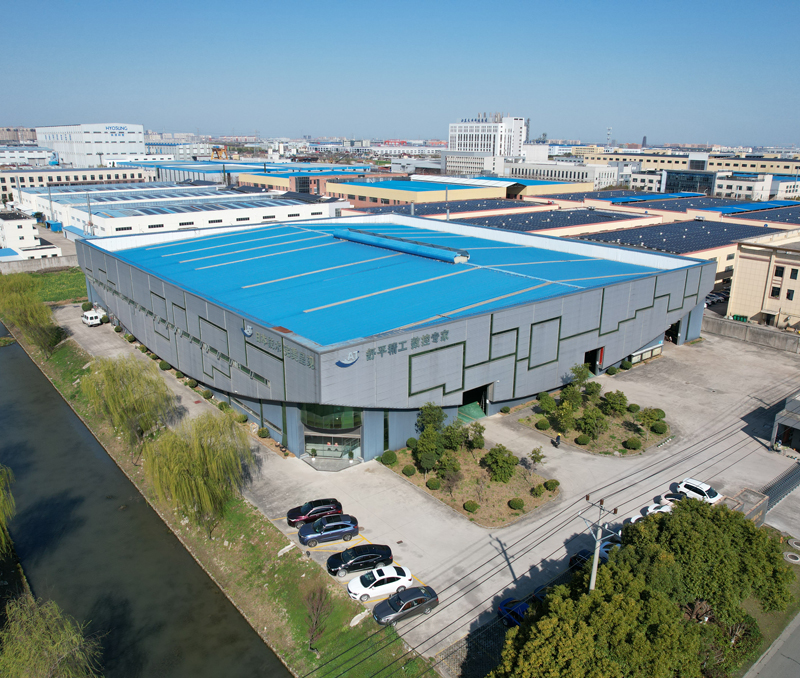

Shanghai Shuping Precision Machinery Co., Ltd. is a well-established Sino-Japanese joint venture. Its core manufacturing base is Shuping Precision Machinery (Nantong) Co., Ltd., which commenced full-scale production in 2017 and occupies a total floor area exceeding 13,000 square meters. Since its establishment in 1995, the company has consistently focused on the R&D, production, sales, and service of CNC woodworking machinery, dedicated to providing the global woodworking industry with intelligent solutions that are "faster, more precise, more accurate, and more economical."
Our technological heritage originates from Japan. Over a fifteen-year period, the company provided OEM manufacturing services for renowned Japanese enterprises, gaining profound expertise in precision machining techniques originating from Matsuhama, Japan in the 1970s. Building upon this foundation, we established our proprietary brand CAT Shanghai in 2010 and simultaneously founded the CAT JAPAN R&D Center in Japan, ensuring our core technologies remain at the forefront of global innovation.
Welcome To Learn About Our Company

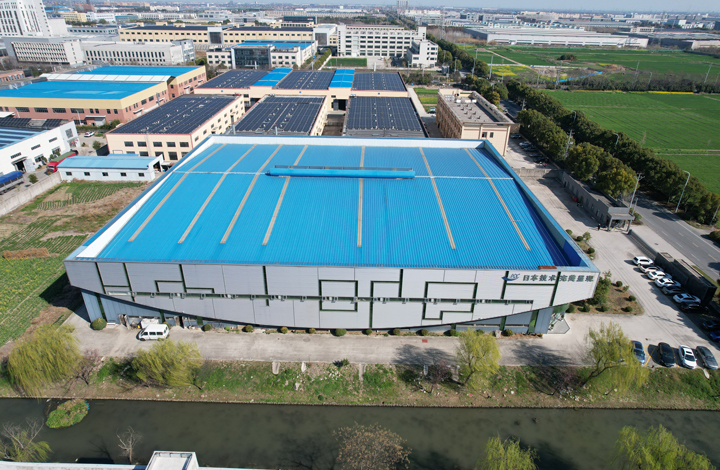
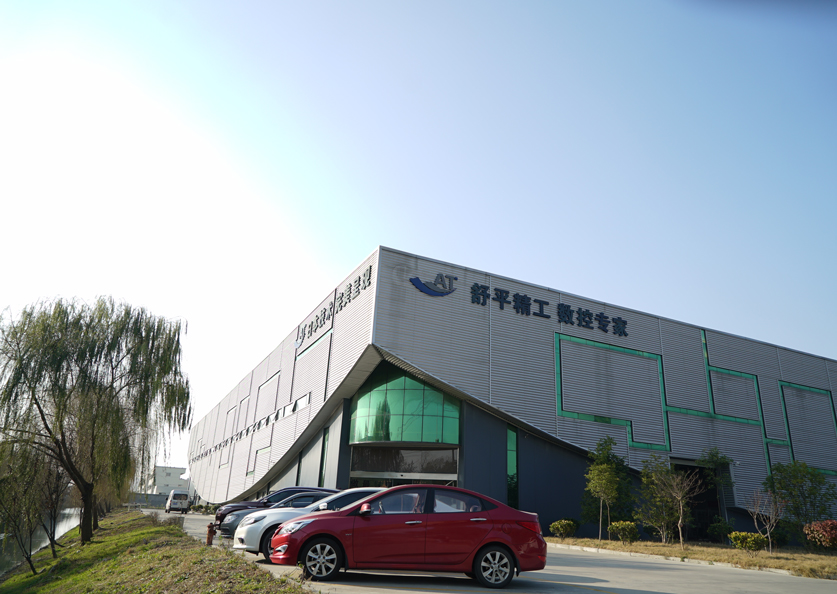
In 2017, the modern production base in Nantong, located within the Jiangsu Hai'an Economic and Technological Development Zone, officially commenced operations, marking the company's entry into a new phase of large-scale, intelligent development. Leveraging this advanced manufacturing platform, we assembled an elite technical team comprising experts in electrical engineering, software, design, and process technology.
We have accumulated over 52 nationally accepted and authorized patents, comprehensively covering the entire spectrum of wood door and panel furniture processing machinery. Our independently developed PNC intelligent control system enables direct QR code scanning and automatic path optimization, transforming complex machining into simple, efficient operations.

It is precisely this relentless pursuit of technology that has earned Shuping Precision Engineering widespread market recognition. Our production lines achieve exceptional efficiency — 680 wooden doors per day with a three-person shift — alongside 0.01mm-level machining precision, significantly boosting clients' production capacity while reducing labor costs.
Today, hundreds of industry leaders — including Jiangshan Oppein, TATA Wooden Doors, Sofia Home Furnishings, Kendiya Wooden Doors, and Country Garden Modern Home Furnishings — have established long-term partnerships with Shuping Precision Machinery, with our products gaining continuous acclaim within the sector.
Talent is the fundamental driving force behind corporate development. We place high importance on human resource development and cultivation, establishing a scientific and systematic training and incentive mechanism to continuously stimulate team innovation. This lays a solid foundation for the company's sustained growth and internationalization strategy.

Explore our full line of CNC boring, sawing, and processing machinery — engineered for the demands of Mexico's door and panel furniture manufacturers.
Like the rising sun, Shuping Precision Engineering advances with vigorous vitality and steady strides, continuously enhancing its capabilities while flexibly adapting to market shifts. We look forward to partnering with global clients — including manufacturers across Mexico and Latin America — to jointly pioneer a new chapter in intelligent woodworking manufacturing through continuously innovative products and services.
Contact Us