+86-18020396629

Leave Your Message
-
CONTACT NUMBER
-
 CONTACT NUMBER
-

Explore our flagship CNC nesting and panel-processing centers — engineered specifically for high-efficiency custom furniture manufacturing with sub-millimeter precision.
The global custom furniture market — valued at over USD 120 billion and growing at 6–8% annually — is being fundamentally transformed by CNC nesting technology. Here's why manufacturers worldwide are making the switch.
Traditional panel-cutting methods rely on manual measurement, handsaw operations, and multi-operator workflows that introduce human error at every step. A modern CNC nesting machine consolidates sawing, drilling, routing, and edge-profiling into a single automated cycle — reducing labour per unit by up to 70%, shrinking material waste from 18% to under 5%, and maintaining ±0.01 mm repeatability across thousands of parts per shift. For custom furniture factories producing hundreds of unique SKUs daily, this is not an incremental gain; it is a fundamental operational transformation.
Machining accuracy at the ±0.01 mm level ensures every custom cabinet panel, door component, and drawer part fits seamlessly without on-site adjustment — essential for flat-pack and ready-to-assemble furniture lines.
Advanced CNC nesting centres achieve processing speeds that allow production of 680+ wooden door leaves per day with a lean three-person shift, dramatically cutting labour costs while scaling output for large custom-furniture orders.
Proprietary intelligent control systems enable direct QR code scanning and automatic toolpath optimisation. Operators simply scan a production order; the machine calculates the optimal nesting layout and commences cutting without manual programming.
Software-driven nesting algorithms maximise the number of parts per board, reducing off-cut waste by 60–75% versus manual methods. This directly improves raw-material ROI and supports sustainable furniture production goals.
Modern CNC nesting machines interface seamlessly with factory ERP and MES platforms, enabling real-time order-to-production traceability — a critical requirement for large-scale custom furniture brands managing thousands of SKUs.
A single CNC nesting centre replaces sawing, CNC drilling, routing, and grooving stations — compressing a multi-machine production line into one compact footprint and eliminating inter-process material handling time.
CNC nesting machines serve a vast range of custom furniture segments. Understanding where they deliver the highest value helps manufacturers choose the right specification.
For custom interior and exterior wood door production, CNC nesting machines execute four-sided sawing, profile routing, hardware-hole drilling, and lock-mortise machining in a single clamped operation. This eliminates repositioning error and reduces door-leaf cycle time to under 90 seconds per unit.
Kitchen cabinets, bathroom vanities, and storage units require dozens of uniquely dimensioned panels per order. CNC nesting software batches all panels from a single customer order onto minimal board stock, cutting, drilling hinge cups, shelf-pin rows, and cam-lock holes in one automated sequence.
Wardrobes, bed frames, TV units, and wall-panel systems with complex profiles and large panel dimensions benefit enormously from CNC nesting precision. Decorative routing, V-groove fold lines, and veneer-safe shallow cuts are all executed within tolerance specifications impossible to achieve manually.
Hotel room furniture, office workstation panels, and retail fixture systems demand large batch sizes with tight dimensional consistency. CNC nesting machines deliver the throughput and repeatability needed for multi-room commercial projects where every panel must be interchangeable.
Ready-to-assemble furniture requires absolute dimensional accuracy so that consumers can self-assemble without gaps or misalignments. CNC nesting ensures every dowel hole, cam-lock bore, and edge profile matches design intent across production runs of thousands of identical units.
Environmental certification requirements (FSC, CARB) demand minimal raw-material waste. CNC nesting optimisation algorithms reduce panel offcuts to levels that meet or exceed sustainability benchmarks — making them a competitive advantage for brands marketing eco-conscious furniture lines.
Six macro-level forces are accelerating the shift toward CNC nesting automation across the global custom furniture sector.
Consumer demand for personalised furniture — unique dimensions, finishes, and configurations — has exploded. CNC nesting machines are the only technology that can process hundreds of unique part profiles per day without tooling changeovers, making mass customisation commercially viable.
As skilled woodworking labour becomes scarcer and costlier across Asia, Europe, and North America, manufacturers are aggressively automating. A single CNC nesting centre with one operator replaces 4–6 workers across sawing, drilling, and routing stations.
CNC nesting machines are becoming nodes in fully connected smart factories — receiving digital cutting lists from ERP systems, reporting real-time OEE data to MES dashboards, and feeding predictive maintenance platforms with spindle and servo telemetry.
Next-generation nesting software uses machine-learning algorithms to continuously improve board-utilisation ratios based on historical cutting data. Some systems now achieve material yield rates above 95%, versus the 82–85% typical of conventional methods.
Online furniture retailers promise delivery in days. This compresses production lead times to 24–48 hours, requiring CNC nesting machines capable of rapid order-to-cut cycles. QR-code-driven production systems eliminate pre-programming delays entirely.
Corporate ESG commitments and tightening timber regulations are pushing manufacturers to minimise material waste. CNC nesting's inherent optimisation capability directly addresses this, positioning machines as both an efficiency tool and a compliance solution.
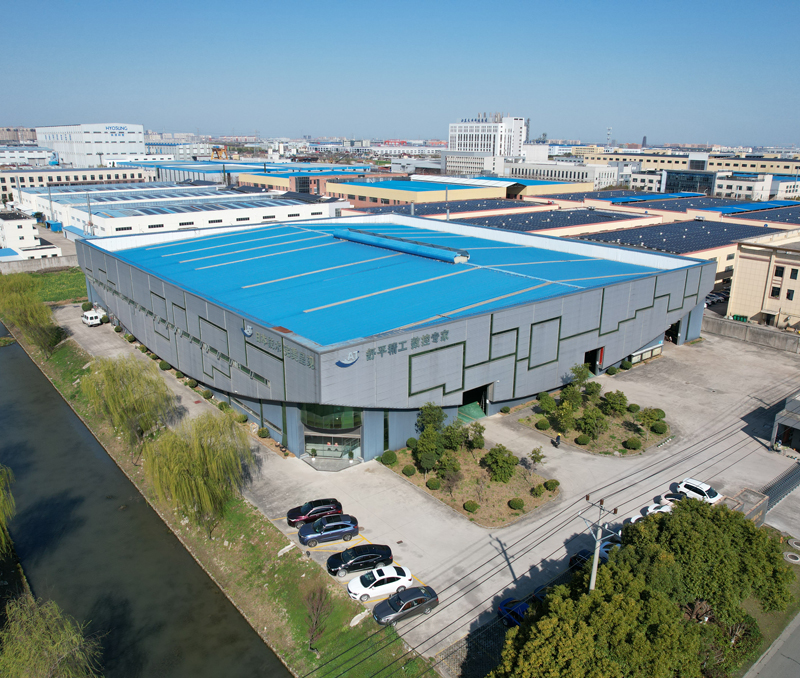
Shanghai Shuping Precision Machinery Co., Ltd. is a well-established Sino-Japanese joint venture. Its core manufacturing base is Shuping Precision Machinery (Nantong) Co., Ltd., which commenced full-scale production in 2017 and occupies a total floor area exceeding 13,000 square meters.
Since its establishment in 1995, the company has consistently focused on the R&D, production, sales, and service of CNC woodworking machinery, dedicated to providing the global woodworking industry with intelligent solutions that are "faster, more precise, more accurate, and more economical."


Our technological heritage originates from Japan. Over a fifteen-year period, the company provided OEM manufacturing services for renowned Japanese enterprises, gaining profound expertise in precision machining techniques originating from Matsuhama, Japan in the 1970s.
Building upon this foundation, we established our proprietary brand CAT Shanghai in 2010 and simultaneously founded the CAT JAPAN R&D Center in Japan, ensuring our core technologies remain at the forefront of global innovation.
This dual-nation R&D model means every CNC nesting machine we produce benefits from decades of Japanese precision engineering knowledge, manufactured at Chinese industrial scale — an unbeatable combination for cost-performance ratio.
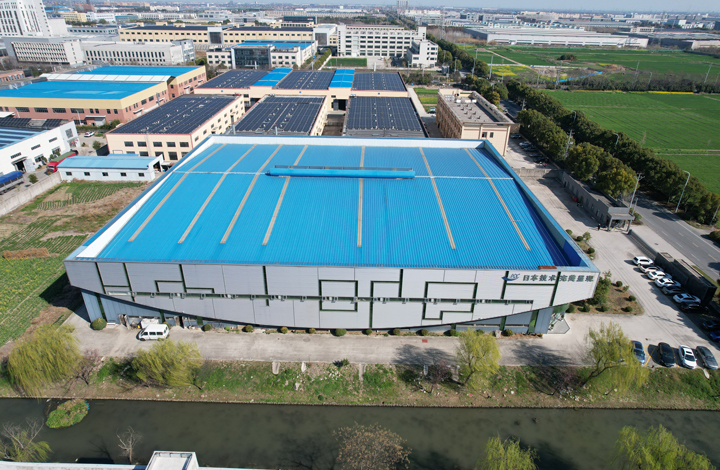
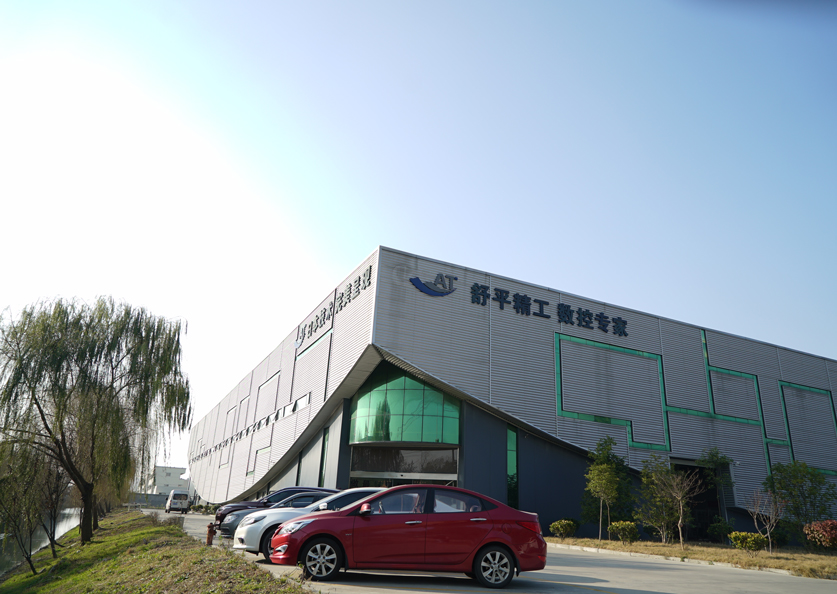

In 2017, the modern production base in Nantong, located within the Jiangsu Hai'an Economic and Technological Development Zone, officially commenced operations, marking the company's entry into a new phase of large-scale, intelligent development.
Leveraging this advanced manufacturing platform, we assembled an elite technical team comprising experts in electrical engineering, software, design, and process technology. We have accumulated over 52 nationally accepted and authorised patents, comprehensively covering the entire spectrum of wood door and panel furniture processing machinery.
Our independently developed PNC intelligent control system enables direct QR code scanning and automatic path optimisation, transforming complex machining into simple, efficient operations that any operator can master within days.
It is precisely this relentless pursuit of technology that has earned Shuping Precision Engineering widespread market recognition. Our production lines achieve exceptional efficiency — 680 wooden doors per day with a three-person shift — alongside 0.01mm-level machining precision, significantly boosting clients' production capacity while reducing labour costs.
Today, hundreds of industry leaders have established long-term partnerships with Shuping Precision Machinery, with our products gaining continuous acclaim within the sector.
Talent is the fundamental driving force behind corporate development. We place high importance on human resource development and cultivation, establishing a scientific and systematic training and incentive mechanism to continuously stimulate team innovation. This lays a solid foundation for the company's sustained growth and internationalization strategy.
From entry-level nesting centers to fully automated smart manufacturing lines — discover the complete Shuping CNC machine range for every scale of custom furniture production.
Like the rising sun, Shuping Precision Engineering advances with vigorous vitality and steady strides, continuously enhancing its capabilities while flexibly adapting to market shifts. We look forward to partnering with global clients to jointly pioneer a new chapter in intelligent woodworking manufacturing through continuously innovative products and services.
Contact Us Today