+86-18020396629

Leave Your Message
-
CONTACT NUMBER

-
 CONTACT NUMBER
-

In modern commercial, residential, and industrial architecture, fire doors serve as critical life-safety components. Unlike standard interior doors, fire-rated doors are designed to withstand extreme thermal stress, block toxic smoke transmission, and maintain structural integrity for periods ranging from 20 to 120 minutes. Consequently, fire door production is subject to some of the most rigorous regulatory standards in the manufacturing sector, including UL 10B, UL 10C, BS 476, and EN 1634.
Historically, manufacturing these specialized doors was a labor-intensive, multi-step process. Fire doors often incorporate complex composite structures, combining dense mineral cores (such as calcium silicate or gypsum boards), chemically treated solid wood stiles and rails, heavy-duty intumescent seals, and specialized fire-resistant veneers. Processing these highly abrasive and dense materials manually or with traditional woodworking machinery led to severe tool wear, inconsistent tolerances, high labor costs, and a high rate of structural defects that could compromise fire certification.
CNC nesting machines engineered for fire doors are designed to handle complex, multi-layered processing in a single setup. By utilizing optimized nesting algorithms and high-torque spindles, these machines execute routing, drilling, sizing, and pocketing operations with unmatched precision. Below are the primary application scenarios:
Fire doors rely on intumescent strips embedded along the edges of the door leaf or frame. In the event of a fire, these strips expand exponentially under high heat, sealing all gaps to prevent smoke and flames from passing through. Milling the grooves for these strips requires precise depth and width control. A CNC nesting machine routes these channels flawlessly, ensuring that the intumescent material sits perfectly flush, maintaining the aesthetic and functional integrity of the door assembly.
Fire-rated hardware—such as heavy-duty mortise locks, concealed door closers, and multi-point hinges—is significantly heavier and more complex than standard hardware. The CNC nesting center utilizes specialized aggregate heads and multi-axis routing to carve deep, clean pockets and horizontal bore holes into dense mineral cores and solid wood frames. This ensures that the hardware fits securely without compromising the door’s structural core.
The core material of a fire door is typically made of mineral boards or particleboard impregnated with fire-retardant chemicals. These materials are highly abrasive and prone to chipping. Advanced CNC nesting machines feature variable-speed, liquid-cooled spindles paired with Polycrystalline Diamond (PCD) tooling. This combination allows the machine to slice through abrasive cores cleanly, preventing delamination of the face veneer and maximizing tool life.
Many commercial fire doors require vision panels fitted with fire-resistant ceramic glass. Cutting these openings requires absolute precision to ensure the glass frame fits tightly, preventing smoke leakage. The CNC nesting machine executes complex internal cutouts, profiling the edges to receive specialized glazing beads and fire-rated ceramic gaskets in a single, automated cycle.
Shanghai Shuping Precision Machinery Co., Ltd. is a well-established Sino-Japanese joint venture. Its core manufacturing base is Shuping Precision Machinery (Nantong) Co., Ltd., which commenced full-scale production in 2017 and occupies a total floor area exceeding 13,000 square meters. Since its establishment in 1995, the company has consistently focused on the R&D, production, sales, and service of CNC woodworking machinery, dedicated to providing the global woodworking industry with intelligent solutions that are “faster, more precise, more accurate, and more economical.”

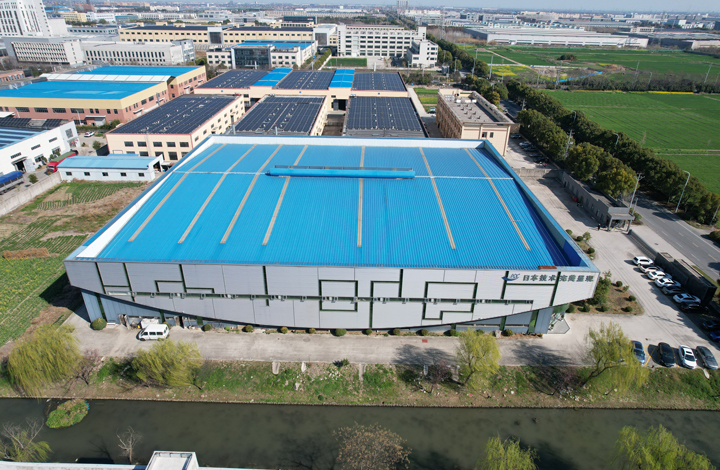

Our technological heritage originates from Japan. Over a fifteen-year period, the company provided OEM manufacturing services for renowned Japanese enterprises, gaining profound expertise in precision machining techniques originating from Matsuhama, Japan in the 1970s. Building upon this foundation, we established our proprietary brand CAT Shanghai in 2010 and simultaneously founded the CAT JAPAN R&D Center in Japan, ensuring our core technologies remain at the forefront of global innovation.
This deep-rooted technical lineage translates directly into the heavy-duty structural design and high-speed stability of our CNC Nesting Machines, ensuring they easily handle the continuous stress of processing heavy, dense fire door blanks.
As the industry moves towards Smart Manufacturing (Industry 4.0), several key advancements are shaping the development of CNC nesting machines designed for fire door production:

By scanning a QR code or barcode attached to the door blank, the CNC machine automatically loads the corresponding CAD/CAM machining paths. This eliminates human error, ensuring hardware cutouts match the specific fire-rating certification requirements of each individual door.
Advanced nesting algorithms calculate the optimal layout for cutting stiles, rails, and core panels from large sheets. This significantly reduces waste of expensive fire-retardant materials and chemicals, lowering the overall production cost per unit.
Processing mineral cores and calcium silicate generates fine, highly abrasive dust that is hazardous to health and machine electronics. Modern CNC nesting centers feature enclosed, high-velocity dust collection hoods that capture particles at the source.
To handle heavy fire door leaves (often weighing over 80kg), CNC nesting centers are integrated with automatic vacuum loading arms, roller conveyors, and unloading pushers, minimizing manual labor and preventing operator injury.
In 2017, the modern production base in Nantong, located within the Jiangsu Hai'an Economic and Technological Development Zone, officially commenced operations, marking the company's entry into a new phase of large-scale, intelligent development. Leveraging this advanced manufacturing platform, we assembled an elite technical team comprising experts in electrical engineering, software, design, and process technology.
We have accumulated over 52 nationally accepted and authorized patents, comprehensively covering the entire spectrum of wood door and panel furniture processing machinery. Our independently developed PNC intelligent control system enables direct QR code scanning and automatic path optimization, transforming complex machining into simple, efficient operations.

It is precisely this relentless pursuit of technology that has earned Shuping Precision Engineering widespread market recognition. Our production lines achieve exceptional efficiency—680 wooden doors per day with a three-person shift—alongside 0.01mm-level machining precision, significantly boosting clients' production capacity while reducing labor costs.
Today, hundreds of industry leaders—including Jiangshan Oppein, TATA Wooden Doors, Sofia Home Furnishings, Kendiya Wooden Doors, and Country Garden Modern Home Furnishings—have established long-term partnerships with Shuping Precision Machinery, with our products gaining continuous acclaim within the sector.
Talent is the fundamental driving force behind corporate development. We place high importance on human resource development and cultivation, establishing a scientific and systematic training and incentive mechanism to continuously stimulate team innovation. This lays a solid foundation for the company's sustained growth and internationalization strategy.
Explore our advanced catalog of high-precision CNC machinery designed to streamline your fire door manufacturing line from raw core processing to final sizing.
Like the rising sun, Shuping Precision Engineering advances with vigorous vitality and steady strides, continuously enhancing its capabilities while flexibly adapting to market shifts. We look forward to partnering with global clients to jointly pioneer a new chapter in intelligent woodworking manufacturing through continuously innovative products and services.
Contact Us