+86-18020396629

Leave Your Message
-
CONTACT NUMBER

-
 CONTACT NUMBER
-

In the modern construction and interior design industries, the demand for high-quality, standardized, and rapidly deliverable door frames has skyrocketed. Historically, door frames were crafted individually by skilled carpenters on-site or in small-scale workshops. While this traditional method allowed for high customization, it suffered from long lead times, high labor costs, and inconsistencies in dimensional tolerances. Today, the global urbanization wave, combined with the rise of prefabricated modular buildings and mega-residential developments, has transformed the industry. Transitioning to a dedicated door frame for mass production workflow is no longer just a competitive advantage—it is an absolute necessity for survival in the global market.
Modern mass production of door frames relies on integrating state-of-the-art CNC (Computer Numerical Control) technology, automation, and advanced software systems. This transition has enabled manufacturers to produce hundreds of door frames per shift with minimal human intervention, maintaining sub-millimeter precision. By standardizing components and automating critical paths—such as double-end sawing, hinge routing, and lock tongue joint cutting—factories can significantly lower production costs while ensuring that every single frame fits perfectly on the construction site.
The global market for door frames is experiencing robust growth, driven by residential housing projects, commercial office complexes, and public infrastructure developments. According to recent market analyses, real estate developers and contractors are increasingly demanding pre-hung door systems. A pre-hung door includes the door leaf pre-fitted into a matching door frame, complete with hinges and lock preps. This system dramatically reduces on-site installation time from hours to minutes.
Consequently, the industrial focus has shifted from manufacturing individual door leaves to creating integrated door frame mass production lines. Large-scale furniture and door manufacturing enterprises must optimize their factories to handle high volumes of varying frame dimensions. The challenge lies in balancing mass production with "mass customization." Today's clients demand different wood species, finishes, and dimensions, requiring machinery that can adapt instantaneously without halting the production line.
"The integration of intelligent PNC control systems and automated CNC processing lines has reduced the traditional door-making workflow from a multi-day craft to an optimized process completing hundreds of units daily."
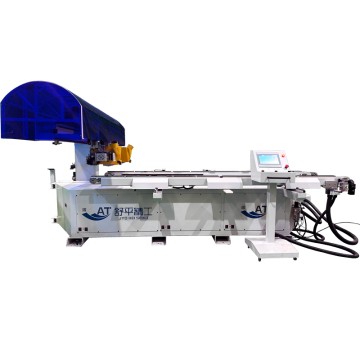
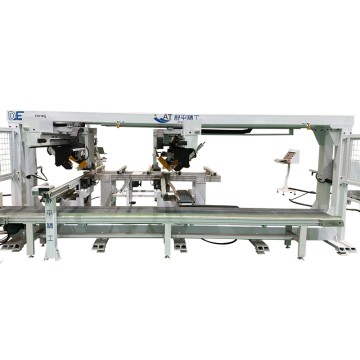
To achieve seamless mass production, woodworking manufacturers rely on a suite of specialized CNC machinery. Each machine is engineered to perform specific tasks with extreme speed and repeatability:
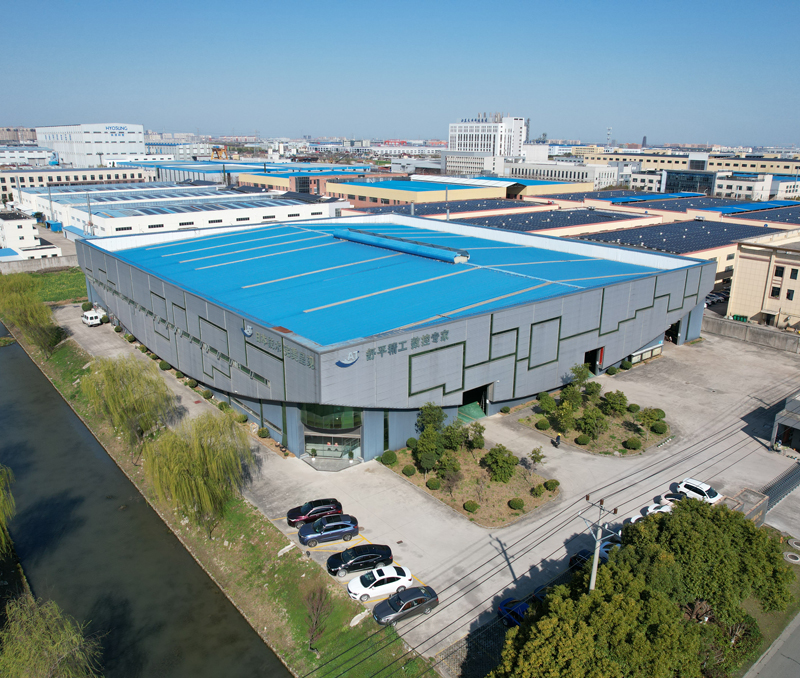
Shanghai Shuping Precision Machinery Co., Ltd. is a well-established Sino-Japanese joint venture. Its core manufacturing base is Shuping Precision Machinery (Nantong) Co., Ltd., which commenced full-scale production in 2017 and occupies a total floor area exceeding 13,000 square meters. Since its establishment in 1995, the company has consistently focused on the R&D, production, sales, and service of CNC woodworking machinery, dedicated to providing the global woodworking industry with intelligent solutions that are "faster, more precise, more accurate, and more economical."

The application of mass-produced door frames extends far beyond simple residential doors. Different industries and construction types require specialized frame profiles, materials, and structural properties.
In large-scale housing developments and modular apartment buildings, efficiency is paramount. Hundreds of units are constructed simultaneously, requiring identical door frames. Mass production lines produce standardized frames that can be shipped flat-packed or pre-assembled. Because modular construction relies on off-site manufacturing, the door frames must have absolute dimensional consistency. A deviation of even 1mm can disrupt the assembly line of a modular home. Shuping's 0.01mm-level precision ensures that every frame fits perfectly into prefabricated wall panels.
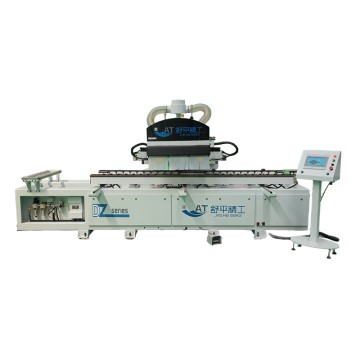
Commercial buildings require door frames that can withstand heavy traffic and integrate seamlessly with complex hardware. These frames often feature routing for electronic strikes, magnetic locks, motion sensors, and heavy-duty concealed hinges. Additionally, acoustic and fire-rated specifications are strictly enforced. Mass-producing these frames requires advanced multi-functional machining centers (like the DZKQ Series) that can route complex wire paths and hardware pockets in a single pass, ensuring structural integrity and code compliance.
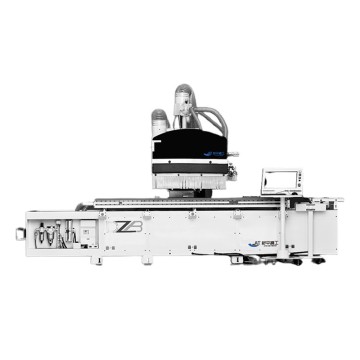
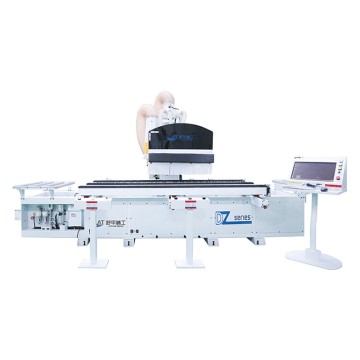
The hospitality industry presents a unique challenge: the need for high-end aesthetics combined with the scale of mass production. Hotels require doors and frames with premium wood veneers, complex moldings, and excellent sound insulation. By utilizing automated sawing and milling machining centers (such as the DZA Series), manufacturers can process intricate profile designs on a large scale. The CNC machinery ensures that the detailed profiling is uniform across hundreds of guest room doors, maintaining a premium brand image for the hotel.
Hospitals, clinics, and schools require highly durable and hygienic door frames. These environments often utilize specialized materials, such as high-pressure laminates (HPL) or composite materials that resist moisture and impact. The frames must accommodate heavy-duty pivots, kick plates, and specialized seals to control airflow and maintain hygiene. Automated processing centers allow for the rapid execution of these specialized cuts on durable composite materials without wearing down tooling or slowing down production rates.
As the woodworking industry moves further into the era of Industry 4.0, several key trends are shaping the future of door frame mass production:
Our technological heritage originates from Japan. Over a fifteen-year period, the company provided OEM manufacturing services for renowned Japanese enterprises, gaining profound expertise in precision machining techniques originating from Matsuhama, Japan in the 1970s. Building upon this foundation, we established our proprietary brand CAT Shanghai in 2010 and simultaneously founded the CAT JAPAN R&D Center in Japan, ensuring our core technologies remain at the forefront of global innovation.
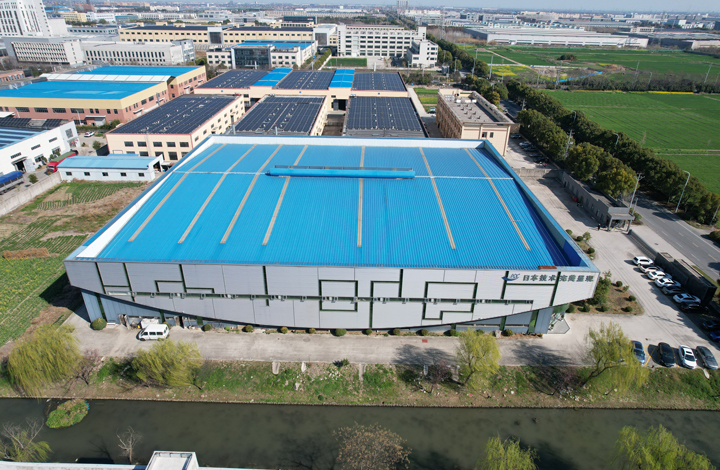
In 2017, the modern production base in Nantong, located within the Jiangsu Hai'an Economic and Technological Development Zone, officially commenced operations, marking the company's entry into a new phase of large-scale, intelligent development. Leveraging this advanced manufacturing platform, we assembled an elite technical team comprising experts in electrical engineering, software, design, and process technology.
We have accumulated over 52 nationally accepted and authorized patents, comprehensively covering the entire spectrum of wood door and panel furniture processing machinery. Our independently developed PNC intelligent control system enables direct QR code scanning and automatic path optimization, transforming complex machining into simple, efficient operations.
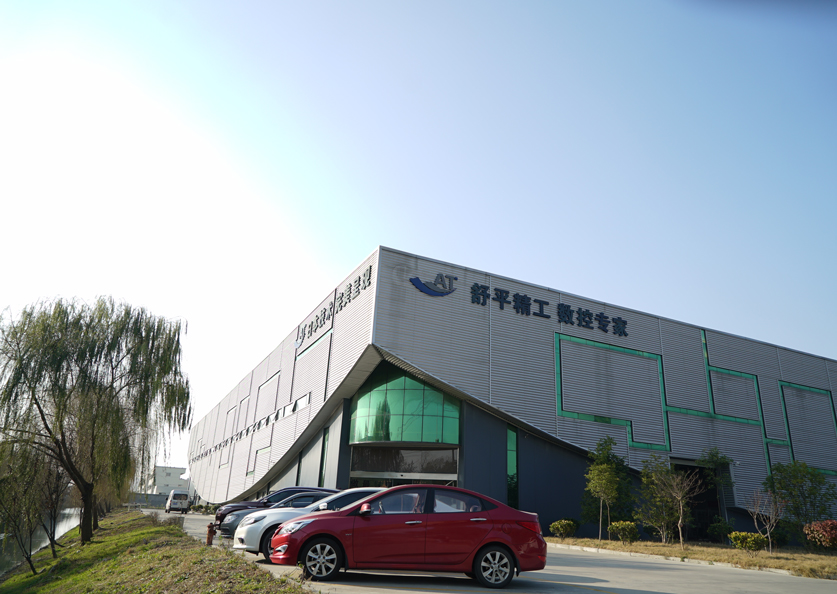
It is precisely this relentless pursuit of technology that has earned Shuping Precision Engineering widespread market recognition. Our production lines achieve exceptional efficiency—680 wooden doors per day with a three-person shift—alongside 0.01mm-level machining precision, significantly boosting clients' production capacity while reducing labor costs.
Today, hundreds of industry leaders—including Jiangshan Oppein, TATA Wooden Doors, Sofia Home Furnishings, Kendiya Wooden Doors, and Country Garden Modern Home Furnishings—have established long-term partnerships with Shuping Precision Machinery, with our products gaining continuous acclaim within the sector.
Talent is the fundamental driving force behind corporate development. We place high importance on human resource development and cultivation, establishing a scientific and systematic training and incentive mechanism to continuously stimulate team innovation. This lays a solid foundation for the company's sustained growth and internationalization strategy.
Like the rising sun, Shuping Precision Engineering advances with vigorous vitality and steady strides, continuously enhancing its capabilities while flexibly adapting to market shifts. We look forward to partnering with global clients to jointly pioneer a new chapter in intelligent woodworking manufacturing through continuously innovative products and services.
Contact Us