

 +86-18020396629

Leave Your Message
-
CONTACT NUMBER
-
 CONTACT NUMBER
-

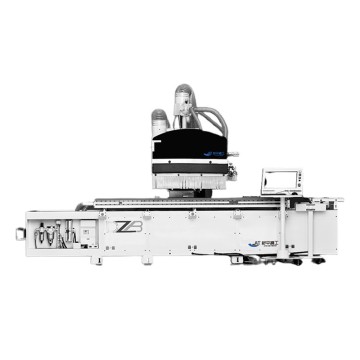
Our flagship CNC door frame processing centers are engineered specifically to accommodate complex door-lock mortising, hinge routing, and tongue-joint cutting required by high-end custom furniture manufacturers worldwide.
In modern custom furniture manufacturing, a "door lock" is far more than a simple security accessory. It is a precision-engineered junction point — the mortise pocket, the strike-plate recess, the hinge bore, and the handle backset must all be machined to micrometric tolerances so that the lock mechanism seats perfectly, the door closes silently, and the furniture retains its premium aesthetic for decades.
The global custom furniture market surpassed USD 28 billion in 2024 and is projected to exceed USD 45 billion by 2030, driven by rising demand for bespoke wardrobes, cabinetry, and wooden interior doors. Within this growth, door-lock hardware integration has emerged as a primary quality differentiator — brands that cannot achieve ±0.1 mm lock-pocket accuracy see disproportionate returns, rework costs, and customer dissatisfaction. CNC door-frame processing centers solve this challenge at industrial scale.
Custom furniture factories today face a structural paradox: consumer expectations demand individualised, hotel-quality finishes on each piece, while competitive pricing requires the throughput of mass production. Door-lock machining sits at the exact intersection of this tension.
From residential wardrobes to five-star hotel suites, the precision of door-lock slots and frame joints determines the perceived quality of the entire piece. Below are the key application contexts where CNC lock-pocket processing delivers measurable commercial value.
Homeowners selecting custom-built wooden interior doors expect seamless lock operation and zero door rattle. CNC door-frame centers machine the full lock-keep pocket, hinge mortise, and rebate in a single setup, eliminating the multi-step manual process and guaranteeing that every door in a multi-room renovation is dimensionally identical.
Hotel projects often specify 500–3,000 identical door-lock assemblies across a single property. Contract furniture manufacturers supplying this market rely on CNC batch consistency to meet fire-door certification requirements (EN 1634 / UL 10B) that mandate strict dimensional tolerances on lock-bolt throw and strike-plate alignment.
Brands like Oppein, Sofia, and TATA have built billion-dollar businesses on the promise of personalised wardrobe solutions. Every swing-door panel in these systems requires a precisely machined lock-cylinder hole, hinge-cup recess, and handle-backplate pocket — all of which are now produced inline on CNC door-leaf hardware hole slot machining centers, cutting per-unit processing time from 8 minutes to under 90 seconds.
Open-plan offices increasingly feature full-height glazed or wooden partition doors with integrated access-control lock hardware. The lock-body cavity must accommodate electronic RFID or Bluetooth modules, which have tighter positional tolerances (+0/-0.3 mm) than traditional mechanical locks. CNC solutions programmed via QR-code scanning enable factory operators to switch between mechanical and smart-lock cavity profiles in seconds.
The global modular construction market is forecast to reach USD 130 billion by 2028. Pre-hung door assemblies for modular pods require lock hardware to be factory-fitted before transport to site. CNC door-frame double-end sawing centers produce pre-machined frames that arrive on-site ready for lock installation, reducing assembly hours and on-site skilled-labour requirements by up to 60%.
Smart-lock penetration in new residential builds rose to 34% globally in 2024. These electronic lock bodies require bespoke cavity geometries that vary by brand and protocol. The PNC intelligent control system — with QR-code-driven automatic path optimisation — allows custom furniture factories to maintain a library of hundreds of lock profiles and switch between them without manual G-code editing, enabling true mass customisation at scale.
The convergence of Industry 4.0, smart-home proliferation, and global supply-chain reshoring is accelerating innovation across every dimension of CNC door-lock processing.
Next-generation CNC controllers integrate machine-vision cameras that scan each workpiece for grain irregularities, pre-existing defects, or dimensional variance before cutting. AI algorithms then micro-adjust toolpaths in real time, ensuring that even slightly warped door blanks receive perfectly centred lock pockets — a capability critical for sustainably sourced hardwoods with natural dimensional instability.
Leading custom furniture manufacturers are integrating CNC processing centres directly with Manufacturing Execution Systems (MES). Order data entered at point of sale flows automatically to the shop floor — the machine receives the customer's door dimensions, chosen lock model, and hinge specification without any human transcription, eliminating a primary source of errors in high-mix production.
Engineered wood products — CLT panels, bamboo composites, and reclaimed timber — are increasingly specified by architects and interior designers. These materials present unique machining challenges for lock pockets: delamination risk, variable density, and embedded fasteners. CNC centers with adaptive feed-rate control and high-frequency spindles handle these substrates cleanly, opening new markets for eco-conscious custom furniture brands.
Cloud-connected CNC platforms now transmit spindle load, vibration, and thermal data to manufacturer service centres in real time. Predictive maintenance algorithms flag bearing wear or tool degradation before it affects lock-pocket dimensional accuracy — a critical advance for factories running three-shift operations where unplanned downtime directly impacts delivery commitments to custom furniture end-clients.


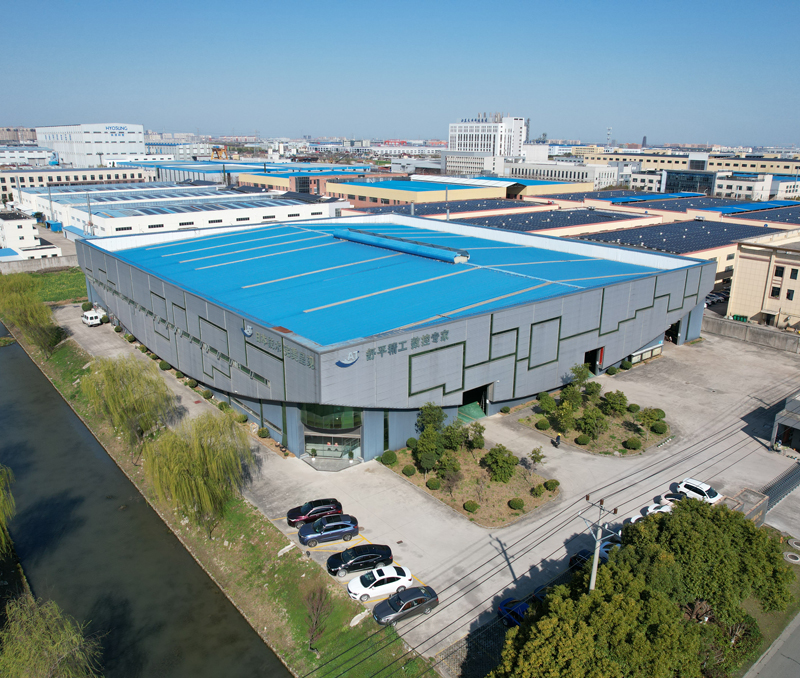
Shanghai Shuping Precision Machinery Co., Ltd. is a well-established Sino-Japanese joint venture. Its core manufacturing base is Shuping Precision Machinery (Nantong) Co., Ltd., which commenced full-scale production in 2017 and occupies a total floor area exceeding 13,000 square meters. Since its establishment in 1995, the company has consistently focused on the R&D, production, sales, and service of CNC woodworking machinery, dedicated to providing the global woodworking industry with intelligent solutions that are "faster, more precise, more accurate, and more economical."


Our technological heritage originates from Japan. Over a fifteen-year period, the company provided OEM manufacturing services for renowned Japanese enterprises, gaining profound expertise in precision machining techniques originating from Matsuhama, Japan in the 1970s. Building upon this foundation, we established our proprietary brand CAT Shanghai in 2010 and simultaneously founded the CAT JAPAN R&D Center in Japan, ensuring our core technologies remain at the forefront of global innovation.

In 2017, the modern production base in Nantong, located within the Jiangsu Hai'an Economic and Technological Development Zone, officially commenced operations, marking the company's entry into a new phase of large-scale, intelligent development. Leveraging this advanced manufacturing platform, we assembled an elite technical team comprising experts in electrical engineering, software, design, and process technology.
We have accumulated over 52 nationally accepted and authorised patents, comprehensively covering the entire spectrum of wood door and panel furniture processing machinery. Our independently developed PNC intelligent control system enables direct QR code scanning and automatic path optimisation, transforming complex lock-pocket machining into simple, efficient operations.
It is precisely this relentless pursuit of technology that has earned Shuping Precision Engineering widespread market recognition. Our production lines achieve exceptional efficiency — 680 wooden doors per day with a three-person shift — alongside 0.01 mm-level machining precision, significantly boosting clients' production capacity while reducing labour costs.
Today, hundreds of industry leaders have established long-term partnerships with Shuping Precision Machinery, with our products gaining continuous acclaim within the sector. Talent is the fundamental driving force behind corporate development. We place high importance on human resource development and cultivation, establishing a scientific and systematic training and incentive mechanism to continuously stimulate team innovation. This lays a solid foundation for the company's sustained growth and internationalisation strategy.
The shift from manual and semi-automatic methods to fully CNC-integrated door-lock processing is not merely a technology upgrade — it is a fundamental reimagining of how custom furniture factories operate, compete, and scale.
European lock sets (DIN 18251, EN 12209) specify lock-body cavity tolerances of ±0.25 mm. Only CNC machining centres with servo-controlled axes and thermal compensation achieve this consistently across a full production shift without operator re-calibration.
Processing a complete door frame — including lock mortise, hinge pockets, and rebate — manually takes 12–18 minutes per unit. A CNC door frame processing center completes the same sequence in under 3 minutes, enabling the 680-doors-per-day throughput that defines Shuping's competitive positioning.
Custom furniture orders routinely mix European mortise locks, cylindrical latches, and electronic smart-lock bodies within a single batch. QR-code-driven toolpath libraries allow operators to switch lock profiles between individual workpieces without any manual measurement or fixture adjustment.
A three-person team operating a CNC line achieves the output of a 12-person manual team while producing fewer defects and near-zero rework on lock-related assembly failures. This directly improves contribution margins on custom furniture projects where material costs leave little room for waste.
Each machined door is linked to a unique QR code capturing the CNC program version, tool wear status, and dimensional inspection results. This traceability is increasingly demanded by large retail customers and facilitates rapid root-cause analysis when a lock-fit issue is reported post-delivery.
Custom furniture destined for European, North American, and Middle Eastern markets must comply with increasingly strict fire-door and security-door lock-fixing standards. CNC processing guarantees the dimensional repeatability required for third-party certification testing, removing a critical barrier to premium export markets.
Explore our full lineup of CNC woodworking processing centers — each designed to address a specific stage of door and custom furniture production with maximum precision, speed, and automation.
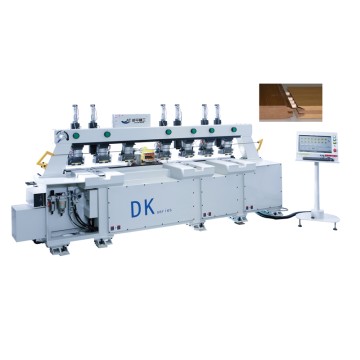
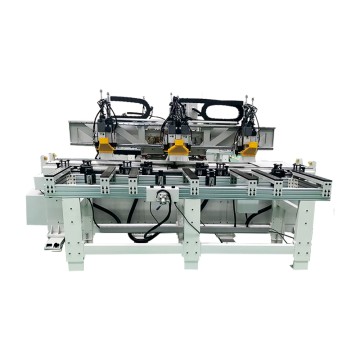
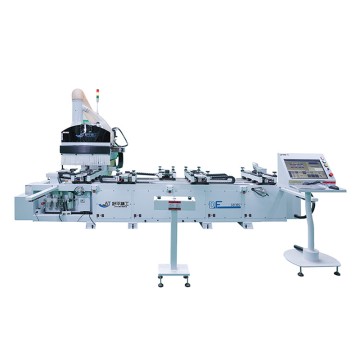
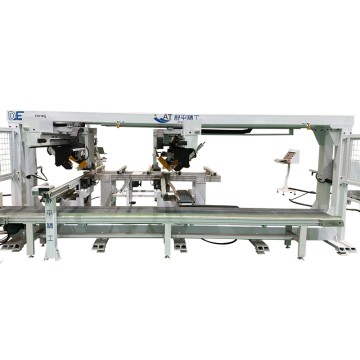
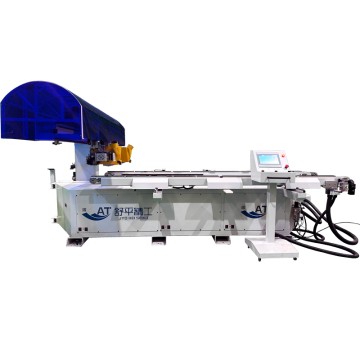
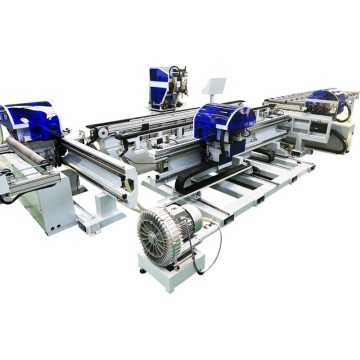
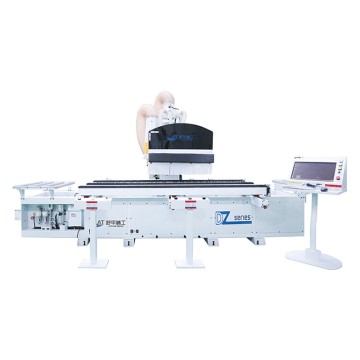
Like the rising sun, Shuping Precision Engineering advances with vigorous vitality and steady strides, continuously enhancing its capabilities while flexibly adapting to market shifts. We look forward to partnering with global clients to jointly pioneer a new chapter in intelligent woodworking manufacturing — delivering door lock processing solutions for custom furniture that are faster, more precise, and more economical than ever before.
Contact Us