

 +86-18020396629

Leave Your Message
-
CONTACT NUMBER
-
 CONTACT NUMBER
-

High-efficiency CNC machining centers engineered for residential door lock hardware — delivering 0.01mm-level accuracy at scale
Door locks are among the most fundamental yet technologically sophisticated components in residential housing. Far beyond a simple mechanical barrier, a residential door lock today represents the convergence of precision engineering, electronic intelligence, materials science, and cybersecurity. As urban populations grow and housing standards rise globally, the demand for high-performance door lock systems in residential buildings — from individual family homes to large-scale apartment complexes — has surged to unprecedented levels.
Modern homeowners and property developers no longer accept basic mortise or cylinder locks as sufficient. The expectation has shifted toward smart locking systems that offer keyless entry, remote access control, audit trails, biometric verification, and seamless integration with broader smart home ecosystems. This transformation is reshaping the entire supply chain: from raw material sourcing and hardware precision machining to software development and after-sales service.
At the manufacturing level, the quality of door lock hardware is entirely dependent on the precision of the machining process. Lock mortises, strike plates, cylinder housings, bolt channels, and hinge mortises all require micron-level accuracy to ensure smooth operation, long service life, and genuine security. This is where advanced CNC woodworking and door-frame processing machinery becomes indispensable.
Lock pocket and hardware hole tolerances at the sub-millimeter level ensure perfect hardware alignment, eliminating misalignment failures and costly rework on residential doors.
High-volume residential housing projects demand relentless output. Our production systems achieve 680 complete door units per day with a three-person shift — unmatched in the industry.
Scan a QR code, and the machine automatically optimizes its cutting path — transforming complex multi-step door lock hardware machining into a single seamless operation.
The global residential door lock market was valued at over USD 9 billion in 2023 and is projected to exceed USD 16 billion by 2032, growing at a compound annual growth rate (CAGR) of approximately 6.5%. This growth is driven by several macro forces: rapid urbanization in Asia-Pacific and Africa, government mandates for enhanced building security in Europe and North America, the explosion of smart home adoption, and the post-pandemic acceleration of home renovation spending worldwide.
From an industrial perspective, residential door lock production is highly fragmented. The sector spans thousands of manufacturers ranging from large integrated conglomerates in Germany and South Korea to highly specialized mid-sized factories in China's Guangdong, Zhejiang, and Jiangsu provinces. China alone accounts for over 60% of global door hardware production by volume, with its manufacturers supplying not only domestic residential projects but also exporting finished hardware and machined components to Europe, North America, Southeast Asia, and the Middle East.
The commercial dynamics within this industry are shifting rapidly. Specifying architects and property developers increasingly demand factory certifications, traceability documentation, and evidence of precision quality control. This raises the barrier to entry for commodity-grade manufacturers while creating significant competitive advantages for companies that invest in advanced CNC machining infrastructure, intelligent manufacturing systems, and R&D capabilities. The days of purely manual door lock preparation are ending — replaced by automated machining centers capable of producing perfectly dimensioned lock pockets, bolt cavities, and hinge mortises with zero human error.




Shanghai Shuping Precision Machinery Co., Ltd. is a well-established Sino-Japanese joint venture. Its core manufacturing base is Shuping Precision Machinery (Nantong) Co., Ltd., which commenced full-scale production in 2017 and occupies a total floor area exceeding 13,000 square meters. Since its establishment in 1995, the company has consistently focused on the R&D, production, sales, and service of CNC woodworking machinery, dedicated to providing the global woodworking industry with intelligent solutions that are "faster, more precise, more accurate, and more economical."
Established in
Occupies a total floor area exceeding
Nationally accepted and authorized patents
The sector is evolving faster than ever — driven by smart home demand, sustainability requirements, and AI-powered manufacturing
Bluetooth, Z-Wave, and Wi-Fi-enabled smart locks now account for over 28% of new residential lock installations in developed markets. The hardware precision required for smart lock cylinder housing and electronic actuator channels demands tolerances of ±0.02mm — achievable only with advanced CNC machining centers. Manufacturers investing in smart-ready door preparation machinery are capturing a rapidly growing segment of the residential construction market.
LEED, BREEAM, and China's Green Building Evaluation Standard are pushing residential developers to specify certified sustainable wood door systems with precisely machined lock interfaces. Efficient material utilization — achieved through optimized CNC cutting paths — reduces waste by up to 18% compared to conventional machining, directly supporting green building compliance while lowering material costs.
High-rise residential complexes in China, Southeast Asia, and the Middle East routinely require 5,000 to 50,000 identical door units per project. The ability to maintain sub-millimeter lock pocket accuracy across this volume — while accommodating multiple door leaf thicknesses and hardware configurations — is a defining competitive advantage. Intelligent machining centers with QR code-driven automatic path optimization make this level of mass customization economically viable.
Leading residential door manufacturers are deploying machine vision systems and AI-powered quality inspection at the machining stage — automatically detecting oversized or undersized lock pockets before assembly, reducing rework rates by over 30%. Predictive maintenance algorithms, fed by real-time spindle load and vibration data, further reduce unplanned downtime, keeping high-volume production lines running at peak efficiency.

Our technological heritage originates from Japan. Over a fifteen-year period, the company provided OEM manufacturing services for renowned Japanese enterprises, gaining profound expertise in precision machining techniques originating from Matsuhama, Japan in the 1970s. Building upon this foundation, we established our proprietary brand CAT Shanghai in 2010 and simultaneously founded the CAT JAPAN R&D Center in Japan, ensuring our core technologies remain at the forefront of global innovation.
Over 52 nationally accepted and authorized patents — comprehensively covering the full spectrum of wood door and panel furniture processing machinery for residential and commercial applications.
The primary entry door of a single-family residence represents the most critical security interface in the entire property. Modern entry door lock systems for this application typically combine a heavy-duty mortise lock body — requiring a precisely machined 60mm or 70mm backset pocket in the door leaf — with a multi-point locking mechanism that engages the door frame at three or more points simultaneously. The precision of the lock pocket machining directly determines the smoothness of operation, the resistance to forced entry, and the longevity of the hardware over decades of daily use.
For wooden entry doors, which remain the dominant material globally for residential applications, the machining of the lock mortise must account for wood grain direction, moisture expansion coefficients, and the exact thickness and composition of the door leaf. Advanced CNC door machining centers from Shuping Precision Machinery address all of these variables automatically, delivering consistent results regardless of batch size or door specification variety.
Within a residential home, interior doors require privacy locks, passage sets, and in some cases, keyed entry hardware for home offices, nurseries, or utility rooms. While security requirements are lower than for entry doors, dimensional precision remains critical: a poorly machined latch pocket results in a door that rattles, sticks, or fails prematurely — unacceptable quality in any market segment. The scale of interior door production in residential housing developments means that even marginal improvements in machining speed and accuracy translate into massive gains in overall project economics.
High-rise and mid-rise residential apartment buildings present a unique set of door lock requirements. Each unit door must accommodate an apartment entrance lock — typically a deadbolt combined with a lever handle set, or increasingly a smart lock with motorized bolt actuation. Building management systems now frequently integrate individual apartment locks with a central access control platform, enabling property managers to issue and revoke digital keys, monitor entry events in real time, and respond rapidly to security incidents.
The shift toward smart locks in apartment buildings is accelerating. In tier-1 and tier-2 Chinese cities, new residential developments are now routinely specified with pre-installed smart lock preparation — meaning the door leaf arrives from the factory with precisely machined recesses for smart lock actuator housings, cable channels for wiring, and reinforced strike plate pockets. This factory-level preparation is only possible with high-precision CNC machining centers that can execute complex multi-function machining sequences from a single QR code scan.
An often-overlooked application segment is accessible residential housing for elderly or mobility-impaired occupants. Lever handle locks, low-force thumb-turn deadbolts, and smart locks with voice or app control are increasingly specified for this demographic. The door frame and leaf preparation for these systems demands the same precision as conventional residential hardware — but with additional attention to accessibility clearances, lever handle mortise geometry, and the structural reinforcement of strike plate zones to handle the different usage patterns of this user group.
At the premium end of the residential market, bespoke door lock and hardware systems are increasingly specifying custom-machined pockets for architectural-grade hardware from brands such as Valli&Valli, Olivari, or Hafele. These systems demand tolerances that commercial-grade machinery cannot achieve consistently. Shuping's 0.01mm precision machining capability positions its systems as the preferred platform for luxury residential manufacturers who need to guarantee flawless hardware alignment across every single door — from the first unit to the ten-thousandth.

In 2017, the modern production base in Nantong, located within the Jiangsu Hai'an Economic and Technological Development Zone, officially commenced operations, marking the company's entry into a new phase of large-scale, intelligent development. Leveraging this advanced manufacturing platform, we assembled an elite technical team comprising experts in electrical engineering, software, design, and process technology.
We have accumulated over 52 nationally accepted and authorized patents, comprehensively covering the entire spectrum of wood door and panel furniture processing machinery. Our independently developed PNC intelligent control system enables direct QR code scanning and automatic path optimization, transforming complex machining into simple, efficient operations.
The economic case for investing in high-precision CNC door machining systems is compelling. Consider a mid-sized residential door manufacturer producing 200 doors per day using conventional semi-automated equipment with a 10-person production team. By upgrading to Shuping's intelligent CNC machining centers — capable of processing 680 doors per day with just three operators — the same manufacturer can triple output, reduce direct labor costs by 70%, and virtually eliminate rework caused by machining tolerances.
For a residential housing developer or general contractor sourcing pre-hung door systems for a 1,000-unit apartment complex, these efficiency gains translate directly into project economics: faster delivery schedules, lower component costs, more consistent fit-out quality, and reduced on-site adjustment labor. As residential construction timelines compress under increasing competitive and regulatory pressure, the reliability of precision-machined door lock preparation becomes a project-critical specification rather than a secondary consideration.
Furthermore, the precision and repeatability enabled by modern CNC door machining infrastructure supports the transition toward fully prefabricated building systems — a trend that is reshaping residential construction across China, Japan, Singapore, and Northern Europe. In these markets, complete door units — with lock hardware pre-installed at the factory — are delivered to site ready for immediate installation, with zero on-site modification required. This level of precision is achievable only when the underlying machining technology can guarantee dimensional accuracy to within 0.01mm across every unit, every shift, every day.
It is precisely this relentless pursuit of technology that has earned Shuping Precision Engineering widespread market recognition. Our production lines achieve exceptional efficiency — 680 wooden doors per day with a three-person shift — alongside 0.01mm-level machining precision, significantly boosting clients' production capacity while reducing labor costs. Today, hundreds of industry leaders have established long-term partnerships with Shuping Precision Machinery, with our products gaining continuous acclaim within the sector.
Talent is the fundamental driving force behind corporate development. We place high importance on human resource development and cultivation, establishing a scientific and systematic training and incentive mechanism to continuously stimulate team innovation. This lays a solid foundation for the company's sustained growth and internationalization strategy.
Full product lineup for every stage of residential door lock hardware manufacturing — from door leaf preparation to frame lock tongue jointing
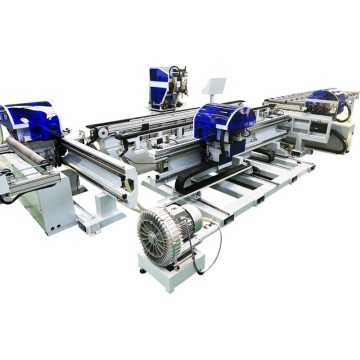 DXJ Door Leaf Hardware Hole & Slot Machining Center
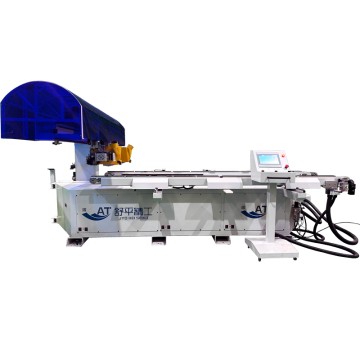 CNC Door Leaf Four Sided Sawing Machining Center
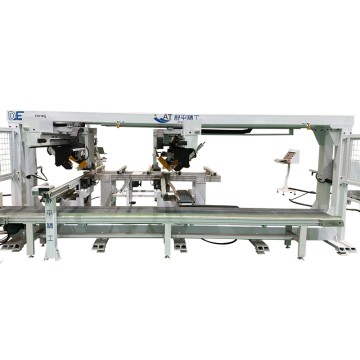 DFW Door Frame Double End Sawing Processing Center
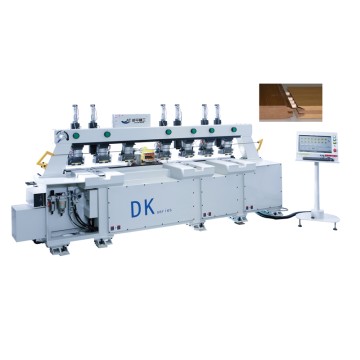 DK Series Door Frame Processing Center
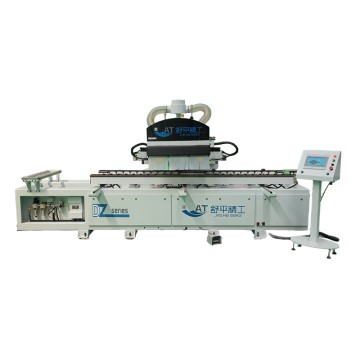 DZWJ Wooden Door Four Sided Sawing Processing Center
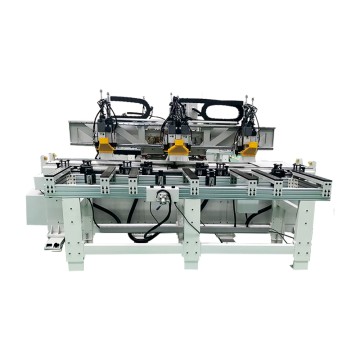 DFH Door Frame Lock Tongue Joint Processing Center
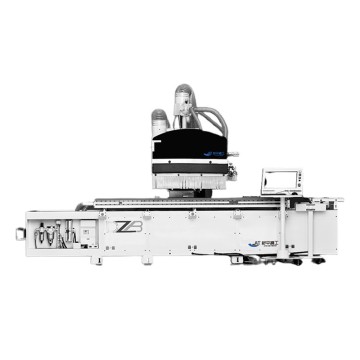 DZB Series Fully Functional Wooden Door Processing Center
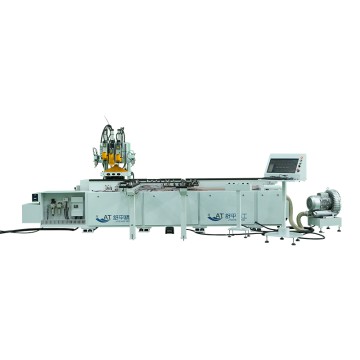 DZKQ Door Leaf & Door Frame Multi-functional Machining Center
Like the rising sun, Shuping Precision Engineering advances with vigorous vitality and steady strides, continuously enhancing its capabilities while flexibly adapting to market shifts. We look forward to partnering with global clients to jointly pioneer a new chapter in intelligent woodworking manufacturing through continuously innovative products and services.