

 +86-18020396629

Leave Your Message
-
CONTACT NUMBER
-
 CONTACT NUMBER
-

Our flagship CNC table saw series is purpose-built for industrial mass production environments — delivering consistent cut quality, rapid throughput, and low-maintenance automation across every shift.
A table saw for mass production is a fundamentally different machine from the benchtop or hobbyist models used in small workshops. At its core, it is an industrial-grade cutting system engineered to sustain continuous, high-volume ripping and cross-cutting of panels, boards, and structural lumber — without sacrificing dimensional accuracy or surface quality across thousands of consecutive cuts.
In modern panel furniture, wood door, cabinet, and flooring manufacturing, table saws operate as the backbone of the entire production line. A single production shift can require hundreds to over a thousand precise cuts, and any deviation — even fractions of a millimeter — can cascade into material waste, rework, and assembly failures downstream. This is why mass production table saws are engineered to hold tolerances of ±0.01mm over extended duty cycles, supported by precision spindles, rigid cast-iron or polymer-concrete beds, and advanced digital servo drive systems.
Modern CNC table saw systems further integrate with factory MES (Manufacturing Execution Systems), allowing automatic cut-list import, QR-code-driven batch identification, and real-time production monitoring — making them indispensable tools in any Industry 4.0-aligned woodworking facility.
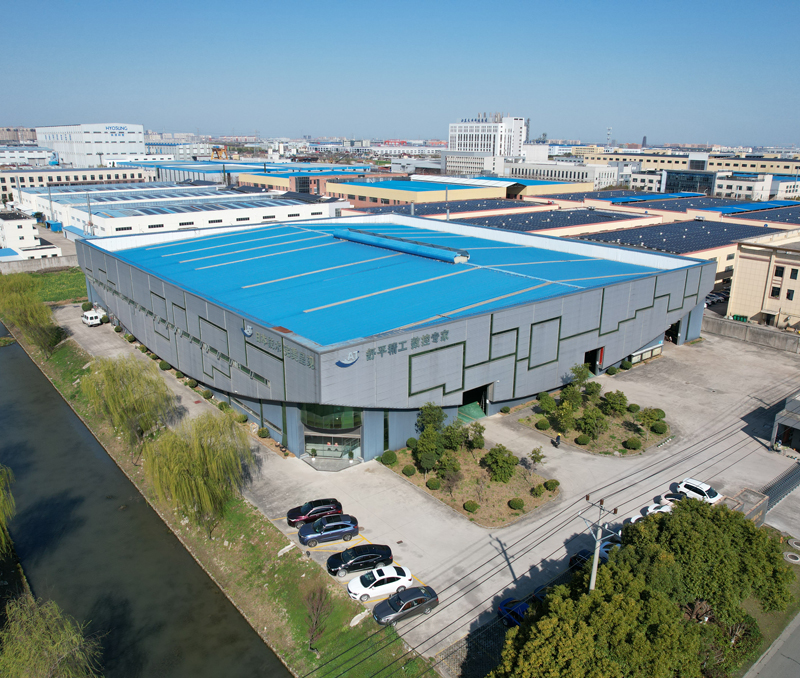


Shanghai Shuping Precision Machinery Co., Ltd. is a well-established Sino-Japanese joint venture. Its core manufacturing base is Shuping Precision Machinery (Nantong) Co., Ltd., which commenced full-scale production in 2017 and occupies a total floor area exceeding 13,000 square meters. Since its establishment in 1995, the company has consistently focused on the R&D, production, sales, and service of CNC woodworking machinery, dedicated to providing the global woodworking industry with intelligent solutions that are "faster, more precise, more accurate, and more economical."
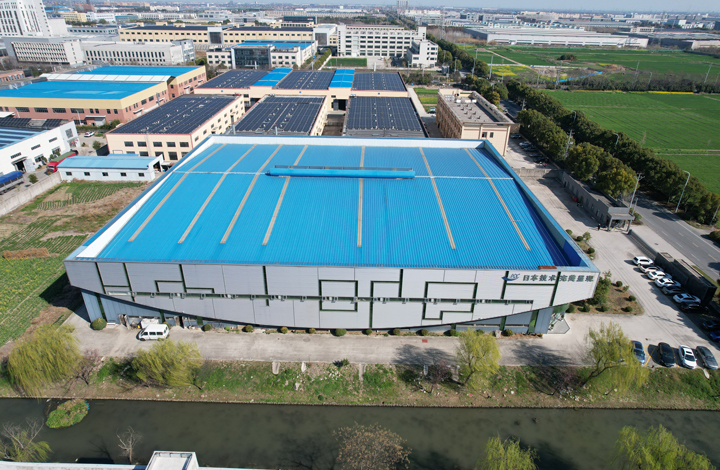
 Welcome To Learn About Our Company
Our technological heritage originates from Japan. Over a fifteen-year period, the company provided OEM manufacturing services for renowned Japanese enterprises, gaining profound expertise in precision machining techniques originating from Matsuhama, Japan in the 1970s. Building upon this foundation, we established our proprietary brand CAT Shanghai in 2010 and simultaneously founded the CAT JAPAN R&D Center in Japan, ensuring our core technologies remain at the forefront of global innovation.
This heritage directly informs every table saw we engineer — from the spindle geometry to the feed mechanism design — resulting in machines that deliver Japanese-standard precision at globally competitive price points for mass production facilities worldwide.
Six engineering pillars that make the difference between ordinary woodworking equipment and a true mass production table saw system.
Precision ground cast-iron tables and servo-driven fences maintain sub-millimeter accuracy across tens of thousands of cuts — critical for zero-rework mass production output.
Our independently developed PNC system enables direct QR code scanning and automatic path optimization, transforming complex multi-batch machining into simple, one-touch operations.
Verified in live production environments: our optimized table saw lines achieve 680 wood doors per day with a three-person shift, dramatically reducing per-unit labor cost.
Table saws designed to work seamlessly upstream with panel optimizers and downstream with edge banders, CNC routers, and assembly jigs — eliminating manual transfer bottlenecks.
Heavy-duty spindle units rated for 3-shift continuous operation, sealed precision bearings, and hardened feed rollers built to sustain mass production workloads year after year.
Remote monitoring interfaces and MES-compatible data outputs allow production managers to track machine health, OEE, and cut statistics in real time across the factory floor.
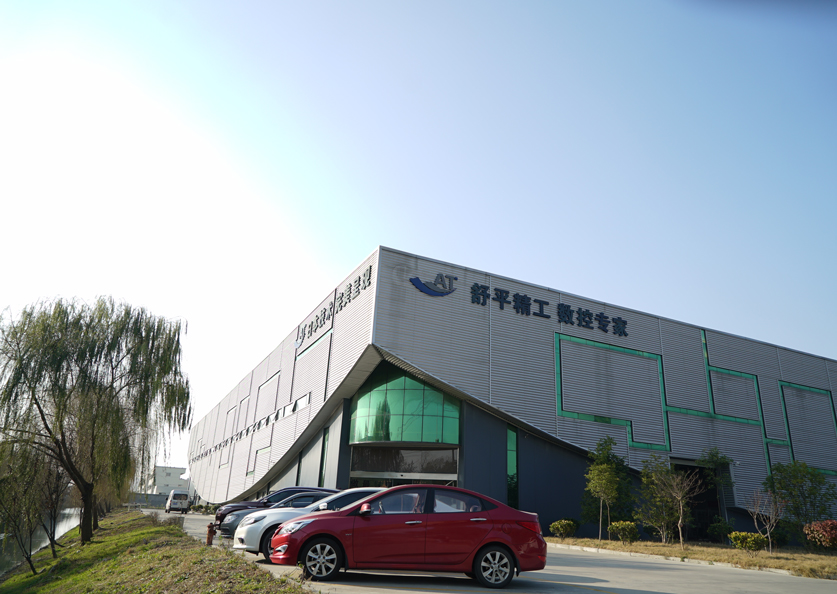

In 2017, the modern production base in Nantong, located within the Jiangsu Hai'an Economic and Technological Development Zone, officially commenced operations, marking the company's entry into a new phase of large-scale, intelligent development. Leveraging this advanced manufacturing platform, we assembled an elite technical team comprising experts in electrical engineering, software, design, and process technology.
We have accumulated over 52 nationally accepted and authorized patents, comprehensively covering the entire spectrum of wood door and panel furniture processing machinery. Our independently developed PNC intelligent control system enables direct QR code scanning and automatic path optimization, transforming complex machining into simple, efficient operations.
The industrial table saw market is undergoing a structural transformation. Understanding where the industry stands — and where it is heading — is essential for factory operators planning capital investments in cutting equipment.
Globally, the woodworking machinery market — of which industrial table saws represent a significant segment — was valued at over USD 5.8 billion in 2023 and is projected to exceed USD 9 billion by 2031, driven by accelerating demand from the furniture, construction, and prefabricated housing sectors. Asia-Pacific, led by China, remains the world's largest manufacturing hub for both table saws and the products made on them, accounting for over 40% of global output.
In China specifically, the shift toward customized panel furniture (dingzhi jiaju) over the past decade has fundamentally reshaped what factories expect from their table saws. Where a production line once handled a handful of standard sizes per shift, today's operations process hundreds of unique SKUs daily — demanding table saws with fast, automated size changes, digital fence positioning, and deep integration with ERP and CAD-to-CAM workflows. This operational complexity has made CNC and semi-CNC table saws the new baseline for any serious mass production facility.
European manufacturers, particularly in Germany and Italy, have long set the benchmark for table saw precision and build quality. The competitive advantage of Chinese manufacturers like Shuping has shifted from pure cost to a combination of precision parity, superior regional service networks, and faster customization cycles — enabling global buyers to access Japanese-heritage engineering at a fraction of the cost of European equivalents.
The next generation of table saws for mass production is being defined by four intersecting forces — automation, intelligence, sustainability, and connectivity.
Table saws are increasingly embedded within fully automated production cells — receiving cut lists directly from digital design files, auto-adjusting fence positions via servo motors, and feeding finished workpieces onto conveyor systems without human intervention. By 2027, industry analysts expect over 65% of new industrial table saw installations in Tier 1 furniture factories to include full CNC automation.
Machine learning algorithms now optimize panel lay-up and cut sequences in real time, maximizing material yield and minimizing offcut waste. When integrated with table saws running PNC-class control systems, AI optimization can reduce material waste by 12–18% compared to manual cut planning — a substantial saving at mass production volumes.
Environmental regulations and corporate ESG commitments are pushing manufacturers to invest in table saws with integrated dust extraction, optimized blade geometries that reduce kerf loss, and intelligent offcut tracking systems. Machines that demonstrably reduce dust emissions and material waste are becoming preferred choices in tender evaluations for large-scale furniture groups.
Connectivity is becoming non-negotiable. Modern mass production table saws transmit vibration, temperature, and cut-quality data to cloud platforms, enabling predictive maintenance that reduces unplanned downtime by up to 40%. Factories increasingly evaluate table saw suppliers not just on machine specs but on the quality of their digital service ecosystem.
From wood door factories to prefab housing plants, mass production table saws serve as the precision cutting backbone across a wide range of high-volume industrial applications.
Wood door factories deploying optimized table saw lines achieve up to 680 finished door panels per day per line with a three-person crew. CNC table saws handle both the primary panel breakdown and precision stile-and-rail ripping with a single machine setup change.
Custom cabinet and wardrobe manufacturers rely on table saws to deliver hundreds of unique part sizes per shift. Digital fence positioning with ±0.1mm repeatability eliminates manual measurement steps, cutting changeover time per part by over 70%.
In the fast-growing prefab and modular construction sector, table saws process engineered wood panels (LVL, CLT, OSB) to structural tolerances. Mass production demands and panel sizes here require the heaviest-duty table saw configurations with extended fence travel and reinforced tables.
Timber window frame manufacturers use precision table saws to rip finger-jointed blanks to exact widths before tenoning and profiling. Consistent width tolerance is critical since downstree saws at very high feed rates to rip raw lumber into tongue-and-groove board widths. Here, blade stability, spindle runout control, and chip extraction efficiency are the defining machine parameters.
High-volume pallet and wooden crate manufacturers deploy gang-rip table saws in continuous operation environments — often running 20+ hours per day. Machine longevity, ease of blade change, and minimal setup time are critical for this sector's economics.
The following parameters represent the performance benchmarks that define a genuine mass production-grade CNC table saw, based on our engineering standards developed over three decades of industrial manufacturing.
| Parameter | Entry Industrial | Mid-Range CNC | Shuping Mass Production Grade |
|---|---|---|---|
| Cutting Precision | ±0.5mm | ±0.1mm | ±0.01mm |
| Table Surface Area | 1200×800mm | 2000×1000mm | 3200×1300mm+ |
| Max Feed Speed | 15 m/min | 25 m/min | 40+ m/min |
| Spindle Power | 3kW | 7.5kW | 11–18.5kW |
| Fence Positioning | Manual | Semi-auto servo | Full CNC auto-servo |
| Control System | Manual | Basic NC | PNC + QR + MES integration |
| Shift Capacity (Doors) | ~120/day | ~350/day | 680+/day |
| Operator Requirement | 3–4 operators | 2–3 operators | 3 operators (full line) |
| Blade Change Time | 25–40 min | 10–15 min | <5 min (tool-free) |
| Warranty / Support | 1 year basic | 2 years standard | Full lifecycle service |
It is precisely this relentless pursuit of technology that has earned Shuping Precision Engineering widespread market recognition. Our production lines achieve exceptional efficiency — 680 wooden doors per day with a three-person shift — alongside 0.01mm-level machining precision, significantly boosting clients' production capacity while reducing labor costs. Today, hundreds of industry leaders have established long-term partnerships with Shuping Precision Machinery, with our products gaining continuous acclaim within the sector.
Talent is the fundamental driving force behind corporate development. We place high importance on human resource development and cultivation, establishing a scientific and systematic training and incentive mechanism to continuously stimulate team innovation. This lays a solid foundation for the company's sustained growth and internationalization strategy.
For factory operators evaluating capital investment in table saw systems, the financial calculus is increasingly straightforward. A modern CNC mass production table saw that enables a three-person crew to produce 680 doors per day — compared to a conventional line requiring 8–10 operators to produce 280 doors — delivers a labor cost reduction of over 60% per unit, while simultaneously improving quality consistency and reducing rework rates.
Beyond direct labor savings, mass production table saws with integrated optimization software reduce panel material waste by 12–18% through intelligent nesting and cut sequencing. At a facility consuming 500 sheets of MDF or particleboard per day, this waste reduction alone can represent annual material savings exceeding USD 200,000 — a figure that frequently delivers full payback on the machine investment within 18–24 months.
The strategic value extends further: factories equipped with precision mass production table saws can credibly pursue contracts from quality-sensitive brands and international buyers that impose strict dimensional tolerances and production documentation requirements. Machine precision becomes a market access credential — opening doors to higher-margin customer segments that manually operated or low-precision machines simply cannot serve.
From high-speed panel ripping to precision solid-wood sizing, our full table saw line covers every mass production scenario — backed by Japanese-standard engineering and a proven service network.
Like the rising sun, Shuping Precision Engineering advances with vigorous vitality and steady strides, continuously enhancing its capabilities while flexibly adapting to market shifts. We look forward to partnering with global clients to jointly pioneer a new chapter in intelligent woodworking manufacturing through continuously innovative products and services.