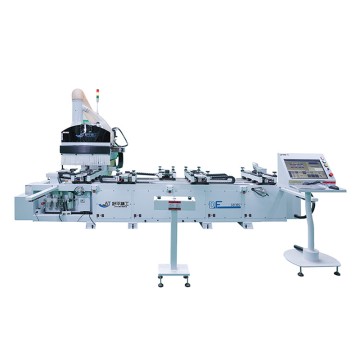
+86-18020396629

Leave Your Message
-
CONTACT NUMBER
-
 CONTACT NUMBER
-

Precision-engineered CNC solutions for doors, frames, panels & luxury interior decoration applications.
The interior decoration industry has undergone a profound transformation over the past two decades. Where handcrafted carpentry once dominated residential and commercial interiors, today's market demands rapid production cycles, millimeter-level precision, and infinite customization — all at competitive cost. Wood machines for interior decoration have risen to meet every one of these challenges, reshaping how designers, contractors, and manufacturers bring architectural visions to life.
From intricately carved door panels and flush-fit cabinetry to ornamental wall cladding, flooring underlays, and bespoke staircase components, CNC (Computer Numerical Control) wood processing equipment now underpins nearly every segment of the interior decoration supply chain. The global CNC woodworking machinery market exceeded USD 4.5 billion in 2023 and is projected to surpass USD 7 billion by 2030, driven by booming residential construction, the rise of customized furniture, and accelerating automation across Asia, Europe, and North America.
Global CNC woodworking machinery market projected to exceed USD 7 billion by 2030 — fueled by smart home trends, mass customization, and AI-driven manufacturing intelligence.
Today's interior decoration industry operates at an industrial scale that would have been unimaginable thirty years ago. Major home furnishing conglomerates, property developers, and hospitality chains routinely commission tens of thousands of identical — yet customizable — interior components per project. Meeting this demand requires wood machines capable of running around the clock with minimal human intervention, maintaining tolerances below 0.05mm across every single workpiece.
Modern CNC wood processing centers serve as the industrial backbone of this ecosystem. Vertical and horizontal machining centers, panel saws, edge banders, boring machines, and multi-axis routing centers are deployed in fully automated production lines. Manufacturers supplying luxury hotel chains, real estate developers, and retail interior fit-out companies operate facilities where a single production line can output hundreds of finished door sets or cabinet panels per shift.
The surge in whole-home customization — driven by platforms like Houzz and local design studios — has made small-batch, high-mix production the norm. Wood machines with QR-code-driven path optimization enable factories to switch between 50 different panel profiles within a single shift without retooling.
Five-star hotels demand consistent grain matching, intricate millwork, and engineered wood veneers machined to the nearest 0.01mm. CNC door frame processing centers and multi-axis carving routers deliver the repeatability required across hundreds of identical guest rooms simultaneously.
Open-plan offices, branded retail environments, and co-working spaces increasingly specify wood accents — acoustic wall panels, slatted ceilings, reception desks — all requiring large-format CNC routing at production scale.
Integrated door systems — frame, leaf, hardware prep, and decorative moulding — are now processed on a single multi-function center. This consolidation eliminates inter-process handling, reduces cycle time, and ensures dimensional consistency critical for fire-rated and acoustic door assemblies.
Kitchen, bathroom, and wardrobe cabinet manufacturers rely on high-speed nested-based routing centers that can process a full kitchen set from a single sheet of board with near-zero material waste, dramatically improving margins in a margin-sensitive industry.
Restoration architects use 5-axis CNC wood machines to replicate historical mouldings, carved panels, and structural joinery elements with archaeological accuracy — reproducing profiles that craftsmen can no longer produce by hand.
Next-generation wood machines embed AI-powered controllers that self-optimize cutting paths in real time, predict tool wear before failure, and automatically adjust feed rates based on material density — reducing scrap rates by up to 35%.
Manufacturers now ship boards pre-labeled with QR codes that encode full machining parameters. The machine reads the code and auto-loads the program — eliminating manual programming errors and enabling lights-out manufacturing for batch interior decoration orders.
Wood processing centers increasingly communicate via industrial IoT protocols (OPC-UA, MQTT), feeding real-time production data to MES and ERP systems. Decorators and contractors can track live order status from design approval to finished component delivery.
Advanced nesting algorithms, combined with intelligent offcut tracking, push material utilization rates above 92%. This is critical as the interior decoration industry faces mounting pressure to achieve carbon neutrality and comply with FSC and PEFC timber standards.
5-axis machining centers are replacing multi-step processes — routing, drilling, tenoning, and profiling — in a single setup. For interior decoration components like curved stair handrails, arched door frames, and 3D wall panels, this consolidation is a game-changer for both quality and throughput.
Machine vendors now offer cloud platforms where design teams upload DXF/CAD files, automatically generate G-code, and push programs directly to the shop floor — while remote engineers perform predictive maintenance diagnostics without a site visit.
The door — as the primary tactile interface between occupant and space — is one of the most specification-critical elements in interior decoration. A wood door frame processing center such as the DF45A enables simultaneous multi-face machining of frame profiles, rebates, hinge mortises, and lock-strike preparations in a single clamping operation. This eliminates cumulative tolerancing errors that occur when moving parts between separate machines, ensuring frames and sashes are dimensionally matched at 0.01mm resolution.
Decorative wall panels — from fluted oak screens to micro-perforated acoustic boards — require complex 2.5D and full 3D toolpaths that only CNC routers can deliver at production scale. High-end residential projects increasingly specify bespoke parametric wall systems where every panel is unique yet must fit precisely into a modular grid. Wood machines capable of reading nested cutting plans from BIM-exported DXF files are now standard tools for fit-out contractors serving architects at this level.
Engineered hardwood flooring requires profiling of tongue-and-groove joints to within 0.02mm to ensure click-lock assembly integrity over the life of the floor. CNC moulding and profiling lines running at speeds of 60–80 meters per minute produce consistent profiles that purely mechanical equipment cannot match for dimensional stability across different grain orientations and moisture contents.
Open-tread staircases, curved handrails, and carved newel posts represent the pinnacle of residential interior decoration. Multi-axis CNC wood machines bring these traditionally hand-crafted elements into the realm of industrial manufacturing — allowing architects to specify complex geometries with confidence that the factory can reproduce them at cost. 4-axis and 5-axis routing centers produce handrail sweeps, volutes, and carved detail that previously required master craftsmen weeks to produce.
High-end interior decoration projects — branded residences, flagship stores, private jets, and superyachts — demand furniture components that are simultaneously structurally engineered and visually flawless. CNC processing centers perform precise dovetail joint cutting, veneered panel routing, inlay channels, and hardware preparation in a single workflow, giving luxury furniture manufacturers the ability to promise delivery timelines measured in days rather than weeks.
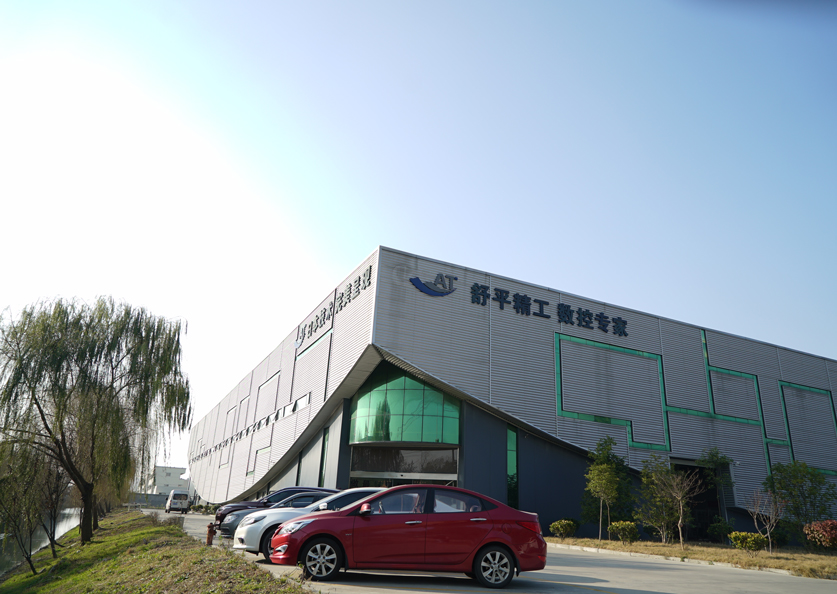
Shanghai Shuping Precision Machinery Co., Ltd. is a well-established Sino-Japanese joint venture. Its core manufacturing base is Shuping Precision Machinery (Nantong) Co., Ltd., which commenced full-scale production in 2017 and occupies a total floor area exceeding 13,000 square meters. Since its establishment in 1995, the company has consistently focused on the R&D, production, sales, and service of CNC woodworking machinery, dedicated to providing the global woodworking industry with intelligent solutions that are "faster, more precise, more accurate, and more economical."
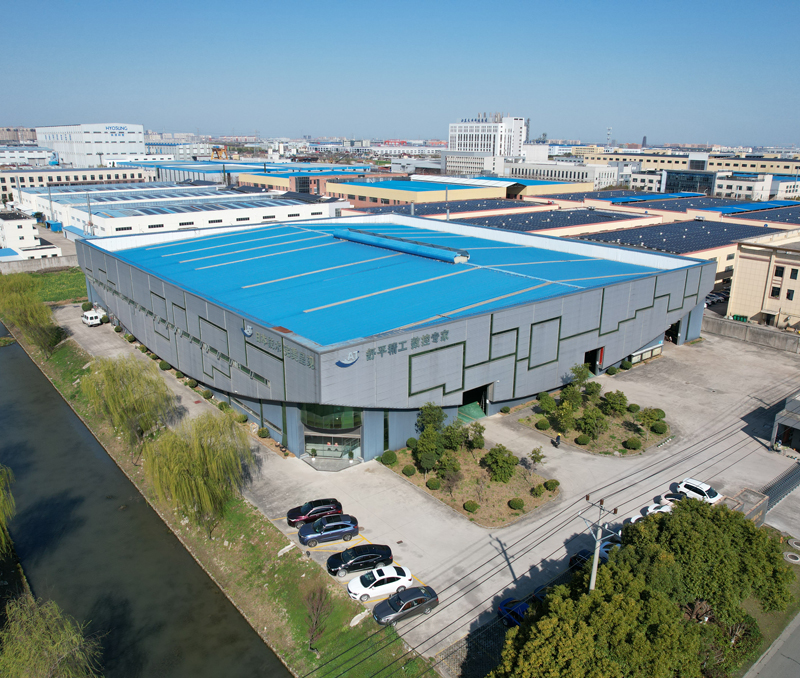


Welcome To Learn About Our Company
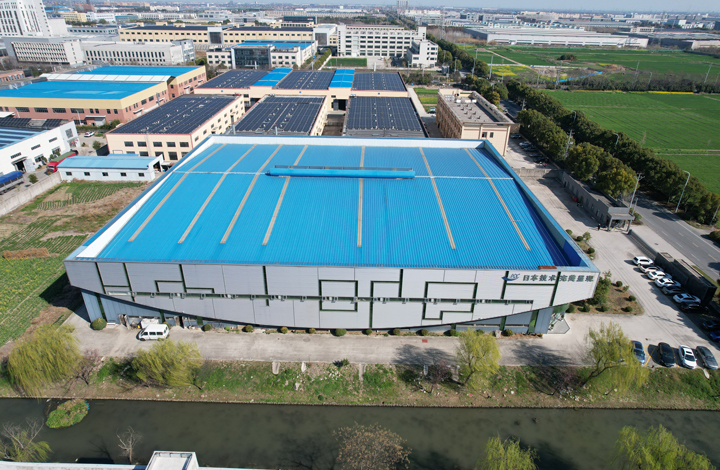
Our technological heritage originates from Japan. Over a fifteen-year period, the company provided OEM manufacturing services for renowned Japanese enterprises, gaining profound expertise in precision machining techniques originating from Matsuhama, Japan in the 1970s. Building upon this foundation, we established our proprietary brand CAT Shanghai in 2010 and simultaneously founded the CAT JAPAN R&D Center in Japan, ensuring our core technologies remain at the forefront of global innovation.

In 2017, the modern production base in Nantong, located within the Jiangsu Hai'an Economic and Technological Development Zone, officially commenced operations, marking the company's entry into a new phase of large-scale, intelligent development. Leveraging this advanced manufacturing platform, we assembled an elite technical team comprising experts in electrical engineering, software, design, and process technology.
We have accumulated over 52 nationally accepted and authorized patents, comprehensively covering the entire spectrum of wood door and panel furniture processing machinery. Our independently developed PNC intelligent control system enables direct QR code scanning and automatic path optimization, transforming complex machining into simple, efficient operations.
Sub-tenth-millimeter tolerances ensure flawless fit between door leaves, frames, panels, and decorative trim — eliminating gaps and misalignment in finished interiors.
Our production lines achieve 680 wooden doors per day with a three-person shift — delivering output volumes that meet large-scale property development and hospitality project timelines.
Independently developed PNC intelligent control with QR code scanning and automatic path optimization — turning complex interior decoration machining into a scan-and-run operation.
CAT JAPAN R&D Center continuously feeds cutting-edge Japanese machining science into our product roadmap, ensuring global-leading innovation in every new model release.
More than 52 nationally accepted patents covering mechanical design, control systems, and process technology — protecting the intellectual property behind our interior decoration machinery advantage.
From installation and commissioning to remote diagnostics and scheduled maintenance, our global service network ensures maximum uptime for interior decoration production lines worldwide.
It is precisely this relentless pursuit of technology that has earned Shuping Precision Engineering widespread market recognition. Our production lines achieve exceptional efficiency — 680 wooden doors per day with a three-person shift — alongside 0.01mm-level machining precision, significantly boosting clients' production capacity while reducing labor costs.
Today, hundreds of industry leaders — including Jiangshan Oppein, TATA Wooden Doors, Sofia Home Furnishings, Kendiya Wooden Doors, and Country Garden Modern Home Furnishings — have established long-term partnerships with Shuping Precision Machinery, with our products gaining continuous acclaim within the sector.
Talent is the fundamental driving force behind corporate development. We place high importance on human resource development and cultivation, establishing a scientific and systematic training and incentive mechanism to continuously stimulate team innovation. This lays a solid foundation for the company's sustained growth and internationalization strategy.
Explore our full lineup of CNC woodworking centers engineered for every interior decoration application.
Like the rising sun, Shuping Precision Engineering advances with vigorous vitality and steady strides, continuously enhancing its capabilities while flexibly adapting to market shifts. We look forward to partnering with global clients to jointly pioneer a new chapter in intelligent woodworking manufacturing through continuously innovative products and services.
Contact Us