

 +86-18020396629

Leave Your Message
-
CONTACT NUMBER
-
 CONTACT NUMBER
-

Precision-engineered CNC machines designed for high-throughput wood door frame manufacturing — combining speed, accuracy and intelligent automation.
The global wood processing machinery market has entered a transformative era. Driven by surging demand in residential construction, commercial real estate, and the furniture sector, manufacturers worldwide are under mounting pressure to increase output while maintaining strict dimensional accuracy and surface quality. Traditional manual or semi-automated production lines can no longer satisfy the throughput requirements of modern large-scale factories.
According to industry research, the global woodworking machinery market was valued at over USD 5.2 billion in 2023 and is projected to grow at a CAGR of approximately 4.8% through 2030. The Asia-Pacific region — particularly China — accounts for the largest share of both production and consumption, with domestic wood door manufacturers alone processing hundreds of millions of door units annually.
This growth is underpinned by three key forces: rapid urbanization requiring standardized building materials, the rise of customized panel furniture demanding flexible yet high-speed CNC systems, and the global push toward Industry 4.0 integration in factory environments. Wood processing machines for mass production are no longer just mechanical tools — they are intelligent, networked manufacturing nodes.
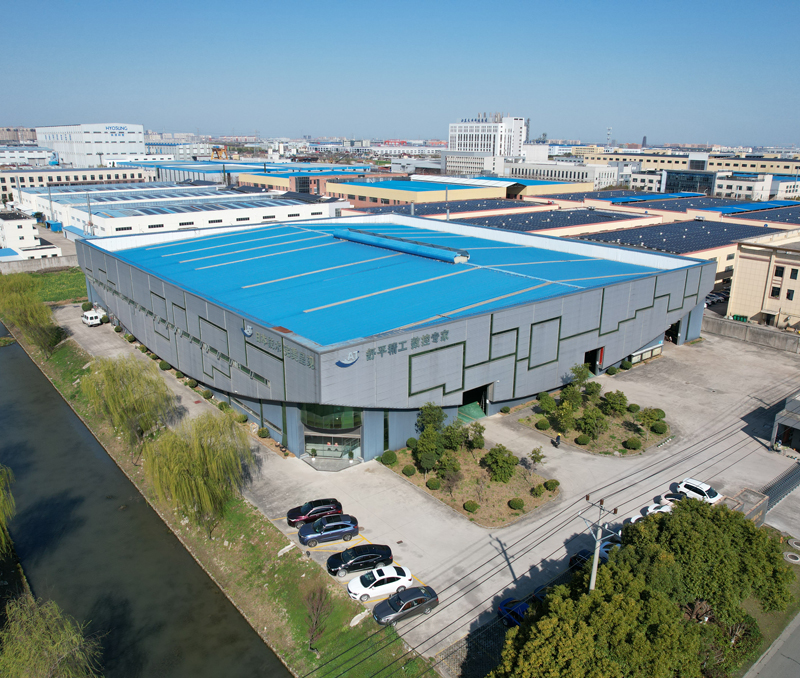
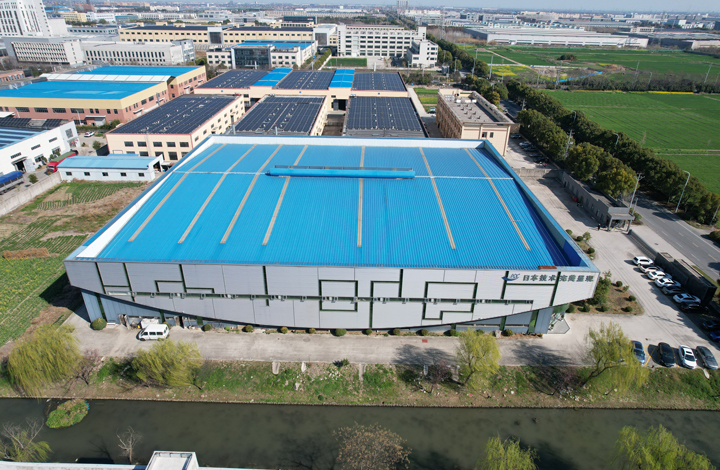


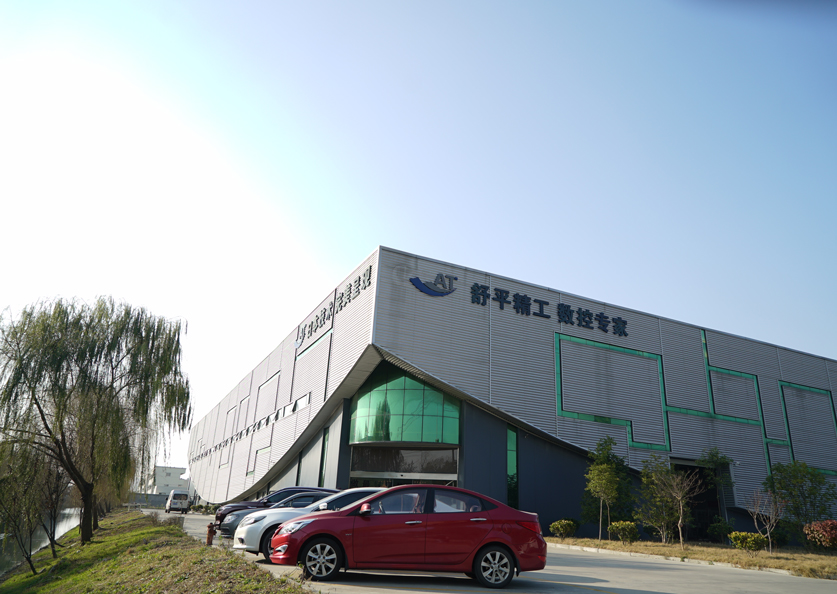
Shanghai Shuping Precision Machinery Co., Ltd. is a well-established Sino-Japanese joint venture. Its core manufacturing base is Shuping Precision Machinery (Nantong) Co., Ltd., which commenced full-scale production in 2017 and occupies a total floor area exceeding 13,000 square meters. Since its establishment in 1995, the company has consistently focused on the R&D, production, sales, and service of CNC woodworking machinery, dedicated to providing the global woodworking industry with intelligent solutions that are "faster, more precise, more accurate, and more economical."
Our technological heritage originates from Japan. Over a fifteen-year period, the company provided OEM manufacturing services for renowned Japanese enterprises, gaining profound expertise in precision machining techniques originating from Matsuhama, Japan in the 1970s. Building upon this foundation, we established our proprietary brand CAT Shanghai in 2010 and simultaneously founded the CAT JAPAN R&D Center in Japan, ensuring our core technologies remain at the forefront of global innovation.
Our independently developed PNC system enables direct QR code scanning and automatic path optimization — turning complex machining into simple, efficient operations.
Our production lines achieve exceptional efficiency — 680 wooden doors per day with a three-person shift — dramatically boosting clients' capacity while cutting labor costs.
Achieving 0.01mm-level machining precision across all processing axes, our machines set the benchmark for dimensional accuracy in mass production environments.
Over 52 nationally accepted and authorized patents comprehensively covering the entire spectrum of wood door and panel furniture processing machinery.
In 2017, the modern production base in Nantong, located within the Jiangsu Hai'an Economic and Technological Development Zone, officially commenced operations, marking the company's entry into a new phase of large-scale, intelligent development. Leveraging this advanced manufacturing platform, we assembled an elite technical team comprising experts in electrical engineering, software, design, and process technology.
We have accumulated over 52 nationally accepted and authorized patents, comprehensively covering the entire spectrum of wood door and panel furniture processing machinery. Our independently developed PNC intelligent control system enables direct QR code scanning and automatic path optimization, transforming complex machining into simple, efficient operations.

The industry is undergoing a profound shift. Here are the defining trends reshaping how factories deploy wood processing machines at scale.
Leading factories are transitioning toward fully automated wood processing lines where machines operate with minimal human intervention. Robotic loading/unloading arms, automated conveyor systems, and AI-driven quality inspection are becoming standard. The goal: 24/7 lights-out production with consistent output quality.
Modern wood processing machines are increasingly equipped with IoT modules that transmit real-time production data to central MES platforms. This enables predictive maintenance, remote diagnostics, production scheduling optimization, and energy consumption monitoring — all critical for large-scale operations.
Consumer demand for personalized products is driving the need for flexible CNC systems that can switch between door styles, sizes, and profiles with zero downtime. Advanced QR-code-driven machining paths — like our PNC system — allow factories to produce batch-of-one efficiency at mass-production speeds.
Environmental regulations and rising energy costs are pushing manufacturers to adopt servo-driven spindles, regenerative braking systems, and optimized cutting strategies that reduce material waste. Sustainable wood processing is no longer optional — it is a competitive differentiator in global markets.
Artificial intelligence is being integrated into CNC control systems to automatically optimize feed rates, tool paths, and spindle speeds based on wood species, grain direction, and moisture content. This reduces tool wear, improves surface finish, and maximizes throughput in mass production scenarios.
As wood product manufacturers expand internationally, the demand for standardized, globally serviceable machines is growing. Equipment manufacturers with overseas R&D centers — such as our CAT JAPAN facility — are better positioned to deliver consistent technical support and localized solutions worldwide.
From residential door factories to large-scale furniture plants, our CNC wood processing centers serve a wide range of demanding industrial environments.
Large-scale wood door factories require machines capable of processing hundreds of door blanks per shift with consistent mortise, tenon, hinge pocket, and lock-hole geometry. Our DZB, DFW, and DK series are purpose-built for this environment, supporting multi-step processing in a single clamping operation to minimize handling time and dimensional variation across batches.
The rapid growth of prefabricated and modular construction has created demand for precisely machined wooden structural components at scale. Wood processing machines with multi-axis CNC capability can produce door frames, window frames, and structural panels to tight tolerances required by assembly-line construction methods, reducing on-site labor and rework costs significantly.
Modern panel furniture production demands high-speed boring, routing, and edge-profiling operations on large boards. CNC wood processing centers integrated with automatic tool changers and multi-spindle heads enable furniture factories to process complete cabinet components — sides, tops, shelves, and backs — in continuous flow lines with minimal operator intervention.
Hotels, offices, and retail environments demand large quantities of custom millwork — door sets, paneling, and built-in cabinetry — produced to architectural specifications. Wood processing machines with QR-code-driven job switching allow manufacturers to fulfill complex commercial contracts involving dozens of door styles and hundreds of unique components with rapid changeover and zero compromise on quality.
Manufacturers supplying international markets must meet stringent dimensional tolerances and surface quality standards demanded by importers in Europe, North America, and the Middle East. Achieving 0.01mm machining precision with our CNC systems ensures that wood door and furniture components pass quality audits and reduce costly rejection rates in export supply chains.
Branded wood door companies increasingly outsource component manufacturing to specialized OEM factories equipped with high-precision CNC processing centers. These facilities rely on machines capable of maintaining micron-level consistency across thousands of identical components per day — exactly the performance profile our production lines are engineered to deliver shift after shift.
Including Jiangshan Oppein, TATA Wooden Doors, Sofia Home Furnishings, Kendiya Wooden Doors, and Country Garden Modern Home Furnishings.
It is precisely this relentless pursuit of technology that has earned Shuping Precision Engineering widespread market recognition. Our production lines achieve exceptional efficiency — 680 wooden doors per day with a three-person shift — alongside 0.01mm-level machining precision, significantly boosting clients' production capacity while reducing labor costs.
Today, hundreds of industry leaders — including Jiangshan Oppein, TATA Wooden Doors, Sofia Home Furnishings, Kendiya Wooden Doors, and Country Garden Modern Home Furnishings — have established long-term partnerships with Shuping Precision Machinery, with our products gaining continuous acclaim within the sector.
Talent is the fundamental driving force behind corporate development. We place high importance on human resource development and cultivation, establishing a scientific and systematic training and incentive mechanism to continuously stimulate team innovation. This lays a solid foundation for the company's sustained growth and internationalization strategy.
Explore our full lineup of industrial-grade wood door and frame processing machines — engineered for maximum throughput, precision, and reliability in demanding production environments.
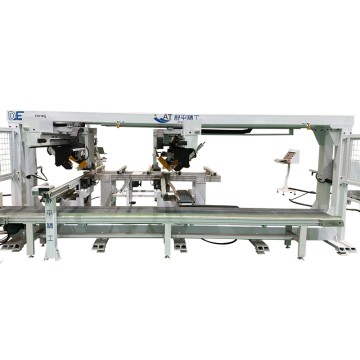 DFW Door Frame Double End Sawing Processing Center
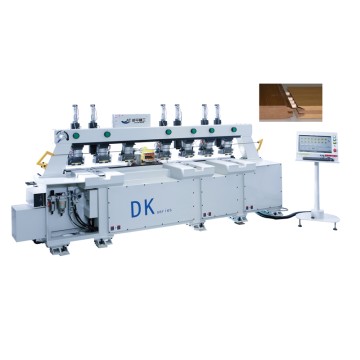 DK Series Door Frame Processing Center
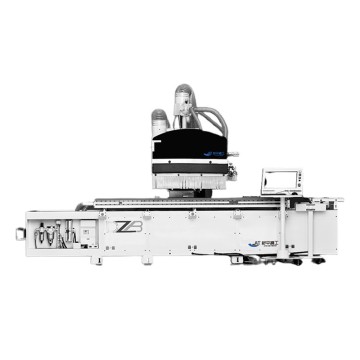 DZB Series Fully Functional Wooden Door Processing Center
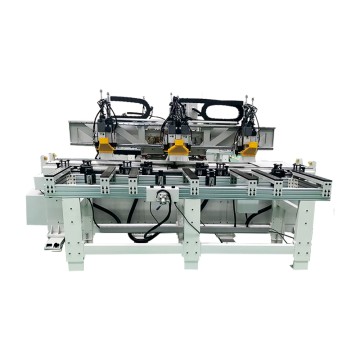 DFH Door Frame Lock Tongue Joint Processing Center
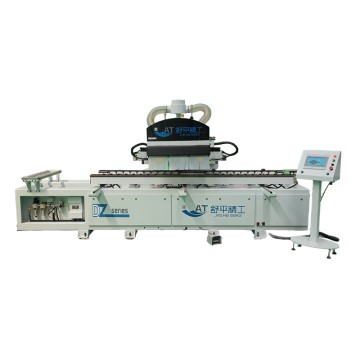 DZWJ Wooden Door Four Sided Sawing Processing Center
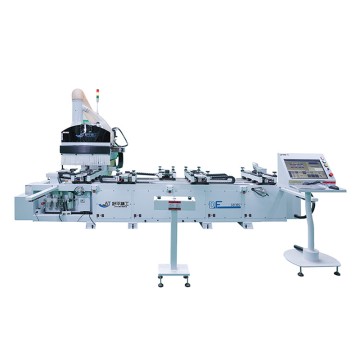 DF45A Wood Door Frame Processing Center
DFW Door Frame Double End Sawing Processing Center
DK Series Door Frame Processing Center
Like the rising sun, Shuping Precision Engineering advances with vigorous vitality and steady strides, continuously enhancing its capabilities while flexibly adapting to market shifts. We look forward to partnering with global clients to jointly pioneer a new chapter in intelligent woodworking manufacturing through continuously innovative products and services.
Contact Us